
The mystery of the master’s choice
In 1981, our company was a “no-name” startup in the middle of Hokkaido. We were young, ambitious, and largely ignored by the design world. Then, out of nowhere, we received an offer that changed everything: a collaboration with Riki Watanabe, the titan of Japanese modern design.
Our president at the time was moved to tears. He thought, “Finally, we’ve been recognized as quality craftsmen!” But to this day, it remains a mystery: why did a legend like Riki choose us? Later, he gave us a clue. He said his first impression was that everyone at CondeHouse—from the president to the youngest craftsman—shared a single, unshakable policy: to work as one with the designer. We didn’t just take orders; we shared a soul.
This might sound like self-praise, but I truly believe it’s the heart of our company. We are a collection of people who simply love making things. When we are tasked with giving shape to something that doesn’t yet exist in this world, we burn with an almost abnormal intensity. However, because we have so many people specialized in “creation,” it also leads to frequent headaches in organizational management. As one of the managers, this is where my skills are put to the test. Every day, I am—shall we say—trembling with fear? No, let’s say “fired up” to tackle the beautiful chaos of our talented team.
The “one-shot” miracle
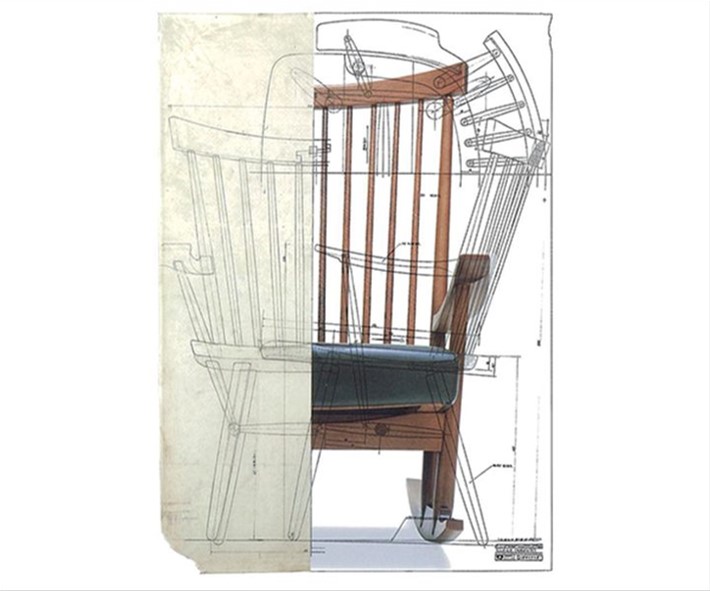
The image above is the full-scale drawing for the RIKI WINDSOR collection. One day, Riki arrived at our factory with this very drawing under his arm.
Now, let me tell you why this story is legendary in our factory. Making a rocking chair is a nightmare. It’s an architectural puzzle of center-of-gravity and balance. Usually, it takes three or four prototypes just to keep the person sitting in it from tipping over or feeling like they’re on a sinking ship.
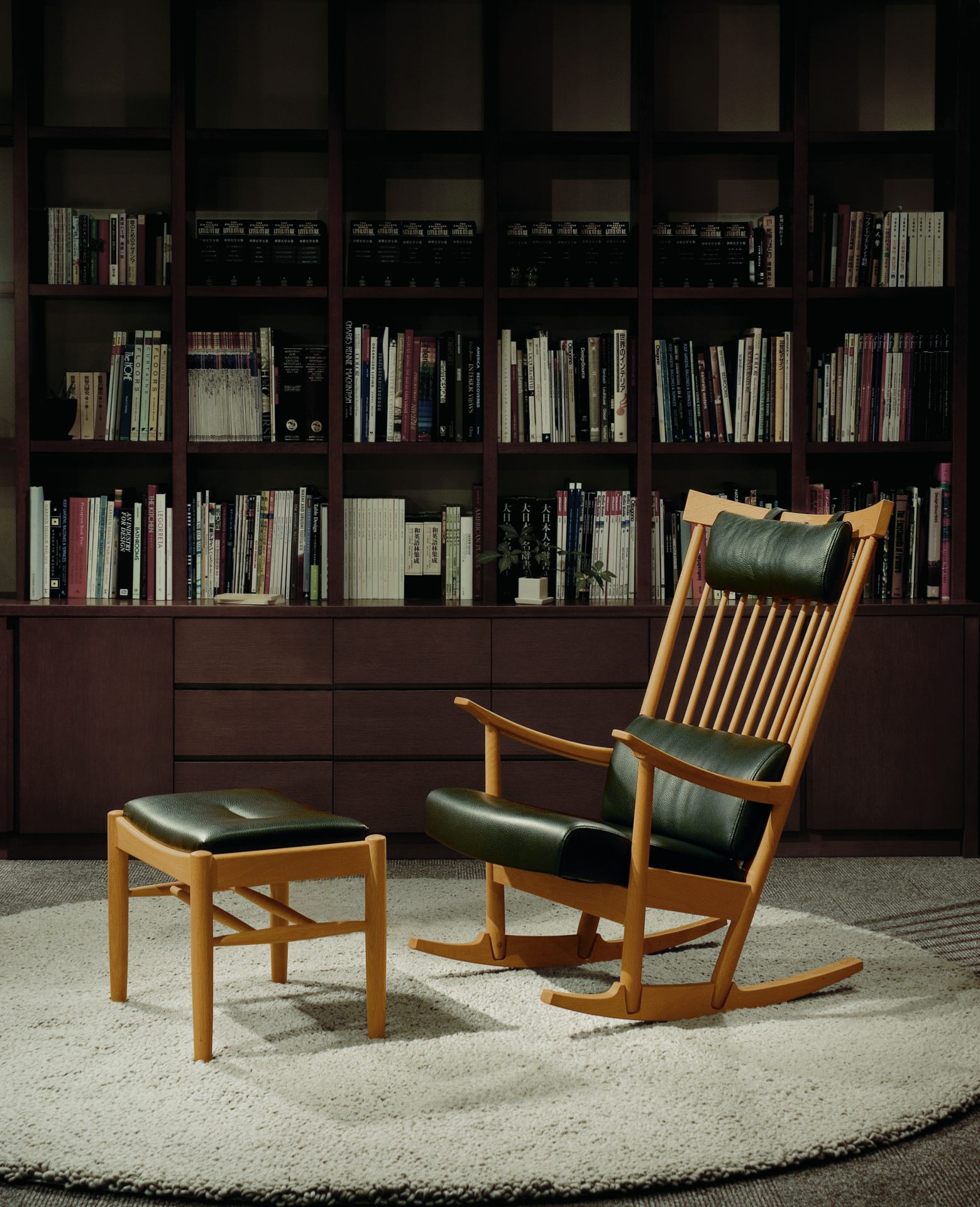
But with Riki’s drawing, we made the prototype, and it was perfect in a single go. The balance, the rocking motion, the comfort—it was as if the chair already existed in his mind and we just had to breathe life into it. Riki later confessed he was secretly relieved, but for us, it was pure magic. The low seating and the uniquely trimmed armrests were his “signature”—a Japanese-style elegance that he claimed was unintentional, but we know better.
Sake, sashimi, and sustenance
Of course, I wouldn’t be me if I didn’t mention the most important part of Riki’s visits to Hokkaido. Whenever he came to see us, he wasn’t just here for the wood. He was here for the fresh fish and local sake.
Watching him enjoy the delicacies of our northern home, I realized that his creative energy—which kept him active throughout his long, brilliant life—was fueled by a deep appreciation for the “good things” in life. It reminds me of my own philosophy: you can’t create a masterpiece on an empty stomach.
I suspect that the “perfect balance” of his rocking chair wasn’t just calculated with a ruler, but with the same refined palate he used to judge a fine Hokkaido sake.
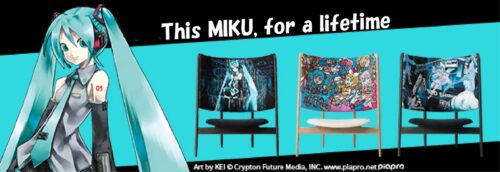
I may be a manager who spends his days ‘trembling with fear’—I mean, ‘fired up’—trying to organize a team of craftsmen with abnormal creative intensity, but I know magic when I see it. Riki Watanabe chose us because we don’t just follow orders; we share a soul with the visionaries. Our Hatsune Miku Art Chair is the modern successor to that legendary spirit—a high-stakes collaboration where our ‘beautiful chaos’ was harnessed to give shape to a digital icon. It’s a chair built with the same ‘one-shot’ precision and refined passion that once moved a master to tears. Now, here is a warning for those who prefer the quiet life: the image below is a portal to our most intense creation yet. If you are afraid of getting caught in the crossfire of our creative energy, do NOT click it. But if you want to see what happens when we truly ‘burn’ for a design, come and witness the magic. We’ve already poured the sake. —— The Hatsune Miku Art Chair.

Shungo Ijima
Global Connector | Reformed Bureaucrat | Professional Over-Thinker
After years of navigating the rigid hallways of Japan’s Ministry of Finance and surviving an MBA, he made a life-changing realization: spreadsheets are soulless, and wood has much better stories to tell.
Currently an Executive at CondeHouse, he travels the world decoding the “hidden DNA” of Japanese culture—though, in his travels, he’s becoming increasingly more skilled at decoding how to find the cheapest hotels than actual cultural mysteries.
He has a peculiar talent for finding deep philosophical meaning in things most people ignore as meaningless (and to be fair, they are often actually meaningless). He doesn’t just sell furniture; he’s on a mission to explain Japan to the world, one intellectually over-analyzed observation at a time. He writes for the curious, the skeptical, and anyone who suspects that a chair might actually be a manifesto in disguise.
Follow his journey as he bridges the gap between high-finance logic and the chaotic art of living!