

The “Special Treat” extinction
Thirty years ago in Japan, sushi was a sacred ritual for the average family. It was a feast reserved strictly for special occasions—birthdays, New Year’s Eve, or perhaps to celebrate passing an important exam. The anticipation was as delicious as the fish itself. Today, conveyor-belt sushi is everywhere, serving as the “fast food” of the sea.
You might think this is progress. You might think we’ve simply become richer. But I suspect the truth is hidden behind a spell called “International Division of Labor (IDOL).” It sounds like a sophisticated economic strategy, but in reality, it’s a spell that has come back to haunt our sense of value.
Ricardo’s tuna and the race to the bottom
If you’ve studied economics, the name David Ricardo likely rings a bell. As one of the only two economists in history to actually become wealthy through his theories, his insights into profit and loss were razor-sharp. He argued that the world gets richer when each country specializes in its “comparative advantage.”
It sounds harmonious on paper, but in the real world, it often looks like a brutal global competition for the cheapest possible labor. I once worked for a Japanese fishery company that operated five tuna vessels. Even then, the number of Japanese crew members was less than half and shrinking fast. We were outsourcing the hardship just to keep the price of a tuna roll under a few dollars. Ricardo was a genius at calculating wealth, but we had to wait for the arrival of Daniel Kahneman and behavioral economics to truly understand the complex relationship between “getting rich” and “being happy.”
The wisdom of moderation
I am not here to dismantle global trade, but I do want to ask: Should we always aim to be “richer”? I felt like the happiest kid on Earth when I ate sushi those two times a year. (Since I almost never passed any exams, it really was limited to just twice a year.) Today, because I can eat sushi anytime, it has lost its magic. In exchange for convenience, we have traded away the “special treat” and the soul of the master sushi chef. It is human wisdom to leave special things as they are.
At CondeHouse, we feel this pressure every day. Our furniture is being squeezed by mass-produced pieces born from that same “race to the bottom.” I can’t always prove our “comparative advantage” on a spreadsheet, but I can promise you this: our furniture is designed to be a “special treat” that stays special for decades. Perhaps true wealth isn’t about how much we can afford to buy, but about how little we actually need to be satisfied. As the old saying goes: “He is rich that has few wants.”
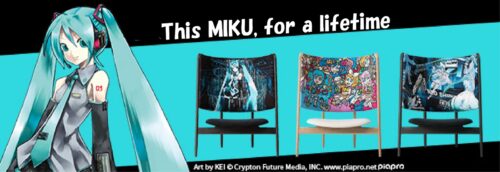
The Hatsune Miku Art Chair is the antithesis of the “International Division of Labor.” It wasn’t built by seeking the cheapest labor; it was built by staying true to the “special” nature of Hokkaido craftsmanship. Just as the sushi of my youth was a rare reward, this chair is designed to be an event in your home—a “comparative advantage” of soul over speed. Whether you’ve passed an important exam lately or not, you deserve a piece of furniture that feels like a ceremony. Why settle for “anytime” products when you can own a “once-in-a-lifetime” masterpiece?
Ready to bring the “special” back into your life? Click the banner below to explore the Art Chair collection.

Shungo Ijima
Global Connector | Reformed Bureaucrat | Professional Over-Thinker
After years of navigating the rigid hallways of Japan’s Ministry of Finance and surviving an MBA, he made a life-changing realization: spreadsheets are soulless, and wood has much better stories to tell.
Currently an Executive at CondeHouse, he travels the world decoding the “hidden DNA” of Japanese culture—though, in his travels, he’s becoming increasingly more skilled at decoding how to find the cheapest hotels than actual cultural mysteries.
He has a peculiar talent for finding deep philosophical meaning in things most people ignore as meaningless (and to be fair, they are often actually meaningless). He doesn’t just sell furniture; he’s on a mission to explain Japan to the world, one intellectually over-analyzed observation at a time. He writes for the curious, the skeptical, and anyone who suspects that a chair might actually be a manifesto in disguise.
Follow his journey as he bridges the gap between high-finance logic and the chaotic art of living!