

The expensive illusion of fate
II often hear people exclaim, “It was fate!” when they make a big life decision. Whether it’s a house, a luxury car, or a high-end sofa, we love to blame our spending on destiny. We suddenly notice information pleasant to our eyes, like a magazine article saying “Now is the best time to buy!” or recall a horoscope that whispered about “new beginnings.”
I hate to break it to you, but that isn’t destiny—it’s Confirmation Bias. We decide what we want first, and then our brains act like a corrupt detective, only looking for evidence that supports the crime. Am I any better? Absolutely not. I’ve been trading stocks for years, and every time I place an order, I feel like I’ve discovered a “secret sign” from the universe that only a genius can see. Naturally, the universe responds by steadily decreasing the balance of my brokerage account. I then stop facing reality and start calling it a “long-term investment.” Be wary of the signs; usually, they are just reflections of your own desires.
Pride: The fuel for fraud
As Julius Caesar famously said, “Men willingly believe what they wish to believe.” This is the root of the bias, but it’s our pride that makes it dangerous. Nobody enjoys admitting they were wrong. To protect our ego, we cling to supportive information like a life raft.
This is exactly how fraud works. People often realize, deep down, that a deal is too good to be true. But to admit it would mean admitting they were fooled, and that is a pill too bitter to swallow. So they stay in the trap, desperately seeking any shred of news that says the investment is still safe. Facing reality requires us to swallow our pride, which is perhaps the most difficult “procurement” a human can undertake.
Breaking the flywheel of the top brands
Confirmation bias is also why it is so incredibly difficult to break into a mature market. Consumers have already decided who the “top brands” are, and their bias prevents them from even noticing alternatives. It’s like a massive flywheel: once people believe a brand is the best, they only see the reasons why that’s true, making the brand stronger every day.
But this works both ways. For a brand like CondeHouse in the global furniture market, we are currently trying to move that heavy wheel. It takes desperate, daily effort to create even a small crack in the consumer’s shell of bias. However, once that flywheel starts to turn in our favor, confirmation bias becomes our greatest ally. I write these articles every day, whispering to the market, hoping to create that “little leak” that will eventually sink the great ship of established hierarchies. I am banking on the hope that once you choose us, you’ll start finding every reason in the world to believe it was “fate.”
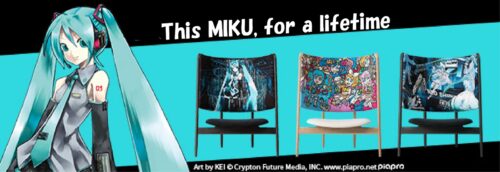
When you look at the Hatsune Miku Art Chair, you might feel a sudden, inexplicable pull—a sense of “fate.” Is it confirmation bias? Perhaps. But if you’re going to let your brain trick you into a decision, shouldn’t it be for something that actually exists in physical reality, unlike my disappearing brokerage balance? This chair is a fusion of digital icons and 1,500 years of woodworking tradition—a piece of “destiny” that you can actually touch, sit on, and hand down to the next generation. Why stay trapped in a bias for the “same old” brands when you can choose a new fate that stares you in the face?
Ready to surrender to a beautiful bias? Click the banner below to explore the Art Chair collection.

Shungo Ijima
Global Connector | Reformed Bureaucrat | Professional Over-Thinker
After years of navigating the rigid hallways of Japan’s Ministry of Finance and surviving an MBA, he made a life-changing realization: spreadsheets are soulless, and wood has much better stories to tell.
Currently an Executive at CondeHouse, he travels the world decoding the “hidden DNA” of Japanese culture—though, in his travels, he’s becoming increasingly more skilled at decoding how to find the cheapest hotels than actual cultural mysteries.
He has a peculiar talent for finding deep philosophical meaning in things most people ignore as meaningless (and to be fair, they are often actually meaningless). He doesn’t just sell furniture; he’s on a mission to explain Japan to the world, one intellectually over-analyzed observation at a time. He writes for the curious, the skeptical, and anyone who suspects that a chair might actually be a manifesto in disguise.
Follow his journey as he bridges the gap between high-finance logic and the chaotic art of living!