
The art of looking intelligent
When was the last time you visited an art museum? To be honest, I am no art expert. In fact, I have two very specific reasons for going, and neither involves knowing the difference between a Monet and a Manet.
First, a museum is the ultimate tool for making yourself look intelligent. I highly recommend announcing to everyone—whether they ask or not—”I’m planning to spend my weekend at the museum.” It instantly changes how people look at you. It is also, of course, the perfect date spot. It doesn’t matter if you have zero interest or knowledge in art. All you need to do is nod with a grave, contemplative expression, as if you’ve just solved one of life’s great mysteries. When your partner asks, “What is it?” you can simply reply, “Nothing, I’ve just decided what I’m ordering for lunch.” You’ll immediately be seen as someone with both depth and a brilliant sense of humor.
Second, and more importantly, I love museums because they are a goldmine for marketing insights. They invite us to look beneath the surface. While attending a special exhibition from the Scottish National Gallery, I struck gold. I wasn’t just looking at paint on canvas; I was looking at two profound lessons in branding and market disruption.
Lesson 1: The alchemy of naming
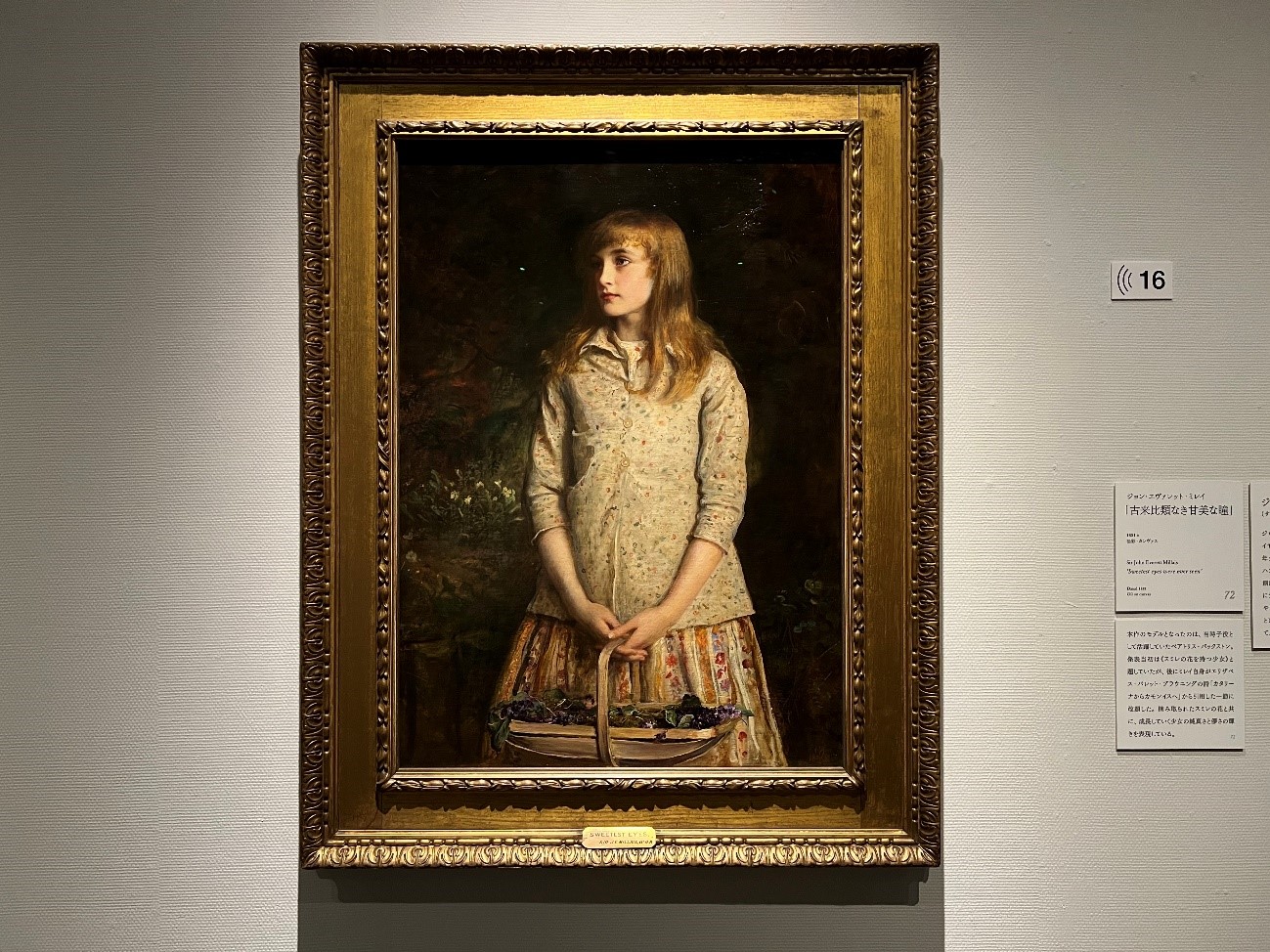
One painting that caught my eye was “Sweetest Eyes Were Ever Seen” by Sir John Everett Millais. If I’m being blunt, the painting itself didn’t move me. What fascinated me was its history.
According to the audio guide, the original title was “A Girl with Violets.” Let’s be honest: that is a catastrophically boring name. It’s a literal description, devoid of soul. But by changing it to “Sweetest Eyes Were Ever Seen,” Millais shifted the focus from the object (the flowers) to the emotion (the gaze).
He stopped selling a picture and started selling a feeling. In the world of marketing, we call this a “Naming Strategy,” and it is the difference between a product that sits on a shelf and a brand that lives in the heart.
Lesson 2: The renaissance of the ordinary
The second lesson was about the tectonic shifts in “Common Sense.” For centuries, Western art followed a rigid hierarchy: painters depicted God for the Church, then nobles for the Aristocracy. The idea of painting an ordinary girl—like the one in Millais’ portrait—would have been considered ridiculous, or even offensive, to a pre-Renaissance mind.
But the “standard” changed. Artists began to paint what they felt, not just what they were ordered to. It reminded me that what we take for granted today—our “common sense”—is often just a temporary fashion. The “ridiculous” idea of today is the “standard” of tomorrow.
The “Knotty” renaissance in wood
A similar revolution has taken place in the wooden furniture industry. Ten years ago, the market was obsessed with “perfection.” Any piece of wood with visible knots or strong, irregular grains was considered “low-grade” and hidden away.
Our founder called this “human ego.” He used to say, “If you cannot appreciate the natural character of the wood, you should give up on wooden furniture altogether.” When we began using wood with bold knots even for our most expensive tabletops, the market reacted with shock. It was our “Renaissance” moment—doubting the common sense that “smooth is better.” Today, those same knots are celebrated as the unique fingerprints of nature. We didn’t change the wood; we changed the eyes of the person looking at it. Just like Millais did with his “Girl with Violets.”
I confess that I love a good ‘Naming Strategy’—because changing a title can turn a simple portrait into a legend, just as seeing beauty in a knot can turn a piece of timber into a masterpiece. At CondeHouse, we don’t just follow the ‘standard’ of the era; we create the ‘common sense’ of tomorrow. We stopped hiding the natural fingerprints of wood and started celebrating them as art. Our Hatsune Miku Art Chair is our latest ‘Renaissance’ moment. It is more than a product name; it is a shift in perspective, bringing a digital soul into the tangible, knot-rich reality of Hokkaido’s finest craft. It’s an invitation to look beneath the surface and see the extraordinary. Now, here is a portal to a brand that lives in the heart: the image below is your link to the special site. If you prefer the literal, soul-less descriptions of the ordinary, do NOT click it. But if you’re ready for a masterpiece that speaks to your emotions, go ahead. Change your eyes. —— The Hatsune Miku Art Chair.

Photo credit: https://www.tokyoartbeat.com/articles/-/the-greats

Shungo Ijima
Global Connector | Reformed Bureaucrat | Professional Over-Thinker
After years of navigating the rigid hallways of Japan’s Ministry of Finance and surviving an MBA, he made a life-changing realization: spreadsheets are soulless, and wood has much better stories to tell.
Currently an Executive at CondeHouse, he travels the world decoding the “hidden DNA” of Japanese culture—though, in his travels, he’s becoming increasingly more skilled at decoding how to find the cheapest hotels than actual cultural mysteries.
He has a peculiar talent for finding deep philosophical meaning in things most people ignore as meaningless (and to be fair, they are often actually meaningless). He doesn’t just sell furniture; he’s on a mission to explain Japan to the world, one intellectually over-analyzed observation at a time. He writes for the curious, the skeptical, and anyone who suspects that a chair might actually be a manifesto in disguise.
Follow his journey as he bridges the gap between high-finance logic and the chaotic art of living!