

The death of the sports car and the tyranny of function
When I was younger—a time I fondly refer to as “the good old days”—I loved sports cars. That was normal for newly licensed drivers. Back then, you couldn’t even ask someone out on a date without one. Things have changed dramatically: In Japan, most young people no longer seem interested in cars, let alone sports cars. Furthermore, ordinary combustion engine cars are being replaced by electric vehicles, threatening sports cars with extinction.
Speaking of sports cars, I once strongly believed they were the ultimate symbol of functional beauty, because every detail is supposedly designed only for speed. They were collections of correct answers—perfectly engineered means of fast transportation. The younger, simpler me thought that their functional correctness was the precise reason why they looked beautiful.
This easy logic was initially comforting, but it eventually provoked smoldering questions. For instance: What about art that is of no utility at all? Most people still deem it beautiful. Thus, the simple question remained: What is beauty?

The failed ascent: From Kant to the chronometer
Since I was young, I’ve tried to read philosophical texts, mainly to make myself look smart. One day, I found that Immanuel Kant had written about aesthetic judgment in his critical work. As usual, the concepts were far too difficult, and my attempt (to make myself look smart) ended quickly and miserably. My philosophical ambition ended in predictable failure.
While I was still in the depths of despair over my poor understanding, a simple sentence from a scientific paper caught my eye. The article stated plainly: “Beauty is judged within 1 second in the brain.” To be precise, the verdict is rendered in just 0.8 seconds.
I had always thought beauty was purely a subject of philosophy, shrouded in complex German prose. Now it turns out that neuroscientists are studying it using chronometers and MRI machines. The contrast—Kant vs. the Stopwatch—is wonderfully absurd.
Plato’s pleasure and the neural network
Scientists have identified specific brain regions contributing to processing aesthetic appeal. Some research shows a close relationship between beauty and pleasure responses in our neural networks. In essence, the immediate appreciation of beauty is a neurological rush of pleasure.
This brings us back to antiquity. It suggests that Plato’s definition—”beauty is pleasure through eye or ear”—is somehow profoundly correct, albeit proven $2,400$ years later by modern science. The core mystery is now clear: Beauty is pleasure in the brain.
The keys to aesthetic appeal: Curvature and symmetry
I know that solving “What is beauty?” only leads us to another mystery: What is pleasure? As in all my articles, I cannot draw a clear, absolute conclusion here. (I am too self-aware and logistically constrained for that kind of definitive statement.)
However, the scientific paper does give us a fantastic clue. It highlights several key properties that consistently increase the aesthetic appeal of an object. Two of these properties are commonly cited: “Symmetry” and “Curvature.”
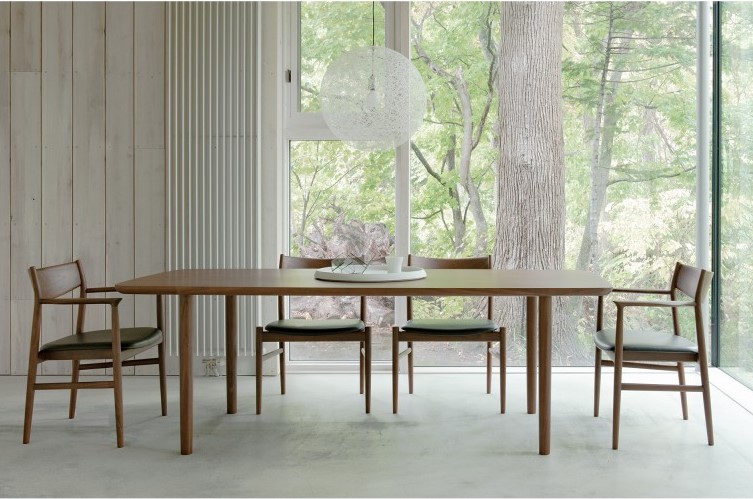
In that specific context—the cold, hard logic of neuroscience—our products, such as the chair shown above which consists only of curved lines, can be objectively deemed beautiful. I suppose that means we are scientifically correct, unlike the younger me who only vaguely referenced functional beauty. What do you think?
I may have failed miserably to understand Kant’s critiques, but it turns out I don’t need a German philosophy degree to know what I like—my brain handles that in just 0.8 seconds. If beauty is indeed a ‘neurological rush of pleasure’ triggered by symmetry and curvature, then our Hatsune Miku Art Chair is essentially a scientific shortcut to happiness. We’ve traded the internal combustion engine of my youth for a different kind of high-performance vehicle: a seat built entirely of those ‘objectively beautiful’ curves that neuroscientists love. You don’t need to overthink the logic or wait for a philosophical revelation. Just look at it, let your neural networks do the math, and enjoy the 0.8-second rush of pure, curated pleasure. —— The Hatsune Miku Art Chair.


Shungo Ijima
Global Connector | Reformed Bureaucrat | Professional Over-Thinker
After years of navigating the rigid hallways of Japan’s Ministry of Finance and surviving an MBA, he made a life-changing realization: spreadsheets are soulless, and wood has much better stories to tell.
Currently an Executive at CondeHouse, he travels the world decoding the “hidden DNA” of Japanese culture—though, in his travels, he’s becoming increasingly more skilled at decoding how to find the cheapest hotels than actual cultural mysteries.
He has a peculiar talent for finding deep philosophical meaning in things most people ignore as meaningless (and to be fair, they are often actually meaningless). He doesn’t just sell furniture; he’s on a mission to explain Japan to the world, one intellectually over-analyzed observation at a time. He writes for the curious, the skeptical, and anyone who suspects that a chair might actually be a manifesto in disguise.
Follow his journey as he bridges the gap between high-finance logic and the chaotic art of living!
Comments
List of comments (3)
Beauty evolves with culture. The greatest artists push forward our understanding and appreciation of beauty. The scientists’ banal description of a 0.8 second process only refers to well established ideas of beauty which have become so accepted that they are clichés–at least to artists. It takes MUCH longer to come to terms with new art: there is no safety net of historical precedent, you are on your own. Only experience and time will sift out the real new work of beauty, its thunderous role of breaking the stale, stasis we so easily fall back into.
[…] human evaluation criteria especially in beauty has been in my research list. As I wrote before an article about beauty, this article is focusing more on a subject to […]
[…] human evaluation criteria especially in beauty has been in my research list. As I wrote before an article about beauty, this article is focusing more on a subject to […]