
The autograph of a century
“Could you engrave the names of all our family members on the back of the tabletop?”
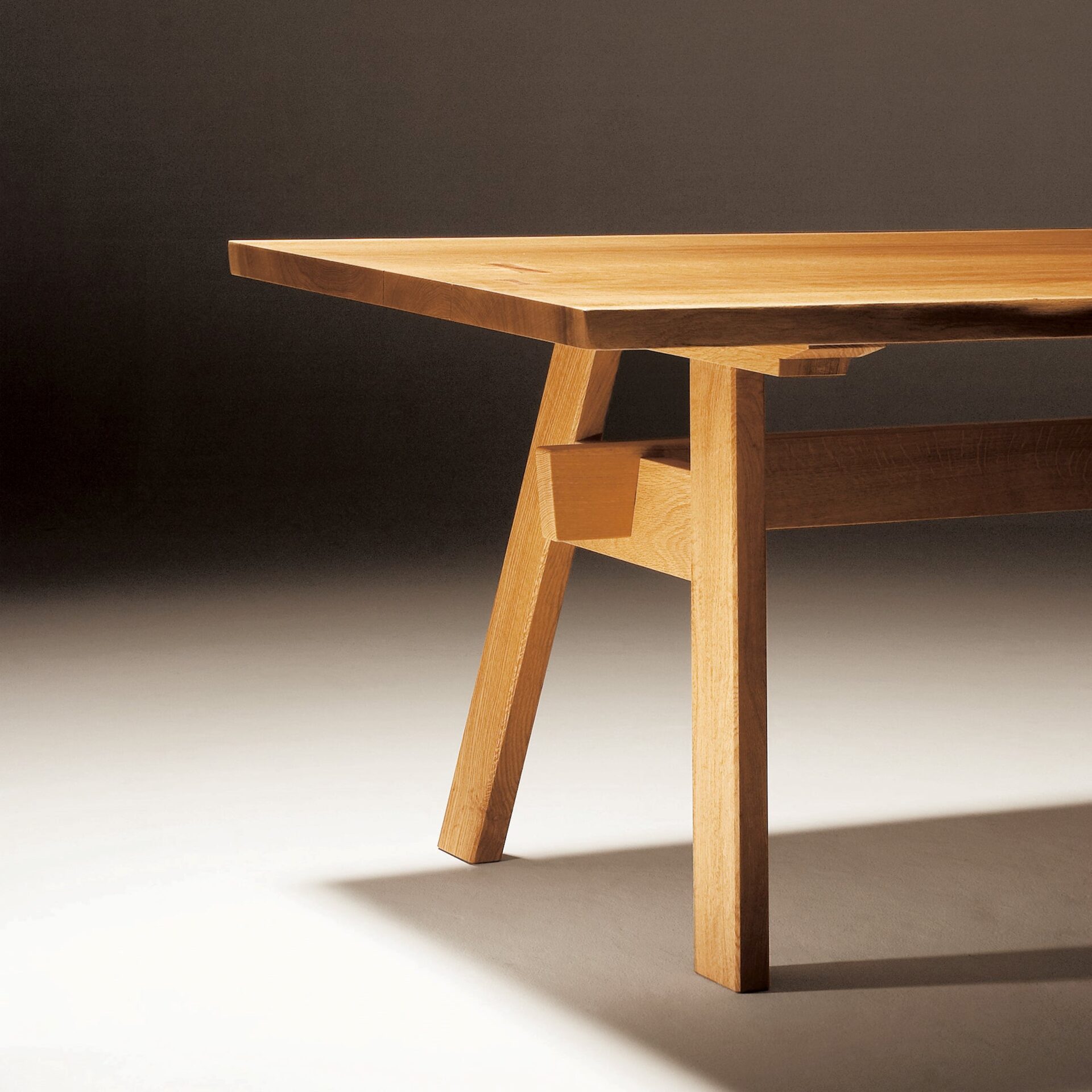
When we received this request for our IPPONGI collection, I realized that for our customers, this isn’t just furniture; it’s a birth certificate. IPPONGI isn’t made from lumber you find at a hardware store. We use trees that have stood for over a hundred years—sentinels that have witnessed empires fall and technology rise.
When you deal with a 100-year-old tree, you aren’t just looking at wood; you’re looking at a biography written in knots, cracks, and scars. Some of our most “enthusiastic” (or shall we say, obsessive) customers travel all the way to our factory in Asahikawa just to handpick their specific slab from the drying piles. They aren’t looking for perfection; they are looking for a soul that matches their own.
The “wood whisperers” of Asahikawa
In the hands of an amateur, a raw, knotty slab of wood often ends up as something “rustic and bulky”—the kind of furniture that looks like it belongs in a Viking mead hall. But at CondeHouse, we have a different ambition. We want to take that rugged, natural power and refine it into something delicate and sophisticated.
Before a single saw touches the wood, our master craftspeople engage in what I call “The Staring Contest.” They study the slab from every angle, touching the grain, whispering to the fibers, and trying to understand exactly how the tree wants to be transformed. It’s a process of getting to know the wood’s personality—including its stubbornness. This isn’t manufacturing; it’s a delicate negotiation between a 100-year-old stubborn spirit and a craftsman who refuses to settle for “good enough.”

The beauty of the “low grade”
Interestingly, the world is finally catching up to us. A few years ago, wood with heavy knots or cracks was considered “low grade” and thrown away. Today, those same features are the most sought-after qualities in high-end design.
We see this shift as a victory for environmental awareness, but also as a return to sanity. Respecting the forest means using the whole tree, scars and all. When we turn a “flawed” piece of timber into a masterpiece, we are extending its life for another century. We hope the family who asked us to engrave their names will keep adding new names for generations to come. After all, a table that has already lived 100 years in the forest is perfectly capable of surviving another 100 years of family dinners, spilled wine, and homework.
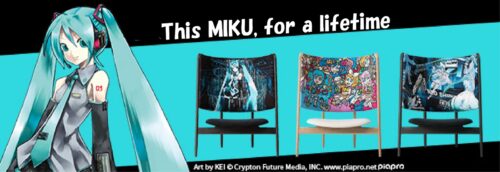
If the IPPONGI table is a 100-year biography of the forest, the Hatsune Miku Art Chair is a prologue to a digital future. Both share the same radical DNA: the belief that “character” is more important than “standardization.” Whether it’s the knots of an ancient oak or the pixels of a virtual icon, we treat every subject with the same artisanal reverence. You could say that sitting at an IPPONGI table in an Art Chair is the ultimate bridge between the deep past and the infinite future. Why settle for a generic home when you can surround yourself with stories that are—quite literally—engraved in history?

Shungo Ijima
Global Connector | Reformed Bureaucrat | Professional Over-Thinker
After years of navigating the rigid hallways of Japan’s Ministry of Finance and surviving an MBA, he made a life-changing realization: spreadsheets are soulless, and wood has much better stories to tell.
Currently an Executive at CondeHouse, he travels the world decoding the “hidden DNA” of Japanese culture—though, in his travels, he’s becoming increasingly more skilled at decoding how to find the cheapest hotels than actual cultural mysteries.
He has a peculiar talent for finding deep philosophical meaning in things most people ignore as meaningless (and to be fair, they are often actually meaningless). He doesn’t just sell furniture; he’s on a mission to explain Japan to the world, one intellectually over-analyzed observation at a time. He writes for the curious, the skeptical, and anyone who suspects that a chair might actually be a manifesto in disguise.
Follow his journey as he bridges the gap between high-finance logic and the chaotic art of living!