
The famous joke: When everyone else has already jumped
On a ship with people from various countries, you’re the first to notice the ship is sinking. What’s the perfect phrase to make them jump into the water?
- To Americans: “Jump, and you’ll be a hero!”
- To the British: “A true gentleman/lady would jump.”
- To the French: “Do not jump!”
- To the Germans: “The regulations say we must jump.”
- To the Japanese: “Everybody else has already jumped.”
This is a famous, and slightly painful, joke in Japan. It perfectly captures one of the most ingrained Japanese characteristics. In most schools, teachers tell us to behave the same as everybody else. At home, parents scold their kids, saying, “No one would do something like that!” (The only exception is when kids beg for the same things their friends have; then the parents inevitably respond, “Live and let live.”) Either way, we are raised under immense, constant peer pressure.
The COVID-19 experiment: Mutual monitoring in action
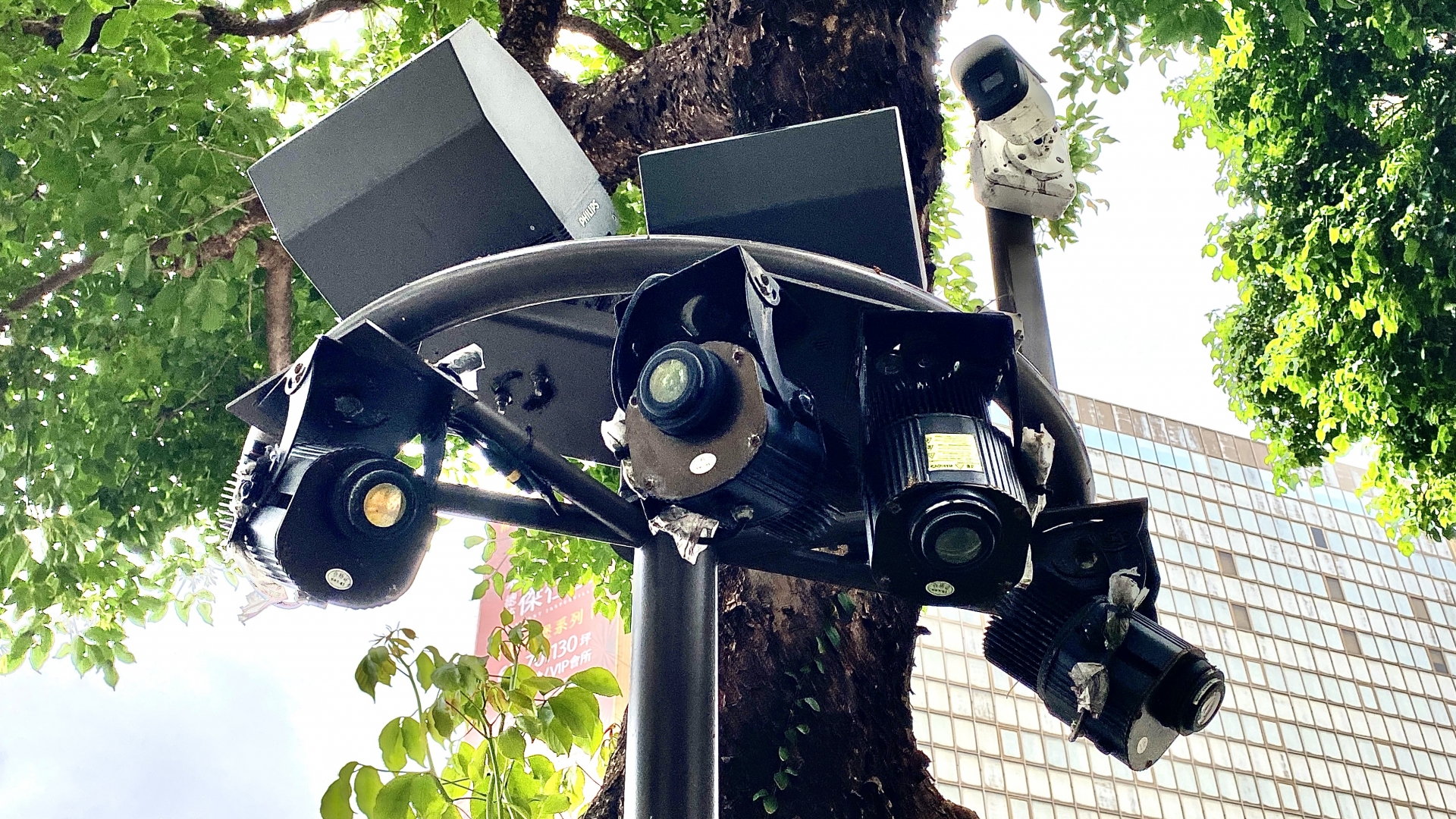
This pervasive pressure is a kind of embedded, decentralized control system. It’s like a soft version of George Orwell’s 1984, without the physical Big Brother.
To control the COVID-19 infection, many countries issued legally binding stay-at-home orders. Japan never imposed such legal restrictions, yet the number of infections remained surprisingly small. People outside Japan were curious about this “Japanese miracle.” The answer is simple: a mutual monitoring system driven by strong peer pressure.
Though there were no legal restrictions, shops and restaurants were harrassed to close during the peak period. The freedom to choose was exchanged for the pressure to conform. As the saying goes, the first casualty of war is freedom. In that sense, yes, the pandemic response was exactly a war—against freedom.
The double-edged sword: Quality vs. Creativity
Personally, I strongly dislike this kind of all-encompassing peer pressure embedded in Japanese society. But we must, on the other hand, acknowledge its immense advantage in one critical area: business and quality control.
This mutual monitoring system enables an exceptionally high level of quality control and meticulousness. This is why you can consistently count on the quality of Japanese products, even as Japan’s overall economic position has declined. You can see the consequences of this regime change in the global shift from giants like Japanese electronics and car manufacturers to new players like GAFA (Google, Apple, Facebook, Amazon). We gained quality assurance, but we sacrificed the radical creativity needed to lead the next era.
The CondeHouse anomaly: An exception to the rule
For most companies operating under this system, people like me—who tend to question the consensus and hate being monitored—are difficult to manage.
Surprisingly enough, CondeHouse still keeps me around, allows me to pursue my non-traditional marketing ideas, and has even promoted me and added me to the board members (though I suspect some of the older directors may regret it).
This suggests an anomaly. While we benefit from the national advantage of meticulous quality (the strength of peer pressure), we are actively fostering a creative environment by employing and empowering people who fight that pressure.
Therefore, you can expect a lot from us: both the traditional, meticulous Japanese quality you rely on, and the kind of unconventional creativity you usually wouldn’t expect from a traditional Japanese manufacturer.
I confess that I’m the kind of person who stays on the boat when everyone else has jumped—a nightmare for traditional managers, yet CondeHouse somehow made me a director. We’ve found a radical balance: using Japan’s famous peer pressure to ensure meticulous quality, while letting ‘misfits’ like me drive our creative spirit. Our Hatsune Miku Art Chair is the ultimate result of this anomaly—traditional perfection meets unconventional rebellion. Now, here is a choice only you can make: the image below is a link to our special site. If you prefer the safety of doing ‘what everyone else does,’ do NOT click it. But if you’re ready to see what happens when a Japanese maker stops following the rules and starts making history, go ahead. Be the first to jump. —— The Hatsune Miku Art Chair.


Shungo Ijima
Global Connector | Reformed Bureaucrat | Professional Over-Thinker
After years of navigating the rigid hallways of Japan’s Ministry of Finance and surviving an MBA, he made a life-changing realization: spreadsheets are soulless, and wood has much better stories to tell.
Currently an Executive at CondeHouse, he travels the world decoding the “hidden DNA” of Japanese culture—though, in his travels, he’s becoming increasingly more skilled at decoding how to find the cheapest hotels than actual cultural mysteries.
He has a peculiar talent for finding deep philosophical meaning in things most people ignore as meaningless (and to be fair, they are often actually meaningless). He doesn’t just sell furniture; he’s on a mission to explain Japan to the world, one intellectually over-analyzed observation at a time. He writes for the curious, the skeptical, and anyone who suspects that a chair might actually be a manifesto in disguise.
Follow his journey as he bridges the gap between high-finance logic and the chaotic art of living!
Comments
List of comments (6)
A very interesting comment on Japanese culture. As long time clients we are grateful for the creativity you bring to Conde House!
Thank you very much for your kind comment that really motivates me. I’ll keep on introducing Japanese culture, history, etc. that, I think, would entertain people outside. Please visit here at your convenience and feel free to leave any comments!
It’s always a delight reading your articles and learning more about your culture and the company. It always puts a smile to my face. Thank you!
Thank you very much for your message! I’m so glad to know that you enjoy my articles. Please feel free to leave your feedback like this, which motivates me a lot!
[…] having burst out to reveal an inconvenient truth of Japan in last journal, I’m going to write something good today. It’s about Japanese school lunch. I happened to find […]
[…] having burst out to reveal an inconvenient truth of Japan in last article, I’m going to write something good today. It’s about Japanese school lunch. I happened to find […]