
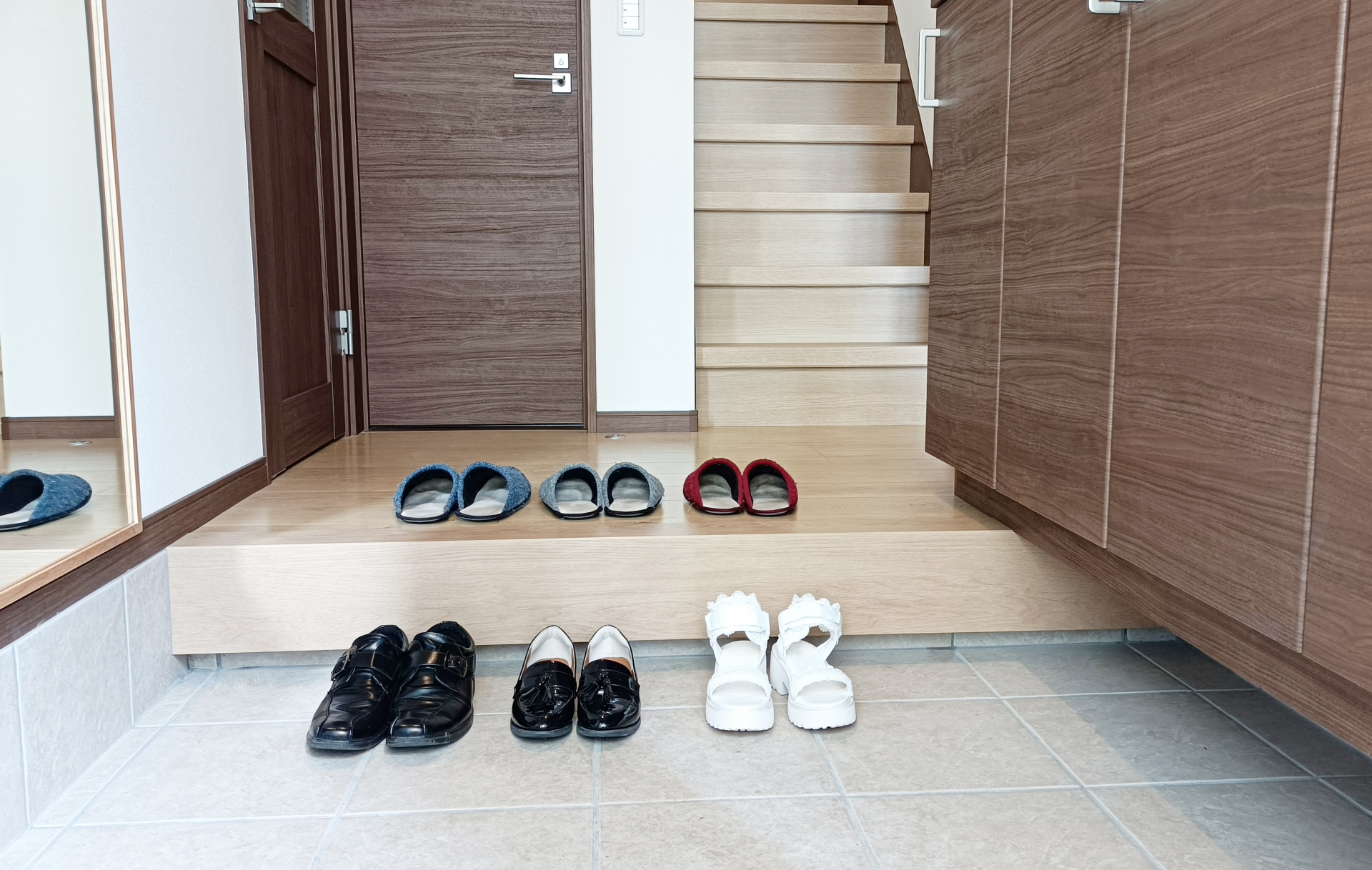
The unconscious act: Why we leave our shoes at the door
“Even if the shoe fits, take it off inside the house.”
In Japan, removing our shoes when entering a building is an almost unconscious ritual, as natural to us as breathing. To be honest, I had never truly questioned why we do this until I realized how many people outside Japan are genuinely curious about the reason.
Common theories often cited include:
- The high temperature and humidity of the Japanese climate.
- A unique culture of dividing the world into in-group (uchi) and out-group (soto).
- The ancient tradition of sleeping directly on the floor.
The first reason is weak; many humid Asian countries don’t strictly adhere to this rule. The second, while philosophically interesting, feels too remote. The third reason, however, stimulated my intellectual curiosity the most: We take off our shoes to keep the floor clean because we traditionally sleep on it. This simple, practical logic led me to the next question: Why did we start sleeping on the floor in the first place?
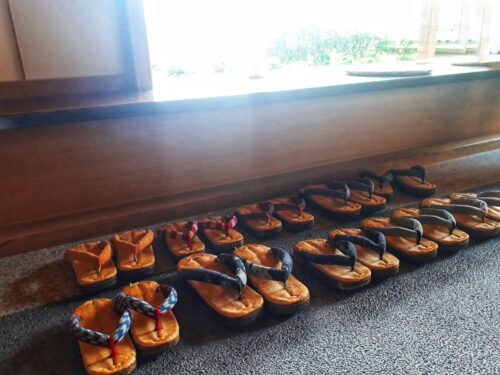
The simple truth: Wood, climate, and space efficiency
The reason we sleep on a Japanese futon directly on the floor (tatami) is rooted in two everlasting truths about Japan: its geography and its architecture.
- Wood and Warmth: As I wrote previously, about 70% of Japan’s land consists of forest. We’ve always had abundant wood to build houses. Crucially, wooden houses are warmer and softer underfoot than the stone or masonry structures common elsewhere. This made the floor a comfortable, viable sleeping surface, eliminating the immediate necessity for beds.
- Space Efficiency: Spreading out and folding up futons is far more space-efficient than placing large, permanent beds. In a country where land is scarce and houses are relatively small—a direct consequence of being a forest-covered, mountainous archipelago—space-efficiency has always been highly prioritized.
The logical chain is simple: Abundant Wood $\rightarrow$ Comfortable Floors –> Futons –> Need for a Clean Sleeping Surface –> No-Shoe Culture.
The unintended consequence: Lower furniture standards
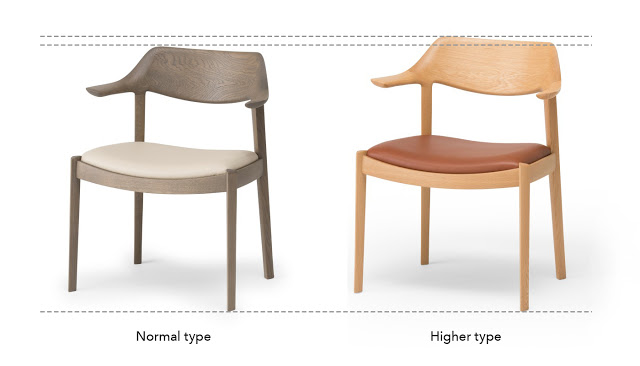
The true cultural impact of this “No-Shoe” tradition affects everything we design. Because our bodies and eyes are accustomed to being closer to the ground (sitting on tatami, sleeping on the floor), our standard heights for chairs and tables are naturally slightly lower than the global standard.
We often propose that our customers, even those abroad, try this cultural experiment: Take off your shoes and try our chairs and tables in our shops. You may discover that the subtle, lower height feels surprisingly calming and comfortable. You don’t have to adopt a no-shoe policy at home, of course; we offer global standard heights in all our collections.
Ultimately, when you buy a Japanese chair, you are buying furniture whose proportions were dictated by the floor on which a great Shogun (or a salaryman exhausted from the Tokyo commute) once sat.
I confess that I’m a man who follows the ‘no-shoe’ ritual as naturally as breathing, never questioning the logic until I saw the world from a higher perspective. Our culture of taking off shoes isn’t just about cleanliness; it’s a direct result of our 1,400-year love affair with wood and space-efficiency. This heritage is what gives Japanese furniture its unique, calming proportions. Our Hatsune Miku Art Chair is the high-art version of this logic—designed with a ‘grounded’ elegance that feels right whether you’re a shogun or a digital pioneer. Now, here is a sacred space where no shoes are required: the image below is your link to the special site. If you prefer furniture that doesn’t understand the soul of the floor, do NOT click it. But if you’re ready to feel the comfort dictated by a thousand years of ritual, go ahead. Step inside. —— The Hatsune Miku Art Chair.


Shungo Ijima
Global Connector | Reformed Bureaucrat | Professional Over-Thinker
After years of navigating the rigid hallways of Japan’s Ministry of Finance and surviving an MBA, he made a life-changing realization: spreadsheets are soulless, and wood has much better stories to tell.
Currently an Executive at CondeHouse, he travels the world decoding the “hidden DNA” of Japanese culture—though, in his travels, he’s becoming increasingly more skilled at decoding how to find the cheapest hotels than actual cultural mysteries.
He has a peculiar talent for finding deep philosophical meaning in things most people ignore as meaningless (and to be fair, they are often actually meaningless). He doesn’t just sell furniture; he’s on a mission to explain Japan to the world, one intellectually over-analyzed observation at a time. He writes for the curious, the skeptical, and anyone who suspects that a chair might actually be a manifesto in disguise.
Follow his journey as he bridges the gap between high-finance logic and the chaotic art of living!