
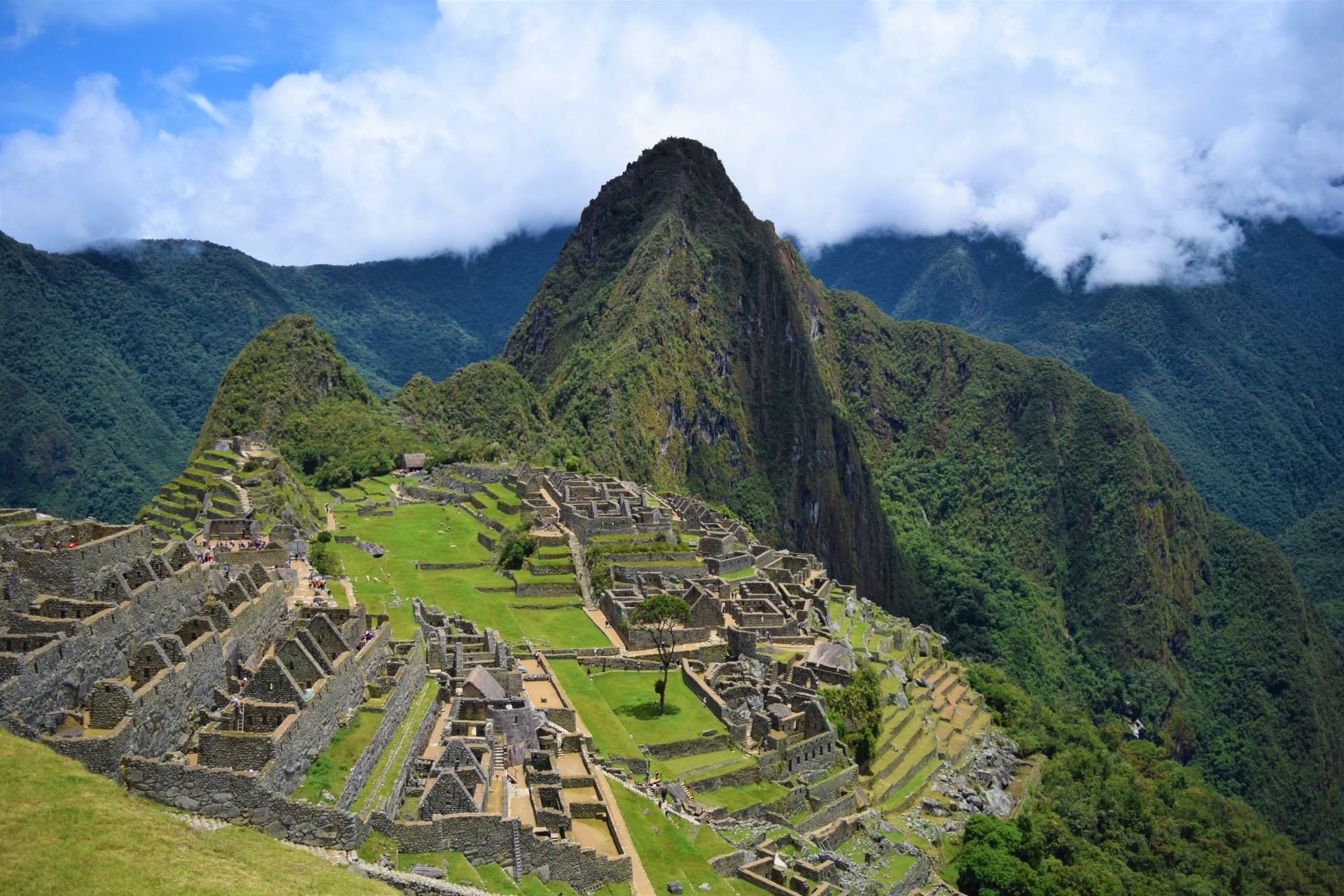
The cliché of the “self-discovery journey”
In Japan over the past decade, the “journey of self-discovery” has become something of a secular religion among young people. The ritual is almost always the same: quit your job, fly to Machu Picchu or some other world-renowned spiritual site, and return with a suitcase full of “life-changing” stories to post on social media.
To be honest, I’ve never liked the ambiguity of the phrase “finding oneself.” Are you looking for things you like? Things you want to do? With such a vague goal, you are bound to end up with vague results. These “ear-pleasing” terms allow people to feel like they’ve understood the essence of a thing when they haven’t even scratched the surface. In other words, using these words is easy; it allows your thinking to simply stop.
I know it sounds arrogant of me to criticize young people for taking the easy path—ignoring my own past mistakes. But perhaps this desire to preach is just one of the primary symptoms of getting older. Please, bear with the ramblings of an aging man and read on with a kind heart.
Experience is a teacher, not an identity
Why is this trend so popular? I believe it’s because we have drastically overestimated the value of “experience” for its own sake. People seem to think they can simply “buy” a personality through travel. But we should ask ourselves: is the experience itself really the big deal?
If the experience of travel truly contributed to one’s personal growth, one would think these travelers would at least develop enough intuition to notice the bored expressions their listeners are politely trying to hide during those endless “epic tales” of adventure.
What matters isn’t what you did, but what you learned from it. There’s an old saying that “experience is the best teacher for a fool.” Think about it: if you were diagnosed with cancer and needed surgery, would you demand a doctor who had experienced cancer themselves? Of course not. You would want the doctor who has spent 20 years in a windowless room studying how to save lives. One is an experience; the other is an identity built on mastery.

The frog in the well knows the depth of the blue
I’m not saying new experiences are useless. I’m saying that breadth is not the only way to find yourself. Depth is an equally valid—and perhaps more stable—alternative.
In Japan, there is a famous proverb: “The frog in the well knows nothing of the great ocean.” Most people use this to mock narrow-mindedness. But the full proverb continues: “…but it knows the blue of the sky.” This second half changes everything. It suggests that by staying in one place and looking deeply at one thing, you can perceive truths that someone constantly moving across the “great ocean” might miss.
Look at our craftsmen at CondeHouse. Many of them start their careers as woodworking specialists right after graduation. They don’t travel the world in search of their souls. Instead, they spend decades in the “well” of their workshop, masterfully working with wood. They aren’t lost; their identities are carved into the very furniture they create. They don’t need to go to Machu Picchu to find themselves—they find themselves every day in the grain of the oak and the edge of the chisel.
I confess that I’m wary of the ‘self-discovery journey’—because you don’t find your identity at Machu Picchu; you carve it out through years of quiet, dedicated work. At CondeHouse, our craftsmen don’t go looking for themselves in the great ocean. They are the ‘frogs in the well’ who have mastered the deep blue of the sky through the grain of Hokkaido wood. Our Hatsune Miku Art Chair is the ultimate result of this mastery. We didn’t just ‘experience’ a collaboration; we built an identity. It is a masterpiece where the ethereal spirit of a digital icon meets the profound depth of artisan skill. It’s not a souvenir from a trip; it’s a sanctuary of self discovered through decades of craft. Now, here is a portal to a depth you won’t find on a map: the image below is your link to the special site. If you prefer the vague, shallow stories of the ‘traveler,’ do NOT click it. But if you’re ready to own a truth carved in timber, go ahead. Dig deep. —— The Hatsune Miku Art Chair.


Shungo Ijima
Global Connector | Reformed Bureaucrat | Professional Over-Thinker
After years of navigating the rigid hallways of Japan’s Ministry of Finance and surviving an MBA, he made a life-changing realization: spreadsheets are soulless, and wood has much better stories to tell.
Currently an Executive at CondeHouse, he travels the world decoding the “hidden DNA” of Japanese culture—though, in his travels, he’s becoming increasingly more skilled at decoding how to find the cheapest hotels than actual cultural mysteries.
He has a peculiar talent for finding deep philosophical meaning in things most people ignore as meaningless (and to be fair, they are often actually meaningless). He doesn’t just sell furniture; he’s on a mission to explain Japan to the world, one intellectually over-analyzed observation at a time. He writes for the curious, the skeptical, and anyone who suspects that a chair might actually be a manifesto in disguise.
Follow his journey as he bridges the gap between high-finance logic and the chaotic art of living!
Comments
List of comments (2)
[…] journey itself is worthless, which is a part of the subject of my previous article. As some of the readers may notice, it is inspired by the words of Marcel Proust (the above image […]
[…] journey itself is worthless, which is a part of the subject of my previous article. As some of the readers may notice, it is inspired by the words of Marcel Proust (the above image […]