

The ritual of the commuter train
Have you ever experienced the morning commuter rush in Tokyo? If not, consider yourself blessed. For three years, I endured this daily ritual of “human Tetris.”
For those who have seen it, you know this is not a metaphor—it is a literal description. In the morning rush, a commuter is no longer a human being; they are simply a Tetris block being jammed into a train. There is no doubt that the famous Japanese sense of “resignation” (Teikan) is cultivated here. I half-seriously believe that many Japanese companies in Tokyo are pushing to abolish remote work just to force their employees back into these Tetris molds, making them easier to control.
On every Japanese train platform, the door positions are marked precisely on the ground. And the trains stop at those exact spots, every single time, with surgical precision. Every morning, long, silent queues form at these marks. And here is the strange part: the faces in my queue were almost always the same. I stood in the exact same spot, next to the exact same people, every single day. In a couple of months, I remembered their faces, came to feel like we were a team, and even worried if there was someone who was no-show in a while. Was there a rational reason? Did that specific door offer a faster exit? No. I was simply a prisoner of the Status Quo Bias. It turns out, human beings don’t just dislike change—we are evolutionarily terrified of it.
The survival of the cautious
We often lionize the “innovators,” the “reformers,” and the “first penguins” who dive into icy waters. But from an evolutionary perspective, the first penguin is often the one that gets eaten by the leopard seal.
Our brains are designed to prioritize the avoidance of loss over the acquisition of gain. Why? Because in the wild, a missed gain means you’re hungry, but a realized loss means you’re dead. This “self-defense instinct” makes 95% of us stay in the same queue, eat at the same restaurants, and stick to the same social norms.
But here is my “sophistry” for the day: A society made entirely of innovators would collapse in a week. We need the conservative majority to provide the “objects” for the reformers to change. Without the resilient, stubborn foundation of the status quo, innovation has nothing to grip onto. Resilience comes from the balance between the gas pedal and the brakes.
The tie and the turtleneck
At CondeHouse, we are—at our core—a conservative bunch. Let’s face it: furniture manufacturing is an ancient craft. Most of our directors still show up in crisp suits and ties, looking more like bankers than Silicon Valley rebels in black turtlenecks and jeans.
However, there is a method to this moderation. While we maintain the “Status Quo” of craftsmanship and traditional aesthetics, our leadership is obsessively adopting the latest technologies and business schemes behind the scenes. We are a “First Penguin” dressed in a conservative suit.
This balance is why we have survived for over 50 years. We don’t change for the sake of changing, but we aren’t afraid to evolve when the leopard seal is actually at the door. After all, the best way to survive the “commuter rush” of the global market is to know exactly which line to stand in—and exactly when to jump to the next one.
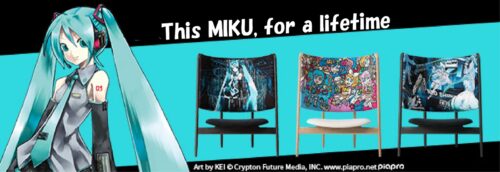
Our “Hatsune Miku Art Chair” is the perfect embodiment of this balance. At first glance, it is a “reformist” piece—a bold leap into digital pop culture. But look closer, and you will see the “conservative” soul of Asahikawa craftsmanship: the joinery, the finish, and the timeless comfort that hasn’t changed in decades. It is a chair for those who appreciate the stability of tradition but aren’t afraid to stand in a new kind of queue. Why not add a piece to your home that celebrates both the safety of the status quo and the thrill of the new? Just like a perfect Tetris fit, it’s a design that belongs exactly where you put it.

Shungo Ijima
Global Connector | Reformed Bureaucrat | Professional Over-Thinker
After years of navigating the rigid hallways of Japan’s Ministry of Finance and surviving an MBA, he made a life-changing realization: spreadsheets are soulless, and wood has much better stories to tell.
Currently an Executive at CondeHouse, he travels the world decoding the “hidden DNA” of Japanese culture—though, in his travels, he’s becoming increasingly more skilled at decoding how to find the cheapest hotels than actual cultural mysteries.
He has a peculiar talent for finding deep philosophical meaning in things most people ignore as meaningless (and to be fair, they are often actually meaningless). He doesn’t just sell furniture; he’s on a mission to explain Japan to the world, one intellectually over-analyzed observation at a time. He writes for the curious, the skeptical, and anyone who suspects that a chair might actually be a manifesto in disguise.
Follow his journey as he bridges the gap between high-finance logic and the chaotic art of living!
Comments
List of comments (2)
[…] no such destiny in our buying behavior. It’s confirmation bias. Me? Of course, always biased, the same as before. I have been trading stocks for years. In most cases when I place orders, I feel like I found secret […]
[…] I wrote something about the president of the company. He seems to read it and have no complaints (at least) so far. Next time I’ll write the […]