
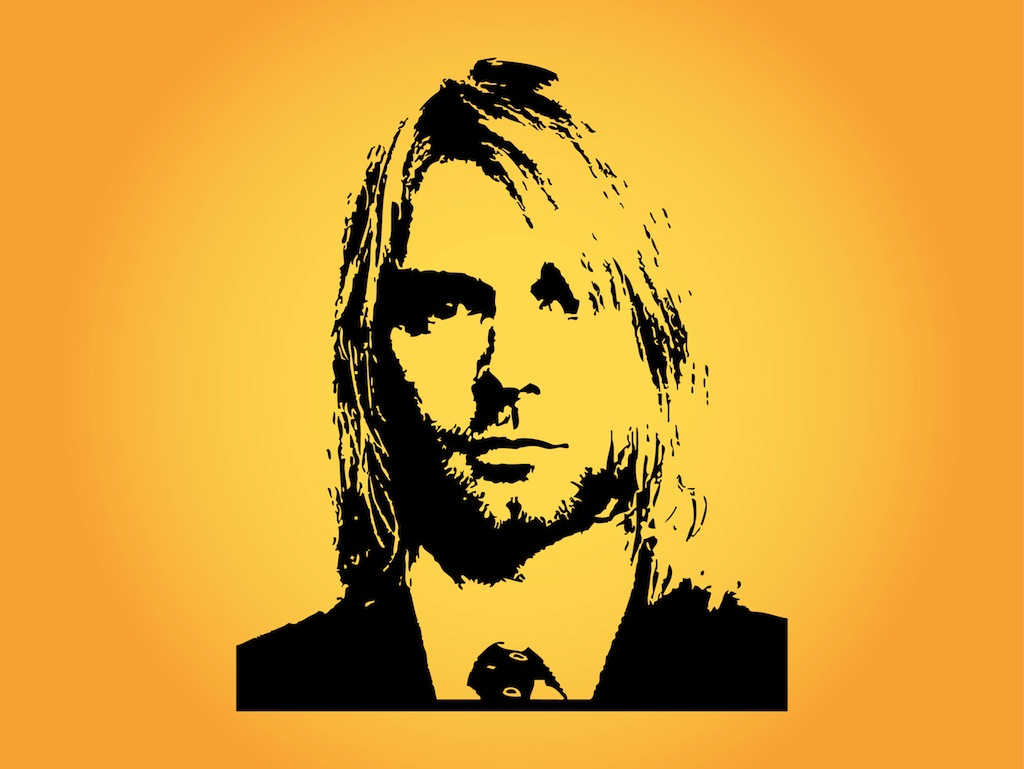
The Dday the music (and the records) died
I grew up in a house filled with the Beatles, thanks to my mother’s obsession. I still vividly remember the day I decided it would be a good idea to use her precious LPs as target practice with my airsoft gun. My friends and I had made a thrilling discovery: when you shoot a vinyl record with a BB gun, it leaves a perfectly clean, satisfying hole. We were high-fiving each other, convinced we were absolute geniuses for finding the world’s best targets—right up until the moment my mother found out. The look on her face? Let’s just say it was like a demon crawling out of the deepest pits of hell.
While my elementary school classmates were swooning over Japanese pop idols, I was diving headfirst into British Heavy Metal and LA Metal. But then, Nirvana arrived. For my generation, their impact wasn’t just a change in the music scene; it was a cultural extinction event. It was “destructive creation” in its rawest form.
The rebellion against the rebels
Before Nirvana, rock stars were gods. They wore spandex and sequins, played lightning-fast guitar solos, and lived in a glamorous world far removed from our own. They were the “Anti-Establishment,” yet they had their own rigid set of rules. Nirvana blew that door off its hinges by taking an anti-establishment stance against the anti-establishment icons themselves.
They appeared on stage in rags, played off-key, and looked like they had just rolled out of bed. Ironically, by refusing to “perform” in the traditional sense, they gave the final blow to rock as a high art form. Rock was dead, replaced by a raw, messy honesty.
At the time, I was electrified. But today, I find myself feeling a strange nostalgia for the “Pre-Nirvana” era—a time when people actually cared about the technical mastery of their craft. Looking back calmly, I realize Nirvana used a “forbidden move.” If you’re going to deny the existing showbiz that much, you should technically deny the very act of performing for an audience. If they had declared, “We won’t release CDs and we’ll only play in the depths of a cave where no one can hear us,” that would be true rock ‘n’ roll. In that sense, the Neanderthals who painted the walls of the Lascaux caves might be more “rock” than Nirvana. (As usual, my penchant for over-thinking has led me to a rather ridiculous conclusion.)
Back to the basics: The rebellion of quality
It’s easy to create something “new” by simply setting fire to the existing order. Anyone can smash a guitar. What is truly difficult—what is actually “rebellious” in today’s world—is to stick to the authentic, the conservative, and the high-quality.
In the modern business world, we are constantly bombarded with “grunge-like” management trends: agile this, disruptive that, new marketing hacks, and revolutionary HR methods. We’ve introduced many of these changes at CondeHouse to survive, and we should always abolish bad traditions. But beneath the noise, I still believe that craftsmanship and product quality are the only things that build true confidence. In an age where “being messy” is a style, being meticulously perfect is the ultimate act of rock ‘n’ roll. We don’t want to be the band that plays out of tune just to look cool; we want to be the master guitarists who spend years perfecting a single note. Because at the end of the day, people don’t sit on a “disruptive concept”—they sit on a chair.
Hatsune Miku might be the ultimate symbol of the post-Nirvana digital age—a star who exists entirely beyond the traditional “rock star” physical form. But at CondeHouse, we’ve taken this digital icon and applied the “Pre-Nirvana” obsession with technical perfection. The Hatsune Miku Art Chair is our way of saying that even a futuristic legend deserves the soul of a master craftsman. It’s not just a piece of “destructive creation”; it’s a meticulously polished statement that quality still matters, even in a virtual world. Why settle for rags when you can sit on a masterpiece of digital glamour?
Ready to witness the ultimate comeback of craftsmanship in a digital age? Click the banner below to see where virtual style meets old-school perfection.


Shungo Ijima
Global Connector | Reformed Bureaucrat | Professional Over-Thinker
After years of navigating the rigid hallways of Japan’s Ministry of Finance and surviving an MBA, he made a life-changing realization: spreadsheets are soulless, and wood has much better stories to tell.
Currently an Executive at CondeHouse, he travels the world decoding the “hidden DNA” of Japanese culture—though, in his travels, he’s becoming increasingly more skilled at decoding how to find the cheapest hotels than actual cultural mysteries.
He has a peculiar talent for finding deep philosophical meaning in things most people ignore as meaningless (and to be fair, they are often actually meaningless). He doesn’t just sell furniture; he’s on a mission to explain Japan to the world, one intellectually over-analyzed observation at a time. He writes for the curious, the skeptical, and anyone who suspects that a chair might actually be a manifesto in disguise.
Follow his journey as he bridges the gap between high-finance logic and the chaotic art of living!