
The art of the daily routine: Why Sado is genius
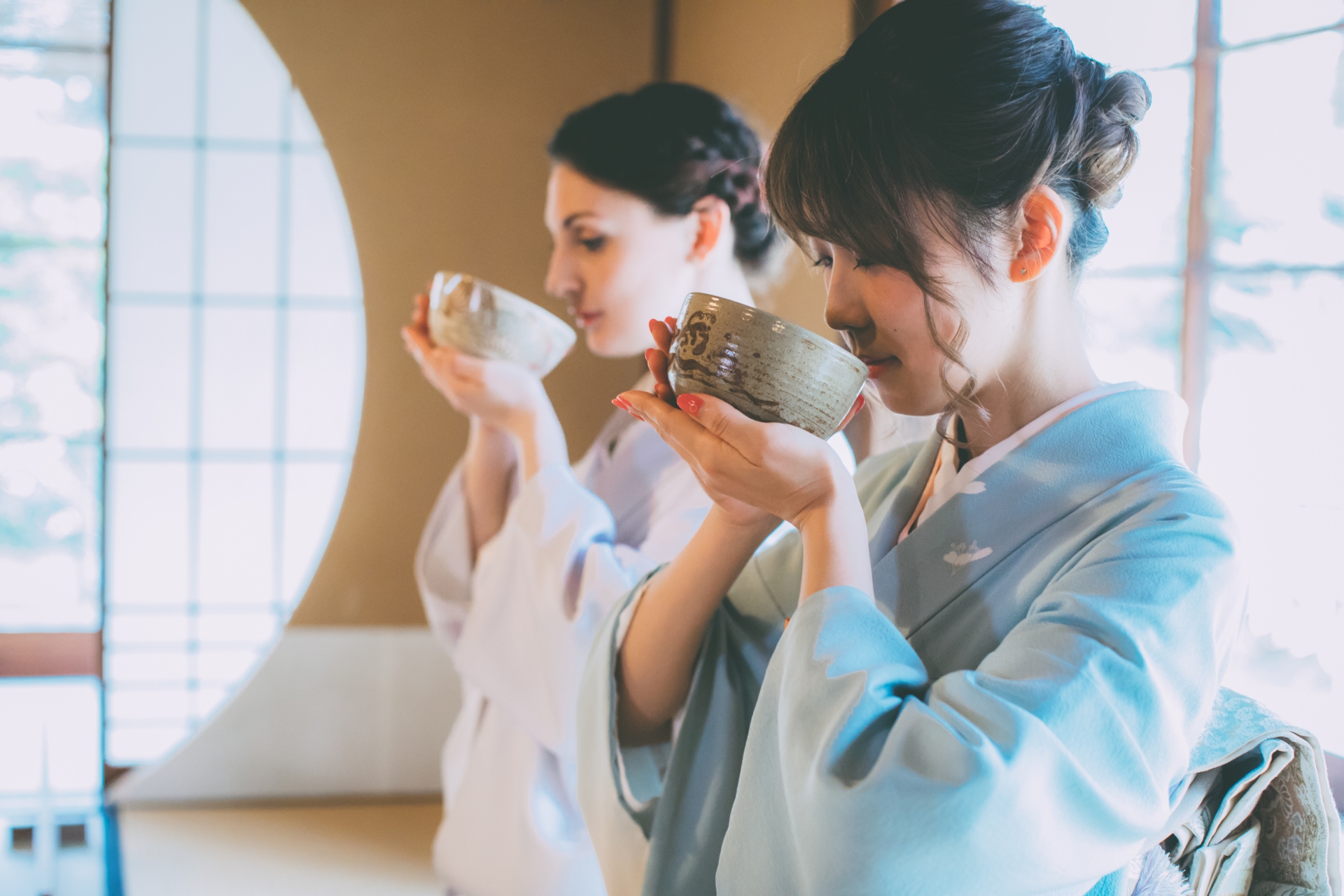
Have you ever experienced a Japanese tea ceremony (Chadō or Sadō)? Me? Never, though I’ve been Japanese since I was born. The most notable feature of Sadō is its formalized beauty. In essence, it is simply a ceremony where a host makes powdered green tea (matcha) and guests drink it. What makes it unique is that every single move of making and drinking tea is strictly prescribed.
The ceremony originated in the 15th century, with a major merchant developing the basic style in the 16th century. Though I haven’t experienced it, I am utterly amazed by the creativity of that merchant. Let me reiterate: It’s just making and drinking tea.
The merchant must have been a true genius to elevate such a daily routine up to a stylized, spiritual ceremony—even taking into account that he didn’t have the distractions of PlayStation or YouTube to fill his time. For example, I frequently have munchies. To be honest, I’ve even imposed a strict personal rule of enjoying something sweet after every single dinner, despite the occasional lecture from my wife. But I just gobble up my chocolates and cookies and have never once thought to stylize the act of snacking.
The core of mindfulness: Seeing things as they are
The Japanese tea ceremony is always associated with the Zen Spirit. These days, the Zen Spirit seems to be gaining popularity, particularly in Silicon Valley, as the origin of “Mindfulness.”
It is admittedly very difficult to explain what the Zen Spirit truly is, so let me try a different approach. Look at these words:
“Is this the real life? Is this just fantasy?”
Most of you probably had the word “Bohemian Rhapsody” or the iconic image of four faces in the darkness pop into your head instantly. If you aren’t a music fan, you might have recoiled, thinking, “That’s a heavy philosophical question to throw at me out of nowhere.”
In either case, you aren’t seeing the words; you are seeing “meaning.” To see things “as they are” is to recognize that what is actually in front of you is simply a collection of pixels—straight lines and curves arranged on a screen (what we call letters).
Humans are biologically designed to perceive the world through the lens of “meaning” and time as a continuous “flow.” Even when we try to look at reality, our view is perpetually clouded by memory and anticipation. We aren’t seeing the present; we are seeing a cocktail of the Past + Present + Future. The Zen Spirit is the disciplined effort to reduce this mental mixing and see the world without the filter of our own subjective storytelling.
The grand contradiction: Seeing everything in nothing
Although it may sound contradictory to the objective stance mentioned above, imagination—the ability to see “everything in nothing”—is the other essential pillar of the Zen Spirit. This is where the profound paradox lies: After you strip away the habitual “meaning” to see the reality, you gain the freedom to intentionally use your imagination to find the essence.
Let me tell you a famous story about this. One day, a powerful Shogun visited a merchant’s garden, having heard that the morning glories were in peak bloom. He expected to see a spectacular field of flowers, but to his anger, he found that every single plant had been mown down. However, when he entered the small tea cabin, he found a single, perfect morning glory placed in a vase.
The Shogun was moved. He realized that the vast field of flowers, stirred up in his mind by that one perfect blossom, was far more beautiful than the physical field itself. This is the Zen logic: by simplifying the physical world, we expand the spiritual one.
The Zen of furniture: Simple beauty, vast imagination
Where does this exploration of Zen’s two contradictions lead us? It leads back to our furniture.
Our products are intentionally minimal. We hope the Zen Spirit in you will allow you to look at our furniture not as just wood and fabric, but as a “single morning glory”—a quiet, objective presence that allows your imagination to supply the rest. If you can see the beauty of an entire forest in the curve of a single wooden armrest, then we have succeeded.
I may still be a man who lacks the discipline to turn snacking into a ceremony—I just see cookies and eat them—but I’ve finally found a way to let Zen into my living room without giving up my munchies.
Our Hatsune Miku Art Chair is the ‘single morning glory’ of the furniture world: a masterpiece that invites you to see an entire digital forest in its clean curves. We’ve stripped away the noise so you can find the essence, proving that even a snack-gobbling mortal can appreciate the beauty of ‘seeing things as they are.’
I invite you to click the banner below to step into our special website, a space where digital legend meets Zen tranquility. Sit down, quiet your mind, and let your imagination do the rest. (Just try to keep the cookie crumbs off the Zen.)—— The Hatsune Miku Art Chair.


Shungo Ijima
Global Connector | Reformed Bureaucrat | Professional Over-Thinker
After years of navigating the rigid hallways of Japan’s Ministry of Finance and surviving an MBA, he made a life-changing realization: spreadsheets are soulless, and wood has much better stories to tell.
Currently an Executive at CondeHouse, he travels the world decoding the “hidden DNA” of Japanese culture—though, in his travels, he’s becoming increasingly more skilled at decoding how to find the cheapest hotels than actual cultural mysteries.
He has a peculiar talent for finding deep philosophical meaning in things most people ignore as meaningless (and to be fair, they are often actually meaningless). He doesn’t just sell furniture; he’s on a mission to explain Japan to the world, one intellectually over-analyzed observation at a time. He writes for the curious, the skeptical, and anyone who suspects that a chair might actually be a manifesto in disguise.
Follow his journey as he bridges the gap between high-finance logic and the chaotic art of living!