
The two-handed test: Why I am not a genius
Try this simple coordination test: Move your right hand up and down while simultaneously moving your left hand back and forth. Can you do it smoothly and easily? If so, you possess a genius level of body control. I often ask this of guests during our factory tours, and I have yet to see anyone succeed effortlessly—including myself. I certainly wouldn’t say I’m clumsy, but I am a cerebral person; my body operates on a slight, perpetual time delay.
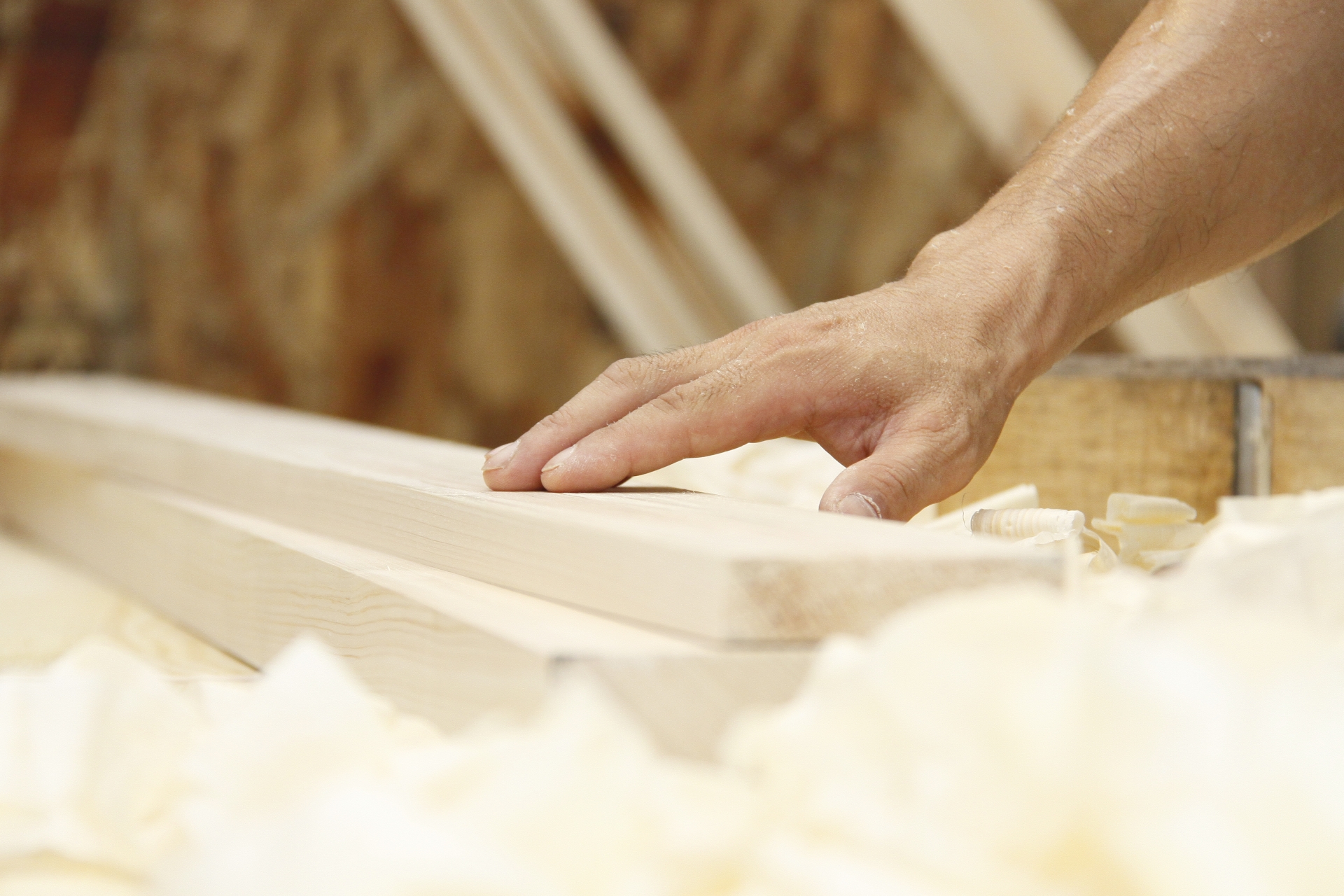
Yet, this exact, bizarre motion is performed constantly by our craftspeople when surface-finishing a tabletop board using a wide belt sander. The sander is a powerful machine. The craftsperson presses the sanding belt onto the board with their right hand (for pressure control) while moving the board platform back and forth with their left hand (for positioning). Not only must they maintain perfect, coordinated movement, but they must judge the final smoothness entirely by the sense of touch.
The grotesque truth: The Penfield Homunculus
Why is the sense of touch so critical?
Have you ever encountered the Penfield Homunculus? If not, search for the image now. It is a standard model illustrating how the human brain allocates cortical space to different body parts for sensory and motor control. The resulting image is a grotesque, creepy, human-like figure—a body with hilariously huge lips, a massive tongue, and enormous, bulging hands.
When I first saw this model, I was genuinely surprised. Like most people, I assumed we navigated and “saw” the world primarily with our eyes. The homunculus reveals the truth: the information derived through the sense of hand touch is far more important to our brain than many of us realize.
The micron test: Hands as sensors and tools

The power of the hand is not just theoretical; it’s a competitive advantage for Japanese manufacturing.
I was once told a story about a small mold factory in Japan where the maximum tolerance for their precision molds is about 1 micron (1/1000 mm). And this precision is verified, not by expensive laser equipment, but by the sense of hand touch of the master craftsman. To my untrained eye, their molds look perfectly smooth even before final polishing.
Furthermore, our hands are superior not only as sensors but also as tools. We can effortlessly hold objects of vastly different intensity—a delicate cream puff and a heavy stone—together at the same time. This is incredibly difficult for robot hands, which require multiple sensors and pre-programmed data for every single object they handle. Our hands perform this complex, multi-variable calculus every single day.
Just like the legendary mold factory, it is the sense of hand touch of our craftspeople that ultimately determines the quality of our products. Their massive homunculus-hands are our quality control.
In order for high-quality things to be fully appreciated, however, your keen sense of hand touch is also necessary. That instinctive urge: “Seeing something and wanting to touch it”—that is the highest compliment we can receive. It signals a design and quality level that transcends the visual. Please confirm the truth of the Penfield Homunculus with your own hands at a shop near you.
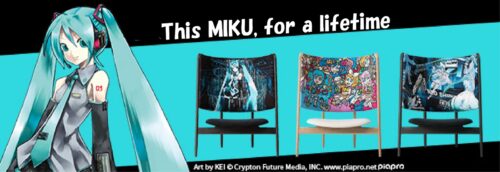
I confess that I used to trust my eyes more than my hands—until I saw the ‘grotesque’ truth of the Penfield Homunculus and realized our brains are wired to prioritize touch. At CondeHouse, our quality control isn’t just about high-tech lasers; it’s about the massive, sensitive ‘homunculus hands’ of our craftsmen who can feel a single micron of difference. Our Hatsune Miku Art Chair is a visual masterpiece, yes—but its true soul lies in the silk-smooth finish that your fingers will crave. It is a design that compels you to reach out and touch it, bypassing the eyes to speak directly to your brain. Now, here is a portal to a sensory experience that transcends the screen: the image below is your link to the special site. If you prefer the cold, flat sterility of a life without touch, do NOT click it. But if you’re ready to let your hands discover the truth of Hokkaido craftsmanship, go ahead. Feel the soul. —— The Hatsune Miku Art Chair.

Shungo Ijima
Global Connector | Reformed Bureaucrat | Professional Over-Thinker
After years of navigating the rigid hallways of Japan’s Ministry of Finance and surviving an MBA, he made a life-changing realization: spreadsheets are soulless, and wood has much better stories to tell.
Currently an Executive at CondeHouse, he travels the world decoding the “hidden DNA” of Japanese culture—though, in his travels, he’s becoming increasingly more skilled at decoding how to find the cheapest hotels than actual cultural mysteries.
He has a peculiar talent for finding deep philosophical meaning in things most people ignore as meaningless (and to be fair, they are often actually meaningless). He doesn’t just sell furniture; he’s on a mission to explain Japan to the world, one intellectually over-analyzed observation at a time. He writes for the curious, the skeptical, and anyone who suspects that a chair might actually be a manifesto in disguise.
Follow his journey as he bridges the gap between high-finance logic and the chaotic art of living!