
The Hemingway hallucination
In Japan, there is a famous quote often attributed to Ernest Hemingway: “When you can’t catch fish, think of it as time granted to contemplate life.” As it turns out, no one can actually prove he said it. In truth, as I stand there, my mind is less occupied by the meaning of life and more by the pressing existential question of whether or not I should open the bag of snacks I brought. But for a frustrated angler like me, standing by a river in Hokkaido with an empty bucket and a bruised ego, the origin doesn’t matter. It’s a necessary psychological defense.
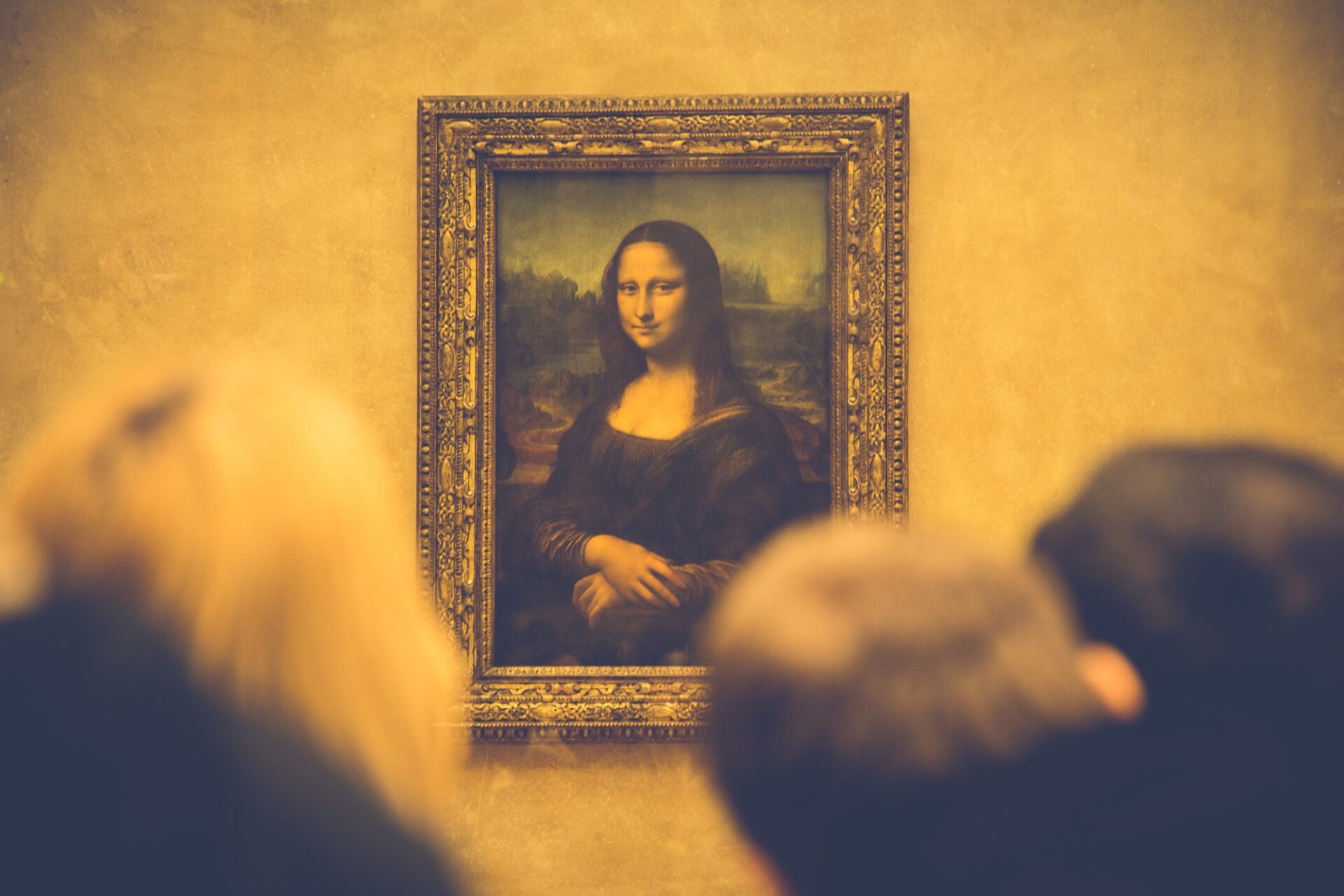
While I pretend to be a philosopher to mask my incompetence, I can’t help but think of a real genius: Leonardo da Vinci. When Leonardo stared at a river, he didn’t just see “no fish.” He saw the complex, swirling patterns of vortices—the birth of fluid mechanics. It is a humbling reminder of the gap between the ordinary and the extraordinary: I see a lack of dinner; he sees the laws of the universe.
The vortex in the heart
Einstein once claimed, “Genius is 1% talent and 99% hard work.” I suspect he was just being polite. He probably couldn’t fathom how the rest of us can stare at a vortex for an hour and only think about sandwiches. It seems that while we ordinary people are too shallow to recognize our own shallowness, our shallowness is equally invisible to a genius. The gap between us is a blind spot for both parties.
Leonardo, however, took those river observations and applied them to the human body. He hypothesized that heart valves were opened and closed by the subtle vortexes of blood flow—a theory that wasn’t scientifically proven until centuries later. From these insights, he concluded: “Human subtlety will never devise an invention more beautiful, more simple, or more direct than does nature, because in her inventions nothing is lacking, and nothing is superfluous.” In other words, nature is a far better designer than any human could ever hope to be.
The “Flaws” of a natural masterpiece
This brings me to the wood we handle at CondeHouse. Wood is filled with what some call “imperfections”—knots, burls, and erratic grain patterns. In the modern world, these are often seen as “defects.”
But if we follow Leonardo’s logic, these figures are nature’s own inventions. They are the record of a tree’s struggle against the wind and time. Our craftsmen spend hours debating how to showcase these pieces. We hope our customers can view a knot in a table not as a “mistake,” but as a “vortex of history” captured in timber. After all, if nature’s inventions are never superfluous, then that knot in your dining table is exactly where it’s supposed to be—even if my fishing hook isn’t.
Leonardo da Vinci believed that no human invention could ever be as beautiful or direct as nature. The Hatsune Miku Art Chair is our playful attempt to test that theory. It takes a digital icon—an invention of human subtlety—and frames her within the “superfluous-free” beauty of Hokkaido wood. It is a collaboration between the virtual vortex of 21st-century culture and the ancient, perfect geometry of the forest. By sitting in this chair, you are witnessing a dialogue between human imagination and natural perfection. Even for those of us who spend more time thinking about snacks than science, the beauty of this fusion is undeniable.
Ready to see if our ‘human subtlety’ has finally caught up to nature? Click the banner below to explore the world where digital art meets the flawless craftsmanship of the forest.


Shungo Ijima
Global Connector | Reformed Bureaucrat | Professional Over-Thinker
After years of navigating the rigid hallways of Japan’s Ministry of Finance and surviving an MBA, he made a life-changing realization: spreadsheets are soulless, and wood has much better stories to tell.
Currently an Executive at CondeHouse, he travels the world decoding the “hidden DNA” of Japanese culture—though, in his travels, he’s becoming increasingly more skilled at decoding how to find the cheapest hotels than actual cultural mysteries.
He has a peculiar talent for finding deep philosophical meaning in things most people ignore as meaningless (and to be fair, they are often actually meaningless). He doesn’t just sell furniture; he’s on a mission to explain Japan to the world, one intellectually over-analyzed observation at a time. He writes for the curious, the skeptical, and anyone who suspects that a chair might actually be a manifesto in disguise.
Follow his journey as he bridges the gap between high-finance logic and the chaotic art of living!
Photo Credit: https://www.nature.com/articles/d41586-019-02144-z