
The “lethal” hot springs of the west
If I asked you which country has the most hot springs, you’d probably guess Japan. I’m sorry to disappoint you, but it’s actually the USA, with Japan coming in second. Yellowstone National Park (YNP) is packed with them.
However, there’s a catch. While a Japanese onsen is designed to “spoil” you with relaxation, the springs in YNP will literally spoil your body—as in, dissolve it. Most of them are so acidic they’re essentially vats of boiling battery acid. If we limit the ranking to “Hot Springs You Can Enjoy Without Dying,” Japan is the undisputed No. 1.
The first rule of onsen club: Bathe three times
To truly master the onsen experience, you must follow the rule of three. We bathe at least three times during a one-night stay: immediately after check-in, before bed, and right after waking up. This ensures you witness the sunset, the starlit sky, and the sunrise—all while being poached like a happy egg.
Here is the “official” (and impressively non-productive) itinerary of a Ryokan guest:
- Check-in
- Bath #1
- Lying horizontally on the tatami floor until your spine feels like jelly.
- Dinner (a feast of legendary proportions)
- A slow, aimless waddle outside.
- Bath #2
- Sleep
- Wake up & Bath #3
- Breakfast & Check-out
It is a lifestyle that contributes absolutely nothing to society, and it is glorious. While private baths are increasing, the traditional communal bath remains the standard. Some may feel hesitant, but there is a profound liberation in collective nudity—a shedding of the “curses” of modern efficiency and social status.
In the Edo period, Japan had a rigid class system (Shi-no-ko-sho). In any era, clothing is the primary tool for displaying one’s rank to the world. By removing it, people could experience a temporary, egalitarian world. Even the Samurai, who stood at the top of the hierarchy, supposedly cherished public baths as a rare sanctuary where they could escape the heavy burdens of their status. In that sense, an onsen isn’t just a place to be lazy; it’s a machine that resets us to our primal, naked selves. When you visit Japan, I urge you to cast aside your inhibitions and experience this “Enlightenment through hot water.”
Time travel in a bathrobe
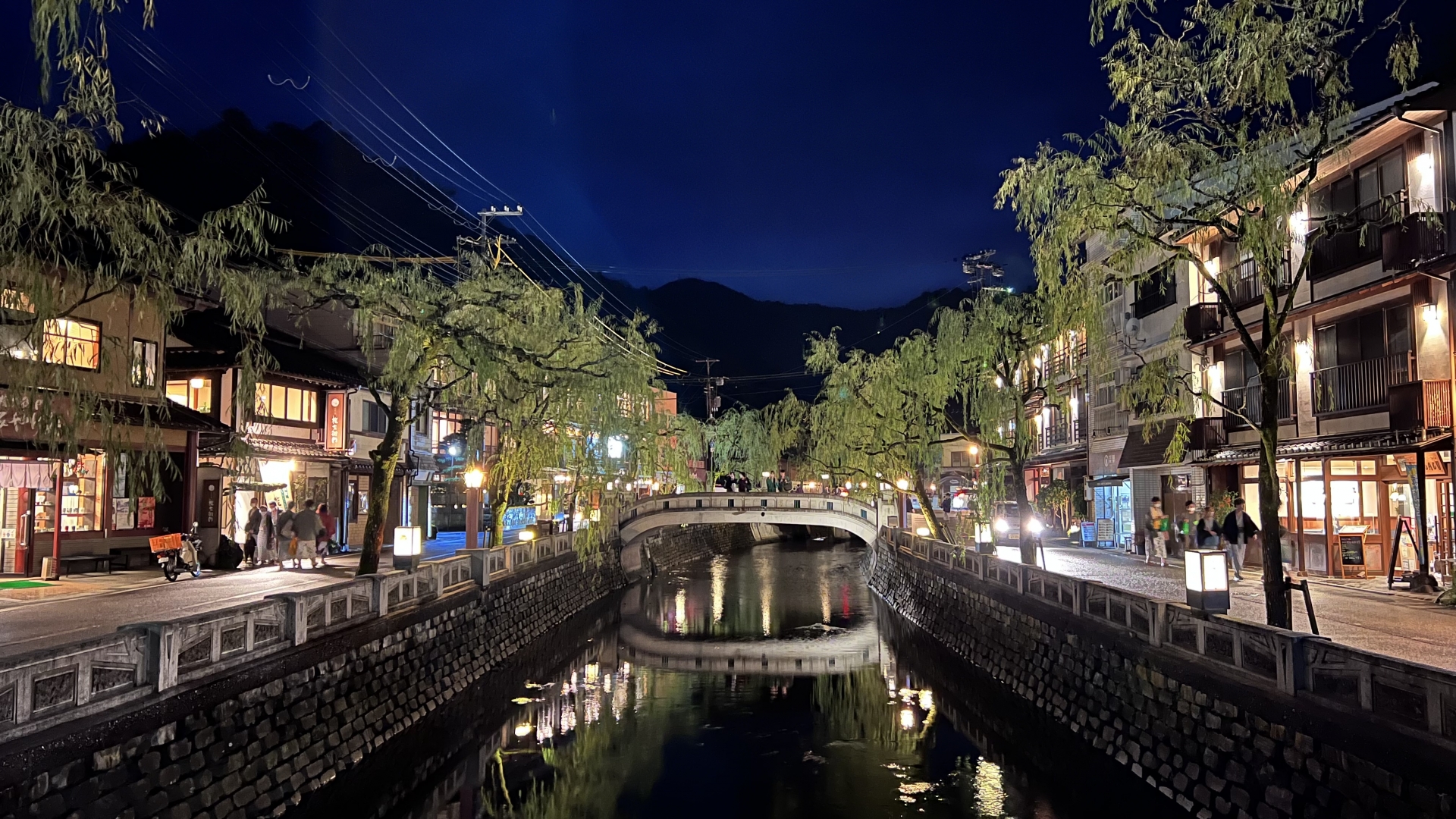
The only exception to this productive vacuum is the “Yukata Waddle.” Walking through a traditional streetscape in your casual cotton kimono, listening to the rhythmic clack-clack of wooden sandals (Geta), makes you feel like you’ve accidentally stepped through a rift in time. The only time we actually contribute to the national GDP is during this phase, when we wander into souvenir shops and buy snacks we definitely don’t need.
Traditional soul, modern comfort
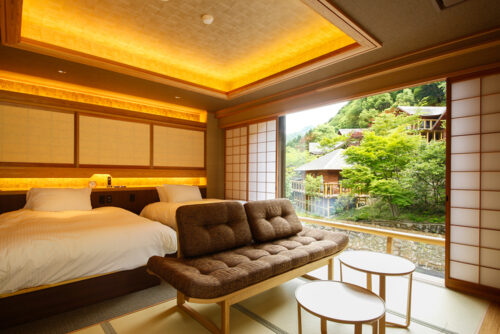
While the atmosphere is ancient, your comfort shouldn’t be. Our furniture at CondeHouse is modern in design, but it’s built with a deep understanding of Japanese aesthetics.
For example, look at the chairs in the image above. We’ve customized them for Ryokan life: they are lower to the ground to match the “floor-level” perspective of Japan, and the legs feature “rails” (sled bases) between them. Why? So you can slide the chair across a delicate tatami-mat floor without causing a “national tragedy” of scratches.
Next time you come to Japan, I invite you to treat yourself to the ultimate luxury: doing absolutely nothing, supported by the very best of Hokkaido’s craftsmanship.
I confess that I’m a devotee of ‘strategic laziness’—because in a world obsessed with productivity, there is a profound enlightenment to be found in doing absolutely nothing. At CondeHouse, we’ve designed the perfect companion for this noble vacuum. Our furniture isn’t just about sitting; it’s about ‘resetting.’ Our Hatsune Miku Art Chair is the ultimate sanctuary for your post-onsen soul. Built with the same respectful precision as our ‘tatami-friendly’ ryokan designs, it invites you to shed the heavy burdens of your status and melt into the vibrant, turquoise-green warmth of our Hokkaido craft. It is a masterpiece that supports your right to be beautifully, unproductively yourself. Now, here is a portal to the most comfortable reset of your life: the image below is your link to the special site. If you prefer to stay trapped in the exhausting gears of modern efficiency, do NOT click it. But if you’re ready to experience ‘Enlightenment through design,’ go ahead. Sink into the serenity. —— The Hatsune Miku Art Chair.

Shungo Ijima
Global Connector | Reformed Bureaucrat | Professional Over-Thinker
After years of navigating the rigid hallways of Japan’s Ministry of Finance and surviving an MBA, he made a life-changing realization: spreadsheets are soulless, and wood has much better stories to tell.
Currently an Executive at CondeHouse, he travels the world decoding the “hidden DNA” of Japanese culture—though, in his travels, he’s becoming increasingly more skilled at decoding how to find the cheapest hotels than actual cultural mysteries.
He has a peculiar talent for finding deep philosophical meaning in things most people ignore as meaningless (and to be fair, they are often actually meaningless). He doesn’t just sell furniture; he’s on a mission to explain Japan to the world, one intellectually over-analyzed observation at a time. He writes for the curious, the skeptical, and anyone who suspects that a chair might actually be a manifesto in disguise.
Follow his journey as he bridges the gap between high-finance logic and the chaotic art of living!