

The genius marketing of Christmas lies
Japan is a country where only 1% of the population is Christian, yet in December, every street is drowning in tinsel and carols. We are the world masters of “culture skimming”—taking the aesthetic of a tradition while completely ignoring its origin.
The most famous example is KFC. In 1970, a KFC manager reportedly told a “little white lie” to the public: “In the West, fried chicken is the traditional Christmas feast!” He was a marketing genius, and KFC Japan has been coasting on that successful deception for over 50 years. But the Colonel wasn’t alone in this campaign. Alongside the chicken, the Christmas Cake became a mandatory tradition thanks to a similar move by Fujiya, a historic confectionery maker, around 1910. They promoted a white cream cake topped with red strawberries, claiming it evoked the image of Santa Claus. Most Japanese people bought it—literally and figuratively—believing that this was undoubtedly what the rest of the world was eating.
There is no historical evidence or rational reason behind these traditions. Yet, for this one day, we forget about our health and indulge in greasy buckets and sugary cakes. Since no one gets hurt and everyone ends up smiling, perhaps these “marketed lies” have evolved into a rather lovely piece of Japanese culture. It’s a hilarious, greasy, and sugary anomaly that defines our December.
The great erasure: From Colonel to cleaning
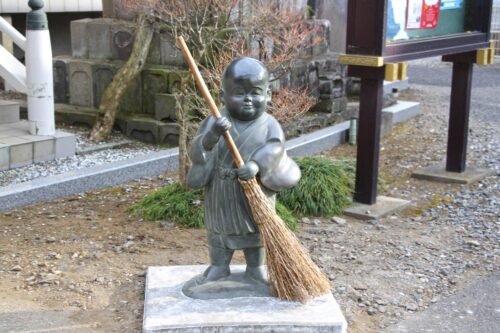
The moment December 26th hits, the Colonel and the strawberry cakes are unceremoniously shoved aside. The cakes go on clearance (a phenomenon so famous it used to be a metaphor for age in Japan), and the entire nation pivots instantly toward “New Year Mode.” This is where our consistency fails but our discipline shines: Oosouji (The Great Year-End Cleaning).
Logically, cleaning in the dead of winter is a terrible idea. It’s freezing, and the water is ice-cold. Yet, we scrub every corner of our homes and offices as a prayer for the coming year. We believe that by physically removing the dust of the past year, we make room for fresh luck.
The digital ritual of reflection
This tradition extends into the business world. On our last working day at CondeHouse, we pick up mops and trash bags. We deep-clean the factory, the warehouses, and the offices.
Is it a chore? Surprisingly, no. As I sort through the scattered papers on my desk and the mountain of data on my PC, I find myself reflecting. Each discarded file is a project completed; each organized folder is a lesson learned. This purification allows me to step into January feeling like a “new leaf.” It is a moment of gratitude before the silence of the holiday begins.
To everyone who has read my articles this year: thank you for being part of my journey. May your new year be as clean and bright as a freshly scrubbed factory floor.
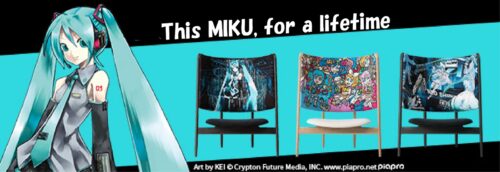
Just as we scrub our factory floors to welcome the New Year, the Hatsune Miku Art Chair was born from a desire for clarity. In a month filled with “marketed lies” like KFC and strawberry cakes, we offer you something grounded in 1,500 years of honest craftsmanship. As you prepare for your own year-end reflection, consider bringing in a piece that doesn’t just fill a space, but cleanses the atmosphere with its iconic beauty. Why start the year with the same old clutter when you can invite a new, polished legend into your home?
Ready to turn over a new leaf? Click the banner below to see the Art Chair collection before the New Year begins.

Shungo Ijima
Global Connector | Reformed Bureaucrat | Professional Over-Thinker
After years of navigating the rigid hallways of Japan’s Ministry of Finance and surviving an MBA, he made a life-changing realization: spreadsheets are soulless, and wood has much better stories to tell.
Currently an Executive at CondeHouse, he travels the world decoding the “hidden DNA” of Japanese culture—though, in his travels, he’s becoming increasingly more skilled at decoding how to find the cheapest hotels than actual cultural mysteries.
He has a peculiar talent for finding deep philosophical meaning in things most people ignore as meaningless (and to be fair, they are often actually meaningless). He doesn’t just sell furniture; he’s on a mission to explain Japan to the world, one intellectually over-analyzed observation at a time. He writes for the curious, the skeptical, and anyone who suspects that a chair might actually be a manifesto in disguise.
Follow his journey as he bridges the gap between high-finance logic and the chaotic art of living!