
The cruelest children’s story: The test of survival
Have you ever read “A Dog of Flanders”? I don’t know why, but this story is immensely popular in Japan. It was even made into an animated TV show, and probably more than 90% of Japanese kids knew the story during my childhood. I wonder if the situation is the same in Belgium (the setting) or the UK (the writer’s country).
Although the book is widely regarded as a masterpiece of children’s literature, I honestly don’t think it is entirely suitable for children. I read it when I was young, and the first lesson I learned was: “It’s impossibly hard to survive in this harsh world.” I often felt it was too early for children to grasp such a cruel reality.
The Nello test: Art vs. Appetite
As I mentioned the “first lesson,” there was another lesson in the story that I found equally cruel. It made me face the harsh reality that I lack artistic talent or sensibility entirely.
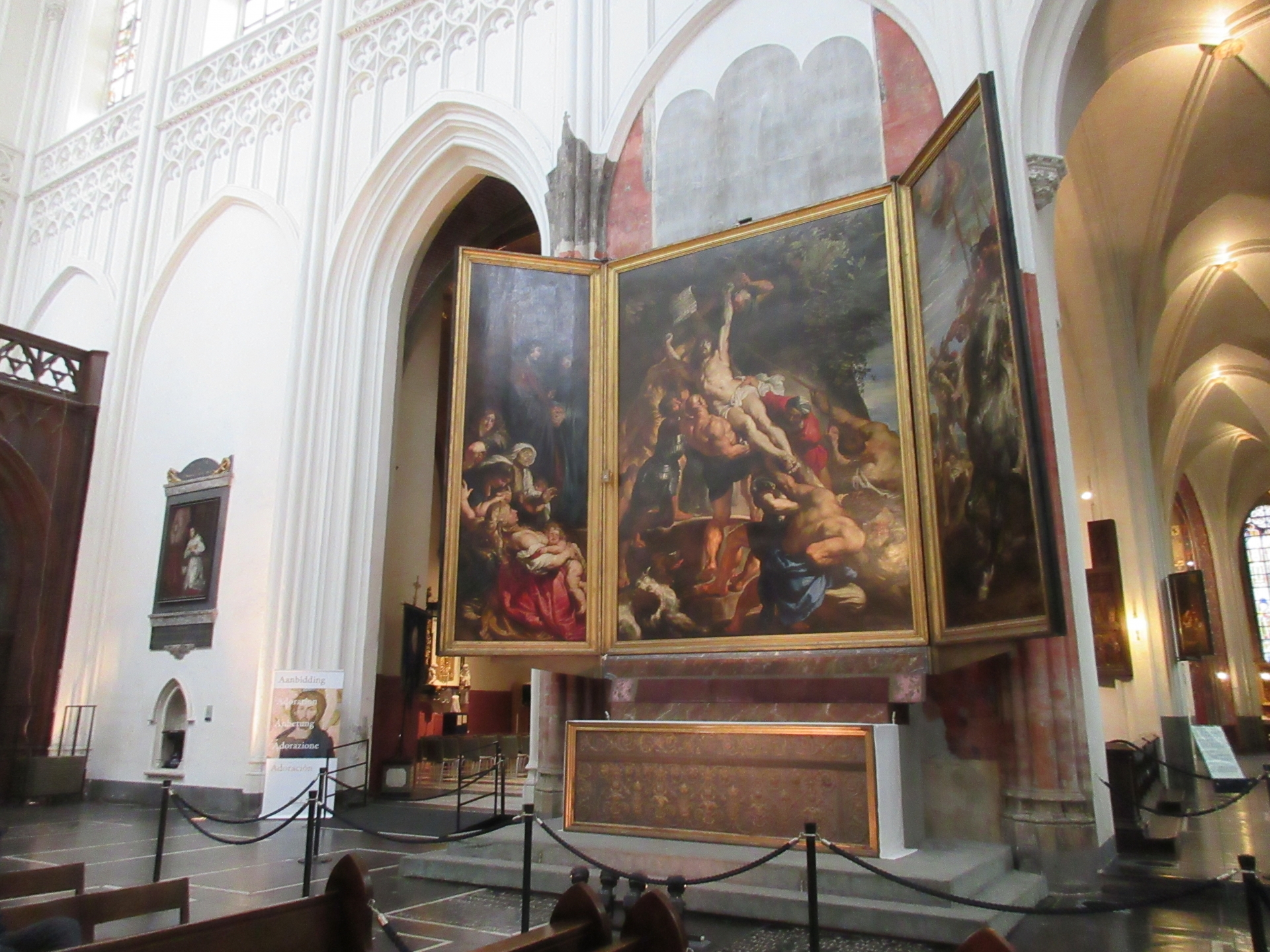
Let’s recall the tragic climax: The poor protagonist, Nello, dies with his beloved dog Patrasche in front of Rubens’ The Elevation of the Cross—the painting he sincerely desired to look at before he died. Can you truly believe it? When he was dying from hunger and cold, what he desperately craved was Art.
If I were Nello, I would be wandering about like a zombie, desperately searching for a warm place and a stale crust of bread. The children’s literature made the young me realize, with painful clarity, just how vulgar and appetitive I was. The ultimate “Nello Test” for defining true art is: Would you rather look at a masterpiece than eat a warm meal? (I fail this test every time.)
The unexpected art of the micro-movement
I’ve lived with this traumatic injury inflicted by A Dog of Flanders for decades. Now that I’m an adult, I still wander from one art museum to another, hoping to awaken the artistic soul that Nello possessed.
The other day, I visited the Hokkaido Museum of Modern Art in Sapporo for a rare Vermeer exhibition. (I only found out that Girl with a Pearl Earring wasn’t included after taking the pamphlet.) I walked through Vermeer’s works, nodding knowingly as always, but I still didn’t find the catalyst to arouse my artistry.
However, one element genuinely inspired me: a short movie showing how a painting was meticulously restored.
Defining art by concentration: From cupid to craft
The featured work, Girl Reading a Letter at an Open Window, had recently been restored to reveal a hidden painting of a Cupid on the back wall. The restoration work shown in the short movie was utterly captivating.
The master repairers used a small knife to scrape off layers of varnish and paint, little by little, demonstrating superhuman concentration and unbelievably precise movements. Their concentration and precision looked almost supernatural.
If the true purpose of art is to move people’s hearts, then I believe the restoration work itself—the precision, concentration, and dedication of the master repairers—can absolutely be defined as art. It is the art of the perfect, focused movement.
In that sense, the master furniture craftspeople in our factory, too, are artists. They possess the same supernatural concentration and execute the same precise human movements, albeit with wood instead of canvas. Please come and see the furniture artists in our factory—they are the perfect embodiment of art defined by the knife.
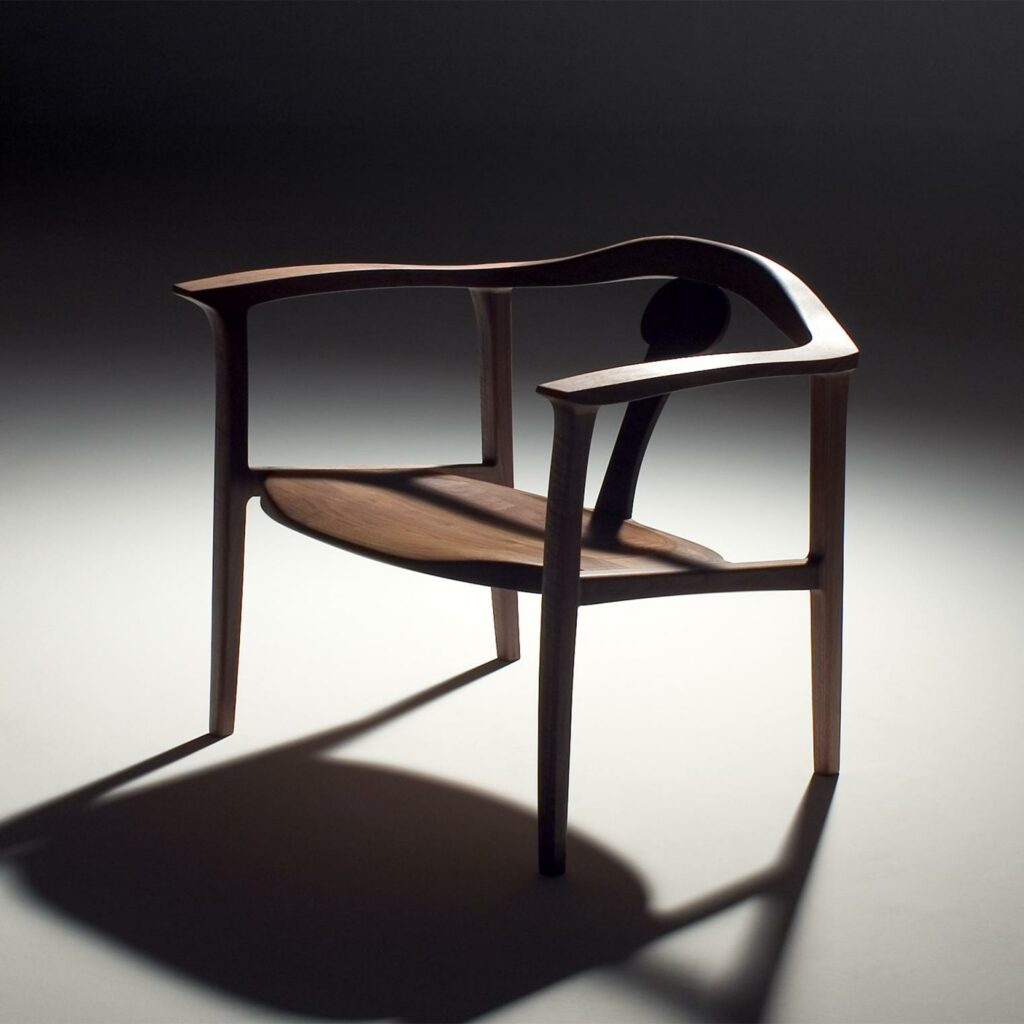
I’ve accepted that I will never pass the ‘Nello Test’; if I were in that cold cathedral, I’d be dreaming of a warm bowl of Ramen rather than a Rubens. I am a man of appetite, not of martyrdom. However, while I may lack the soul of a starving artist, I have found my own cathedral in our factory. Watching our craftspeople work with their chisels and knives—displaying that same supernatural concentration I saw in the Vermeer restoration—is the only thing that truly moves my ‘vulgar’ heart. Our Hatsune Miku Art Chair is born from this very art of the knife, a masterpiece crafted by those who choose precision over fame. Now, here is a final test of your own: the image below is a link to the sanctuary of our craft. If you prefer to stay in the world of comfortable bread and simple thoughts, do NOT click it. But if you suspect that, like me, you are secretly moved by the divine precision of a master’s hand, your curiosity will surely win. Go ahead—pass the test. —— The Hatsune Miku Art Chair.


Shungo Ijima
Global Connector | Reformed Bureaucrat | Professional Over-Thinker
After years of navigating the rigid hallways of Japan’s Ministry of Finance and surviving an MBA, he made a life-changing realization: spreadsheets are soulless, and wood has much better stories to tell.
Currently an Executive at CondeHouse, he travels the world decoding the “hidden DNA” of Japanese culture—though, in his travels, he’s becoming increasingly more skilled at decoding how to find the cheapest hotels than actual cultural mysteries.
He has a peculiar talent for finding deep philosophical meaning in things most people ignore as meaningless (and to be fair, they are often actually meaningless). He doesn’t just sell furniture; he’s on a mission to explain Japan to the world, one intellectually over-analyzed observation at a time. He writes for the curious, the skeptical, and anyone who suspects that a chair might actually be a manifesto in disguise.
Follow his journey as he bridges the gap between high-finance logic and the chaotic art of living!