
The universal malaise: Sunday night depression
When I first learned what the abbreviation “T.G.I. Friday’s” stood for, I felt a deep, global relief: many people, even outside Japan, struggle to survive the workweek. At the same time, another question arose: Do they also feel that crushing sense of dread on Sunday evening, just like me?
I immediately looked into it and found the perfect English expression: “Sunday Scaries.” For your information, this Sunday evening depression is expressed in Japan as the “Sazae-san Syndrome.” Sazae-san is the longest-running animated TV series, broadcast every Sunday evening since 1969. The fact that an animated show gives its viewers a shared sense of impending doom illustrates how common it is for adults, not just kids, to watch anime in Japan.
Anime for grown-ups: The complexity of Attack on Titan
Conforming to recent trends, I rarely watch scheduled TV shows anymore, though the television itself still sits proudly in the center of my living room, like a family altar. Instead, I usually stream content.
Last year, I became completely immersed in the animated program “Attack on Titan” on Amazon Prime Video. Some may still dismiss animation as “crappy” kids’ stuff, but I believe Attack on Titan is worthy of admiration even by adults. It is fundamentally different from simple children’s cartoons that merely depict a black-and-white world of right and wrong. It explores complex moral grey areas, trauma, and geopolitical conflict—hardly the stuff for a tranquil Sunday evening.
The new business frontier: Anime x traditional crafts
As you may know better than I do, Japanese animation is hugely popular across the world today, forming a massive market largely independent of giants like Disney (and its subsidiaries: Marvel and Pixar). Attack on Titan, with over 100 million copies sold, is one of the global blockbusters. I believe the animation industry could be a key pillar for the Japanese economy to survive and thrive.
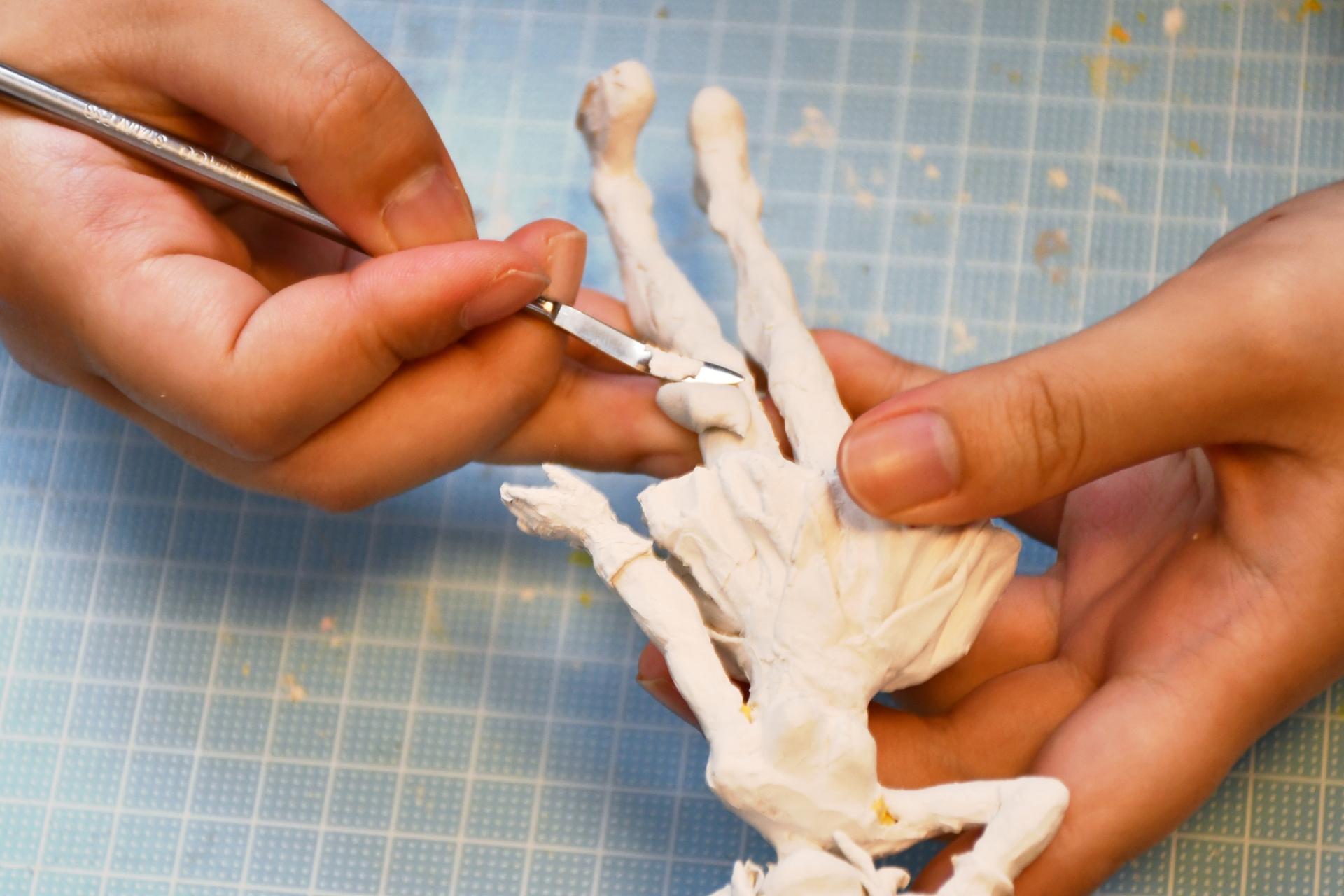
Sharp-eyed marketers have already noticed this, leading to numerous collaboration works between anime characters and Japanese traditional crafts (such as glass art, pottery, etc.). Attack on Titan has, of course, participated in this trend.
In this field, I want to introduce a pioneer: PREMICO, a company that plans, develops, and sells these specific collaboration products.
The logic of respect: Attachment and authenticity
The ace marketer at PREMICO has a fascinating approach. She requires all the directors involved to read the source manga they plan to collaborate with, ensuring they build a genuine sense of attachment to the characters. This is brilliant; you can’t sell passion without possessing it.
What I admire most is that her approach emphasizes the Japanese traditional crafts as much as the anime characters in the final product. Their respect for the heritage and skill of the crafts is authentic. They recognize that fans want a genuine piece of art, not just cheap novelty.
I see immense potential in this synergy: the global emotional appeal of modern anime breathing life and financial viability back into ancient, skilled Japanese crafts. I sincerely hope that someday they will make a collaboration offer to us—I promise our entire team will read the Attack on Titan manga.
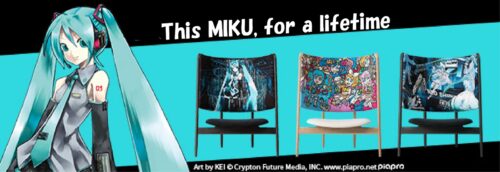
I am a card-carrying member of the ‘Sunday Scaries’ club, but I’ve found that the best cure for that evening dread is a healthy dose of epic storytelling. I’ve even promised my team that we’ll read the entire Attack on Titan manga if a collaboration comes our way—though managing a workshop full of people fueled by titan-sized ambition might be my new ‘Sazae-san Syndrome.’ However, we couldn’t wait for the scouts to find us; we decided to launch our own mission with a different kind of legend. Our Hatsune Miku Art Chair is the ultimate ‘Anime x Craft’ synergy—a piece of furniture that treats a digital icon with the same reverence a master potter treats clay. Now, here is a spoiler-free invitation: the image below is a link to the frontline of our innovation. If you prefer to stay in a world where anime is just for kids, do NOT click it. But if you’re ready to see how modern emotion can breathe life into ancient wood, go ahead. Dedicate your curiosity! —— The Hatsune Miku Art Chair.
Shungo Ijima
Global Connector | Reformed Bureaucrat | Professional Over-Thinker
After years of navigating the rigid hallways of Japan’s Ministry of Finance and surviving an MBA, he made a life-changing realization: spreadsheets are soulless, and wood has much better stories to tell.
Currently an Executive at CondeHouse, he travels the world decoding the “hidden DNA” of Japanese culture—though, in his travels, he’s becoming increasingly more skilled at decoding how to find the cheapest hotels than actual cultural mysteries.
He has a peculiar talent for finding deep philosophical meaning in things most people ignore as meaningless (and to be fair, they are often actually meaningless). He doesn’t just sell furniture; he’s on a mission to explain Japan to the world, one intellectually over-analyzed observation at a time. He writes for the curious, the skeptical, and anyone who suspects that a chair might actually be a manifesto in disguise.
Follow his journey as he bridges the gap between high-finance logic and the chaotic art of living!