
The high command of spring: The meteorological scouts
Every March, Japan enters a state of high alert. We are not monitoring an invading army, but something far more unpredictable: the Sakura Zensen, or the Cherry Blossom Front.
The Japan Meteorological Agency maintains a network of 58 “sample trees” across the archipelago, like strategic outposts. Officers visit these trees daily, waiting for the precise moment when exactly five buds open. Only then do they officially declare “flowering” for the region. Every morning, news anchors conclude their solemn lamentations over the dismal economy and tragic accidents, only to pivot instantly into a radiant, triumphant grin as they reveal the latest tactical coordinates of the Sakura Front. It is as if the appearance of a few pink buds can magically absolve the nation of all its worldly sins. To an outsider, this national obsession with a few petals might seem like “much ado about nothing.” To us, it is a high-stakes logistical operation reported on the news with the gravity of a geopolitical crisis.
As the “front” moves from the warm south to the frozen north, I am reminded of the sheer scale of our island nation. While Tokyoites are already weeping over falling petals, we in Hokkaido are often still shoveling snow.
Hanami: A logistics battlefield for the corporate infantry
The tradition of Hanami (flower viewing) dates back to the 8th century, but its modern iteration is less about poetry and more about endurance. Perhaps, on a deeper level, it is a physical manifestation of the primal human karma of seeking to validate one’s own power and territory. If it were not for this underlying ego, the simple act of staring at a plant would hardly survive as a major social event in a modern world saturated with endless, high-definition digital distractions.
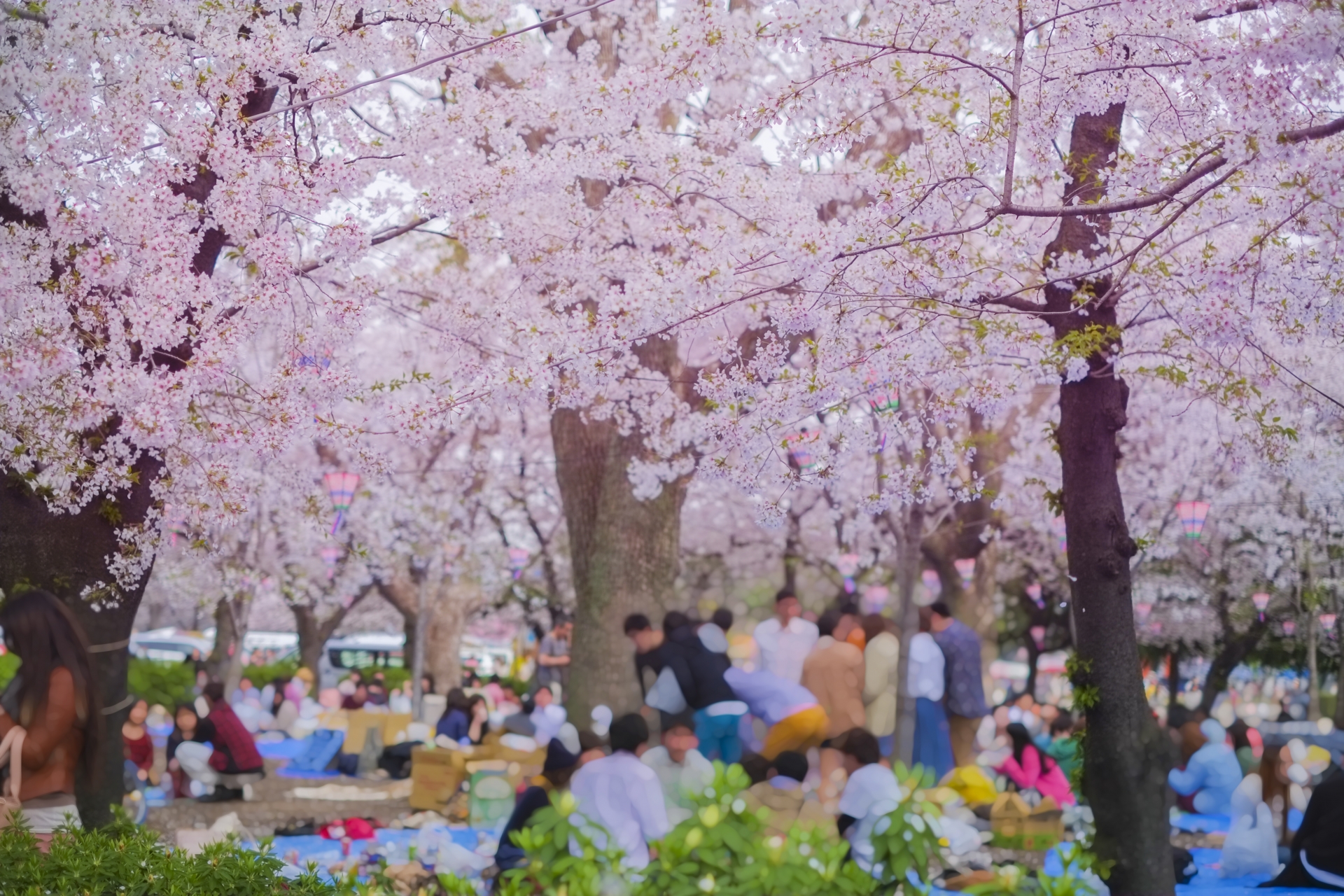
If you visit a popular park in Tokyo during peak season, the ground is completely carpeted—not with fallen blossoms, but with bright blue plastic tarps. This is where the true hierarchy of Japanese society is revealed. It is the sacred duty of the “junior staff”—the corporate infantry—to occupy these spots. They are dispatched to the parks in the freezing hours of pre-dawn to secure a strategic position under the trees.
The supreme irony of Hanami? By the time the senior executives arrive to start the party, everyone is too busy chugging beer and shouting over karaoke to actually look up at the flowers. We call it “flower viewing,” but it is, in reality, a ritualized outdoor drinking session where the trees merely provide a convenient excuse for collective intoxication.
The Hokkaido frontier: Beauty with a backbone
As the Sakura Front finally reaches the northern frontier of Hokkaido in May, the character of the trees changes.
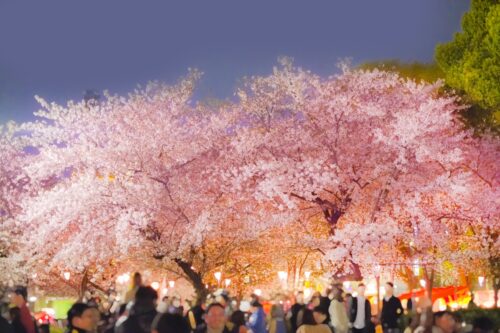
Mainland Japan prizes the Somei-Yoshino—a variety of such fragile, pale beauty that it seems to apologize for existing. In Hokkaido, however, our cherry blossoms are darker and hardier. While I personally prefer the delicate, fleeting aesthetic of the southern flowers, I have a deep respect for the Hokkaido variety for a different reason: its structural integrity.
In mainland Japan, people value the flower; in Hokkaido, we value the timber. The wood of the Hokkaido cherry tree possesses a beautiful grain and a rich, dark hue. At our factory, we use this resilient wood for the bases of our sofa collections. It is a reminder that while the petals may be a fleeting illusion, the skeleton of the tree—the wood itself—is what endures.

I confess that I find the frenzy of the ‘Sakura Front’ a bit much—because while the world weeps over falling petals, we in Hokkaido know that the true beauty lies in the wood that survives the winter. At CondeHouse, we don’t build our legacy on fleeting illusions; we build it on the resilient, dark-hued skeleton of the Hokkaido cherry tree. Our Hatsune Miku Art Chair is the ultimate expression of this ‘beauty with a backbone.’ It isn’t a pale, apologetic flower that disappears with the wind; it is a bold, turquoise-green masterpiece anchored in the solid reality of our craftsmanship. It is a ‘Hanami’ that never ends, right in your living room. Now, here is a portal to a blossom that will never fade: the image below is your link to the special site. If you prefer the fragile, temporary charms of the status quo, do NOT click it. But if you’re ready to own a piece of the northern frontier that endures, go ahead. Capture the eternal. —— The Hatsune Miku Art Chair.


Shungo Ijima
Global Connector | Reformed Bureaucrat | Professional Over-Thinker
After years of navigating the rigid hallways of Japan’s Ministry of Finance and surviving an MBA, he made a life-changing realization: spreadsheets are soulless, and wood has much better stories to tell.
Currently an Executive at CondeHouse, he travels the world decoding the “hidden DNA” of Japanese culture—though, in his travels, he’s becoming increasingly more skilled at decoding how to find the cheapest hotels than actual cultural mysteries.
He has a peculiar talent for finding deep philosophical meaning in things most people ignore as meaningless (and to be fair, they are often actually meaningless). He doesn’t just sell furniture; he’s on a mission to explain Japan to the world, one intellectually over-analyzed observation at a time. He writes for the curious, the skeptical, and anyone who suspects that a chair might actually be a manifesto in disguise.
Follow his journey as he bridges the gap between high-finance logic and the chaotic art of living!