
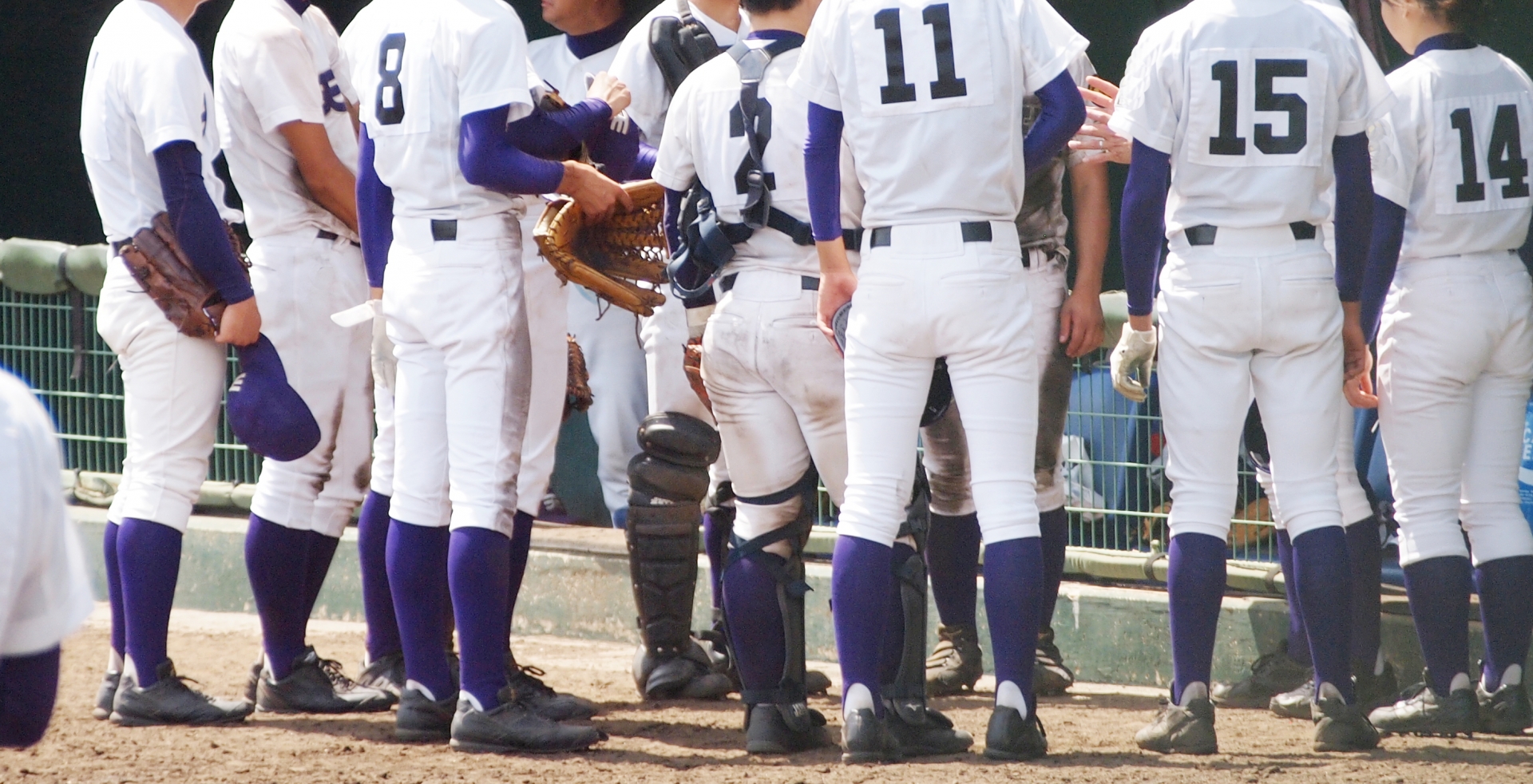
The undisputed king: Why baseball is Japan’s national religion
The world’s most popular sport is soccer, but I believe it’s still baseball in Japan, as I’ve mentioned before. Need definite proof? The average annual salary of professional baseball players in Japan (about $280,000 USD) is significantly higher than that of soccer players (about $200,000 USD). Shohei Ohtani, at $30 million in 2023, is, admittedly, an exceptional exception.
It is true that baseball has been the most popular sport in Japan since before WWII. However, in the scorched earth of the post-war era, soccer—which can be played with a single ball—could have easily taken the throne, as it did in many other developing nations. But it didn’t. The reason, it is said, lies in the nature of baseball itself: its clear division of roles and the distinct switch between offense and defense perfectly mirrored a Japanese educational system built on rigid discipline. As the basic tenet of International Political Economy suggests, hegemony is shaped by systems, not just culture. As a result, every summer, the entire nation tunes in for the seasonal pilgrimage: the National High School Baseball Championship—a gladiatorial tournament that has captivated the country for over 100 years.
The Bōzu fetish: Shaved heads as a symbol of non-sense
That said, my real objective today isn’t actually to talk about baseball. It is to engage in that most insufferable form of self-assertion: the logical re-evaluation of the everyday norms we unconsciously accept. (I don’t necessarily recommend this, as it usually only serves to brand you as a “difficult” person.)
It is from this “difficult” perspective that I want to look at a major shift currently occurring in that historic championship—and it’s about hairstyles.
The shaved head, or Bōzu, was once the absolute, unquestioned standard for high school baseball players. Yes, even the legendary Shohei Ohtani had to shave his head when he was in high school. While many schools have recently abolished this outdated rule, the practice persists in many parts of Japan, rooted in a culture of Guts (Konnjō) and Spartan discipline.
I should add a disclaimer: I am not a cold-blooded rationalist like Mr. Spock, dismissing every non-rational habit simply because it lacks logic. For instance, the handshake originated as a way to prove you weren’t carrying a weapon. Today, it serves no practical purpose, but I’m not about to start an “Anti-Handshake Movement”—that would just be tedious. Social lubricants have their place. However, the forced shaved head is a different story.
In Japanese middle and high schools, there is a wide variety of sports clubs, yet almost none—aside from baseball—mandate a shaved head. Advocates for the shaved head often make two claims. First, they insist the hairstyle makes the kids look “clean and tidy.” But if cleanliness is the point, why aren’t all other athletes—soccer players, swimmers, etc.—forced to shave their heads? I find this claim utterly nonsensical.
The second common argument is about “a sense of unity.” I agree with this to some degree. When I briefly joined the Japan Self-Defense Force, the very first thing we did was get a “GI cut.” The scene was less like a barbershop and more like industrial-scale sheep shearing. We were lined up like livestock, and one by one, the electric clippers stripped us of our hair and our individuality in a matter of seconds. I can honestly admit that watching my comrades be “shorn” like a flock of sheep did instantly strengthen our camaraderie—mostly through a shared sense of trauma.
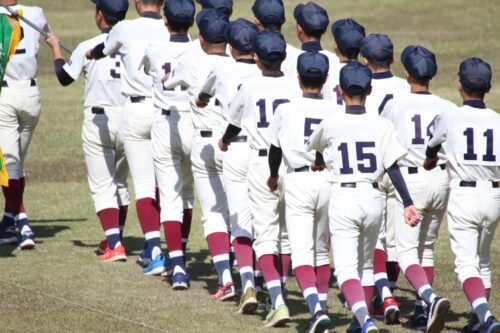
My challenge to the advocates: Shave the Hokkaido Fighters!
But here is my critique, framed from my rational, northern Hokkaido perspective: While a sense of unity may be built, that’s not the end goal. The only point that matters is this: Does that forced unity actually make the team stronger?
If the advocates truly believe their own claims, I invite them to come here to Hokkaido and advise our local professional team, the Hokkaido Fighters, to shave their heads. Our Fighters are currently at the bottom of the league (in 2023), despite being strong when Ohtani played here. The fact is, in Japan, just like in the MLB, no professional baseball team has such a ridiculous, arbitrary hairstyle code. That is more than enough proof that forced shaving has nothing to do with genuine strength—it is purely a relic of non-sense discipline.
From Hokkaido’s homerun to the baseball capital of Mexico
Speaking of baseball and international powerhouses, I have an announcement! Beyond the US, there are many baseball powerhouses, including the Dominican Republic, Venezuela, Cuba, and Mexico.
Next month, I am going to Monterrey, Mexico for the first time because our Mexican dealer is starting to sell our furniture there. Do you know why I started this entire article with baseball? Because Monterrey is considered the baseball capital of Mexico!
It’s a huge logical leap from the rigid, irrational custom of high school baseball in Japan to selling furniture in a vibrant, international baseball city like Monterrey, but that is precisely why I find life—with all its sudden, illogical turns—so endlessly interesting. I hope that one day, our furniture will be used somewhere important—perhaps in the VIP rooms at Estadio Monterrey, the largest baseball stadium in Mexico—a world away from the shaved-head dogma of Japanese high school baseball.
If the shaved head of Japanese high school baseball is a relic of ‘non-sense discipline’—a desperate attempt to enforce unity through the erasure of self—then our furniture stands as the ultimate insurrection. In a world that often demands you to shave away your personality to fit the team, we invite you to do the opposite.
Our Hatsune Miku Art Chair is a homerun for the individualist; a piece of Hokkaido craftsmanship that refuses to be ‘clean and tidy’ in the boring, Spartan sense. It doesn’t ask for your sacrifice—it only asks that you sit down and embrace your beautifully un-shaved soul.
I invite you to click the banner below to visit our special website, where digital legend meets the spirit of Hokkaido. Step into a world where the game has changed, and logic meets art.—— The Hatsune Miku Art Chair.


Shungo Ijima
Global Connector | Reformed Bureaucrat | Professional Over-Thinker
After years of navigating the rigid hallways of Japan’s Ministry of Finance and surviving an MBA, he made a life-changing realization: spreadsheets are soulless, and wood has much better stories to tell.
Currently an Executive at CondeHouse, he travels the world decoding the “hidden DNA” of Japanese culture—though, in his travels, he’s becoming increasingly more skilled at decoding how to find the cheapest hotels than actual cultural mysteries.
He has a peculiar talent for finding deep philosophical meaning in things most people ignore as meaningless (and to be fair, they are often actually meaningless). He doesn’t just sell furniture; he’s on a mission to explain Japan to the world, one intellectually over-analyzed observation at a time. He writes for the curious, the skeptical, and anyone who suspects that a chair might actually be a manifesto in disguise.
Follow his journey as he bridges the gap between high-finance logic and the chaotic art of living!
Comments
List of comments (1)
Real Estate I like the efforts you have put in this, regards for all the great content.