
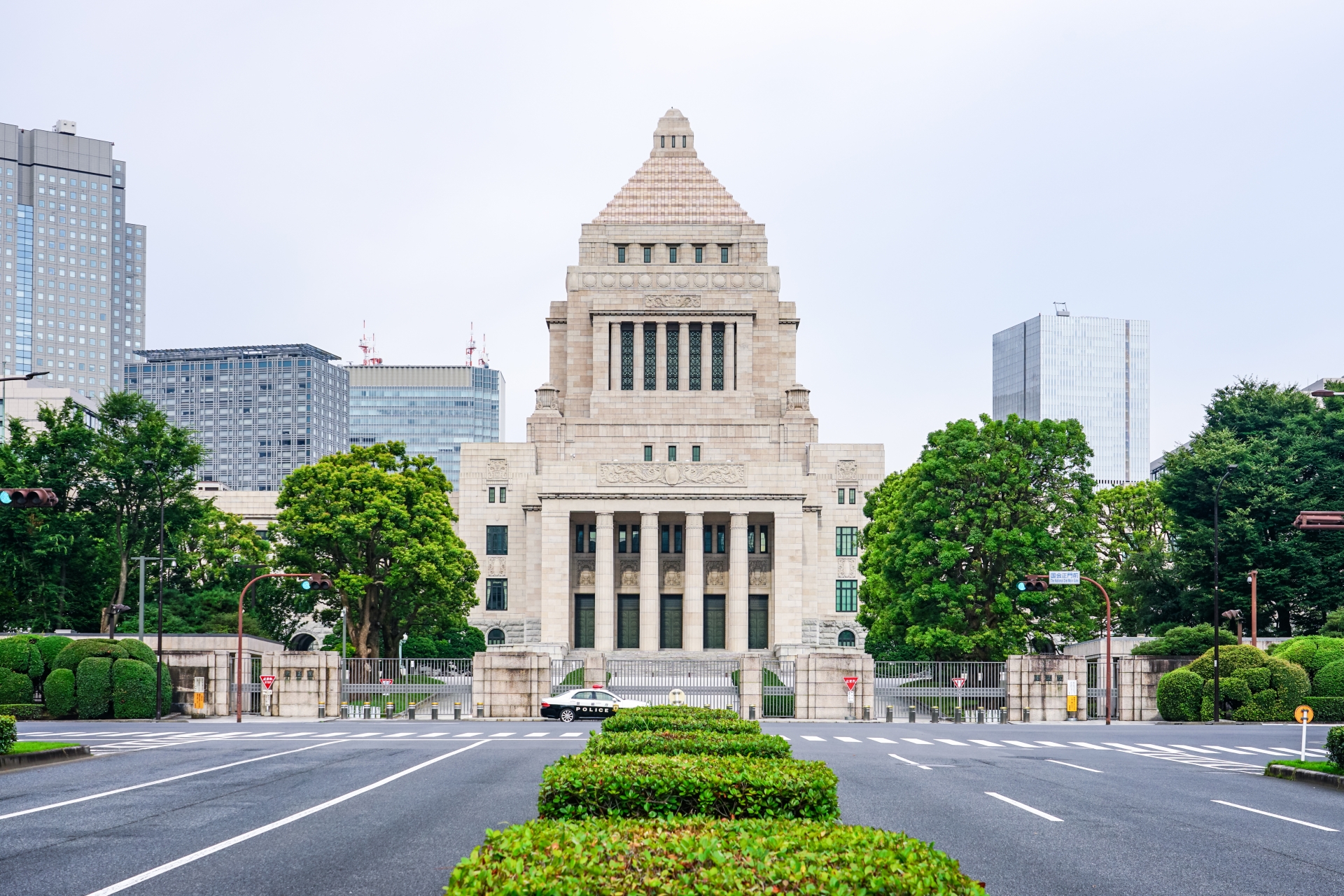
The political lie: Why your favorite candidate became ambiguous
Have you noticed the pattern? A passionate election candidate sharply criticizes the government, wins the seat, and then starts making deliberately ambiguous remarks, seemingly losing their convictions. You feel betrayed, thinking, “If only I were in charge, I’d deliver absolute justice!”
While I won’t defend every politician, I believe the decent ones are destined to be ambiguous. Absolute justice is a myth. Utilitarianism demands the greatest good for the greatest number, but this “tyranny of the majority” often fractures society. Decent politicians understand that maintaining coexistence requires not confronting issues head-on, but finding a common, ambiguous ground that avoids deep, lasting resentment. In a diverse society, ambiguity is a necessary evil—a survival mechanism.
The genetic curse: Why Japanese ambiguity is an ancient wisdom
In terms of embracing ambiguity, the Japanese are world champions. Rarely is a majority vote cast in a company meeting; leaders actively avoid imposing their opinions. Decisions are almost always made through an atmosphere of ambiguous consensus. As a younger person, this irritated me intensely; I saw it as profound irresponsibility.
However, I now believe that workplace ambiguity is an ancient wisdom for organizational harmony. Whenever I see a young employee who is frustrated by the ambiguity and pushes back against it, I feel an urge to bow deeply and apologize (dogeza) to my former bosses and seniors.
This trait may even be genetic. According to research, Japanese people have a higher prevalence of S-alleles of the serotonin transporter which is linked to heightened anxiety and self-torture. This is theorized to be the result of natural selection unique to our isolated island nation, which is constantly battered by tsunamis and earthquakes. In short: we are genetically too anxious and scared to thrive in an environment defined by clear, confrontational accountability.
Ambiguity, therefore, is not a failing of character; it’s a necessary cultural cushion.
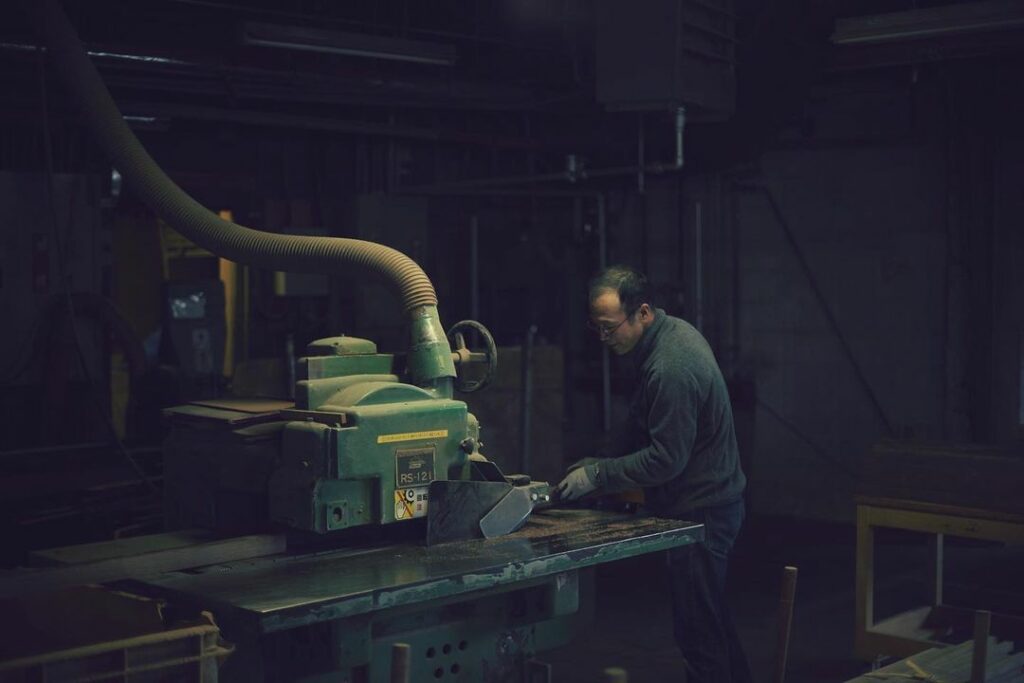
The backlash wisdom: From nervous people to durable wood
If we are so pathologically anxious and avoid clear responsibility, how do we maintain quality? The answer is: We don’t need external accountability. Our genetic predisposition toward anxiety (self-torture) provides the internal quality control.
This concept of strategic, necessary looseness is mirrored perfectly in our craft. Consider the joints in wooden furniture. Some joint parts must have backlash—a small, intentional amount of space or ambiguity—to absorb the natural expansion and contraction of wood due to temperature and humidity. Without that “play,” the wood would tear itself apart.
The modern age of digitalization relentlessly seeks to eliminate all ambiguity, demanding rigidity and instant accountability. Yet, physical things that are designed to endure and coexist—whether they are human organizations, ancient wooden temples, or high-quality furniture—still require that small, vital space for ambiguity to absorb our differences. That small, hidden gap is what ensures long-term harmony.
I confess that I used to despise ambiguity as a sign of weakness, until I realized that ‘backlash’—the intentional space for movement—is exactly what prevents wood, and society, from breaking. At CondeHouse, we build with this wisdom: creating harmony by allowing for the natural ‘play’ within our craft. Our Hatsune Miku Art Chair is the ultimate resolution of this paradox. It brings the rigid, high-tech world of a digital icon into a peaceful coexistence with the living, breathing ‘ambiguity’ of Hokkaido wood. It is a masterpiece of harmony that survives the test of time by knowing exactly when to give. Now, here is a portal to our most flexible secret: the image below is your link to the special site. If you prefer the brittle, suffocating certainty of the ordinary, do NOT click it. But if you’re ready to experience the resilient beauty of a turquoise-green soul that knows how to breathe, go ahead. Feel the harmony. —— The Hatsune Miku Art Chair.


Shungo Ijima
Global Connector | Reformed Bureaucrat | Professional Over-Thinker
After years of navigating the rigid hallways of Japan’s Ministry of Finance and surviving an MBA, he made a life-changing realization: spreadsheets are soulless, and wood has much better stories to tell.
Currently an Executive at CondeHouse, he travels the world decoding the “hidden DNA” of Japanese culture—though, in his travels, he’s becoming increasingly more skilled at decoding how to find the cheapest hotels than actual cultural mysteries.
He has a peculiar talent for finding deep philosophical meaning in things most people ignore as meaningless (and to be fair, they are often actually meaningless). He doesn’t just sell furniture; he’s on a mission to explain Japan to the world, one intellectually over-analyzed observation at a time. He writes for the curious, the skeptical, and anyone who suspects that a chair might actually be a manifesto in disguise.
Follow his journey as he bridges the gap between high-finance logic and the chaotic art of living!
Comments
List of comments (1)
[…] I personally think it’s closely related to the natural environment of our country. As I wrote in last article, Japan is the island country prone to a lot of natural disasters such as tsunamis, earthquakes, […]