
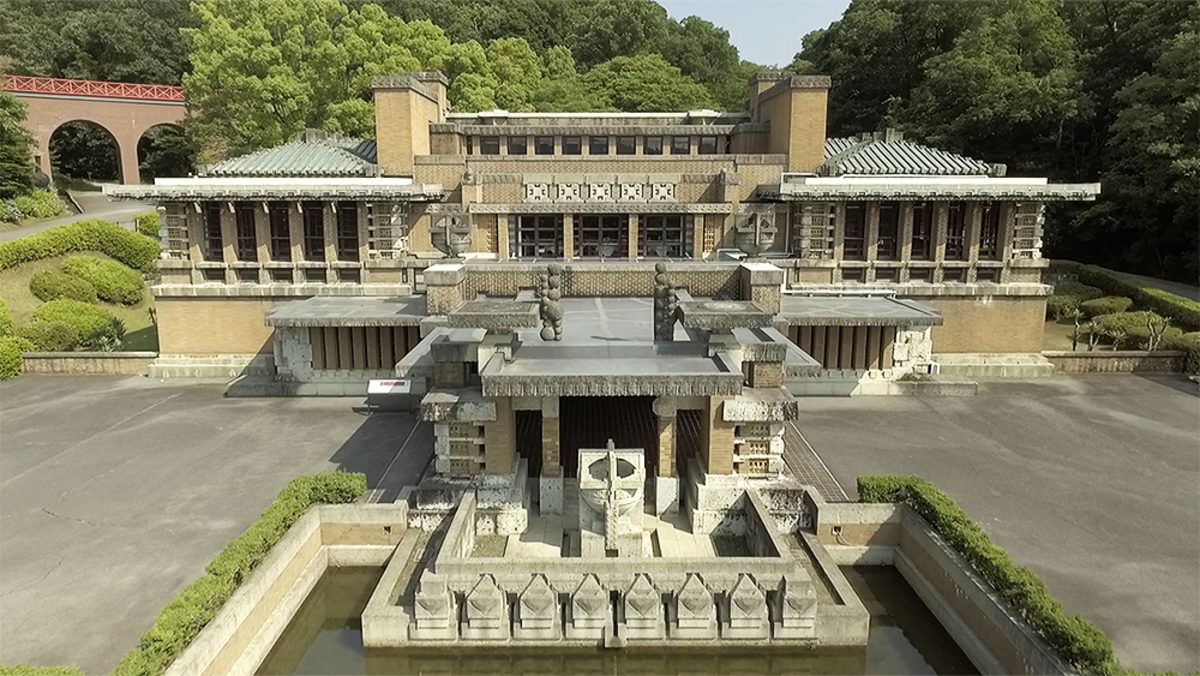
The undefeated structure: Wright and the Great Quake
The Imperial Hotel, designed by the legendary architect Frank Lloyd Wright, was completed in 1923 and dramatically demolished in 1967. Today, only the iconic entrance remains preserved as a museum in a small city in Aichi Prefecture, far from its original location in Tokyo.
Wright’s name alone ensures the building’s place in history, but there is a far greater, more dramatic factor: On the very day of the hotel’s unveiling, the Great Kanto Earthquake struck Tokyo, claiming over 140,000 lives. Amidst this unprecedented disaster, the Imperial Hotel, built using Wright’s innovative floating structure, remained virtually intact. It was an immediate, powerful validation of his genius and a stroke of profound destiny.
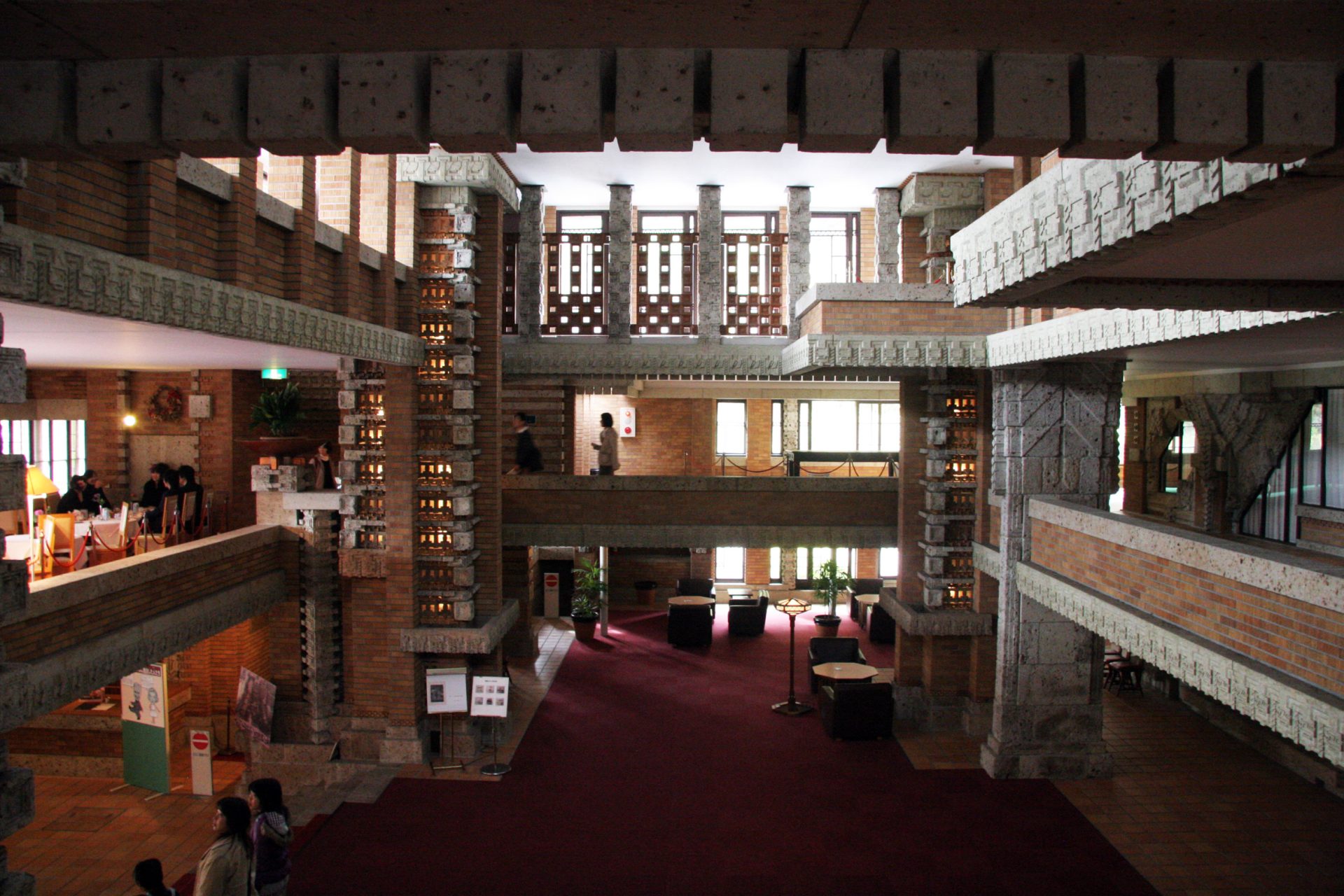
The luminous details: Where God resides
I visited the museum often when I lived nearby. What impressed me most were the intricate decorations on the windows and pillars of the entrance. The combination of natural light filtering through the window motifs and soft illumination leaking from inside the pillars created a feeling of being draped in light. The detailed carvings and masonry are the hotel’s main feature.
Every time I saw those details, I was reminded of the famous dictum: “God is in the details.” (Although the quote is popularly attributed to architect Ludwig Mies van der Rohe, a quick search reveals the true originator is still debated—Einstein, Nietzsche, and Le Corbusier are all cited. It’s a quote whose details are lost in history.)
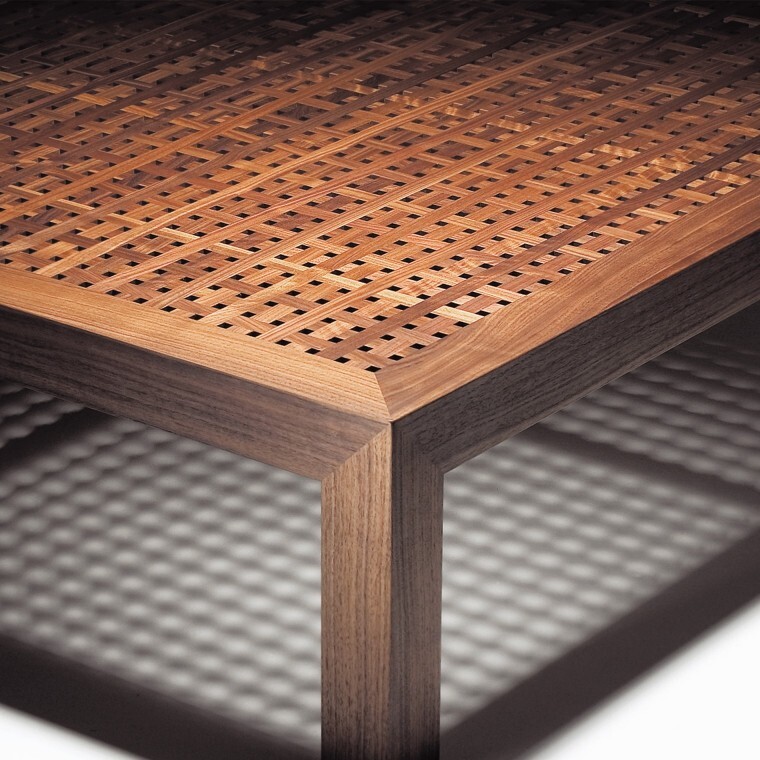
The details dilemma: Seeing the wood for the trees
As I’ve written before, being detail-oriented is undoubtedly a defining characteristic of the Japanese people. In that sense, our furniture can certainly be said to be “full of God.”
Having said that, this national character is not always advantageous. For example, some Japanese cars exhibit extremely good engineering and quality in the details, yet their overall design looks strange or incoherent when viewed as a whole.
“God is in the details,” yes, but we must also keep in mind the counter-saying: “You can’t see the wood for the trees.” This means being so preoccupied with fine details that one fails to grasp the overall picture or the core meaning. This is the Japanese Paradox: we excel at the micro-level, but sometimes falter at the macro-level.
As manufacturers striving for overall excellence, this is the fine line we must walk: embracing the cultural strength of detailing while never losing sight of the “wood”—the clean, coherent, and universal form of the final product.
I confess that I’m the type of person who gets lost in the details of a quote’s origin while forgetting the point of the conversation—a classic victim of ‘not seeing the wood for the trees.’ But at CondeHouse, we’ve mastered this paradox. We obsess over every joint and grain until ‘God’ is comfortably settled in the details, yet we never lose sight of the clean, universal form of the whole forest. Our Hatsune Miku Art Chair is the ultimate proof: a masterpiece where intricate digital precision meets the grand, coherent soul of Hokkaido timber. Now, here is a detailed invitation to the bigger picture: the image below is a link to our special site. If you prefer furniture that lacks both ‘God’ and a cohesive soul, do NOT click it. But if you’re ready to see the ‘wood’ and the ‘trees’ in perfect harmony, go ahead. Discover the divine whole. —— The Hatsune Miku Art Chair.

Photo credit: https://www.imperialhotel.co.jp/e/our_world/column/the_wright_imperial_2.html
https://www.dezeen.com/2017/06/15/imperial-hotel-tokyo-japan-frank-lloyd-wright-150th-anniversary/

Shungo Ijima
Global Connector | Reformed Bureaucrat | Professional Over-Thinker
After years of navigating the rigid hallways of Japan’s Ministry of Finance and surviving an MBA, he made a life-changing realization: spreadsheets are soulless, and wood has much better stories to tell.
Currently an Executive at CondeHouse, he travels the world decoding the “hidden DNA” of Japanese culture—though, in his travels, he’s becoming increasingly more skilled at decoding how to find the cheapest hotels than actual cultural mysteries.
He has a peculiar talent for finding deep philosophical meaning in things most people ignore as meaningless (and to be fair, they are often actually meaningless). He doesn’t just sell furniture; he’s on a mission to explain Japan to the world, one intellectually over-analyzed observation at a time. He writes for the curious, the skeptical, and anyone who suspects that a chair might actually be a manifesto in disguise.
Follow his journey as he bridges the gap between high-finance logic and the chaotic art of living!