
The “unmaterialistic” salesman
Do you collect anything? I have a confession: despite making a living by selling physical objects, I personally have zero interest in “things.” Consequently, I have no desire to collect them. However, I am intensely interested in them as “investment assets.” I have no wish list for myself, yet I find myself obsessed with the money game. I am a strange, irrational creature, and I often baffle even myself. Lately, watches have become the ultimate target for collectors looking for returns; according to the Knight Frank Luxury Investment Index, the watch market has seen a staggering 140% return over the past decade.
But before I was a calculated investor, I was a 10-year-old “Sticker King.”
Statistics say that about 70% of children under the age of six are “collectomaniacs.” I was no exception. At ten years old, my life revolved around the stickers that came with chocolate cookies. I still remember a specific day: I was in my mother’s car when I saw a girl in the car next to us. Driven by a primal urge to impress, I pressed my rarest, most valuable sticker against the glass to show it off to her. My mother was horrified. “Stop it! That’s embarrassing!” she hissed.
I didn’t understand her shame then, but that was the moment I retired from the sticker game. (Though, ever the opportunist, I made a small fortune for a ten-year-old by selling my rare collection to my classmates shortly after.)
The blind collector: Valentino Zagatti
Years later, I discovered a story that made me rethink my mother’s embarrassment and my own cold, investment-driven mind. If you love whisky, you know the name Valentino Zagatti. He built one of the most incredible whisky collections in the world—over 3,000 bottles gathered over half a century.
But here is the remarkable part: Zagatti went blind at the age of eleven, long before he bought his first bottle. He never saw the beautiful labels, nor did he “display” them to impress people like I did with my stickers. He didn’t even collect them for “returns” like I might today. He collected for the history and the soul of the spirit.
Unlike the 10-year-old me seeking vanity, or the adult me seeking 140% returns, Zagatti collected as a way to connect with a world he couldn’t see. He saw value where others only saw prices or trophies.
The Oda Collection: 1,350 masterpieces of seating
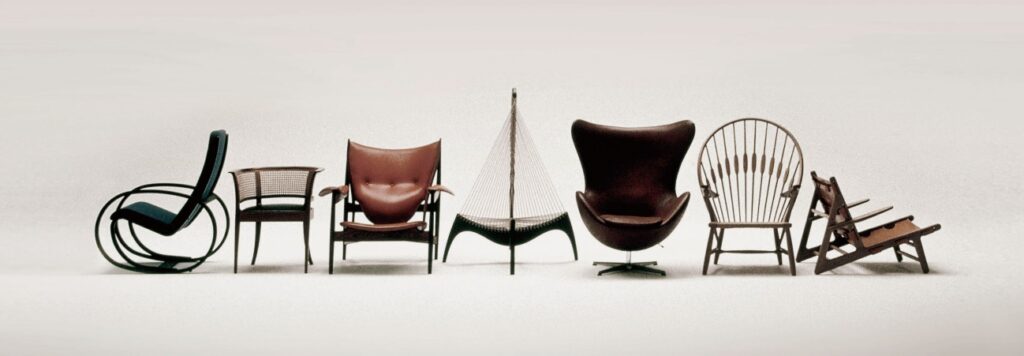
This brings me back to my home, Asahikawa. We are the mecca of wooden furniture, partly because we are home to one of the world’s most significant chair collectors: Noritsugu Oda.
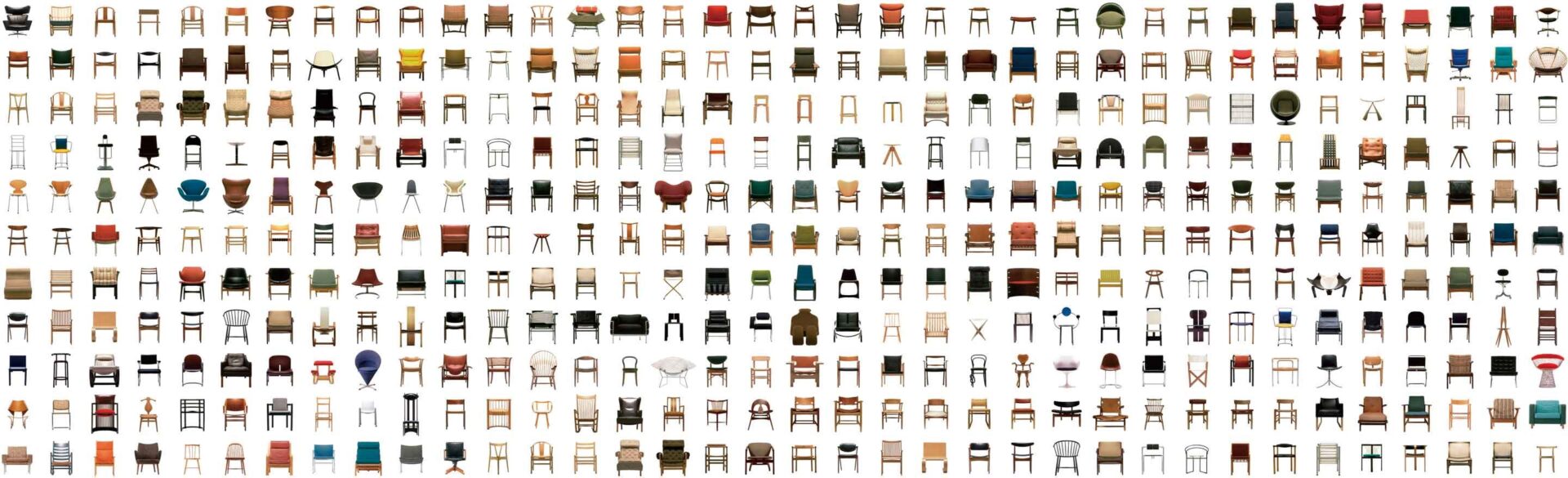
The Oda Collection consists of about 1,350 chairs, including virtually every masterpiece in the history of design. Like Zagatti’s whisky, these aren’t just assets on a balance sheet; they are the ultimate expression of how human beings have tried to balance art with the simple, physical act of sitting.
I highly recommend visiting Asahikawa just to see this collection. It’s a place where you can move past the childish urge to “show off” or the greedy urge to “invest,” and instead feel the weight of history and craftsmanship in every curve of wood.
If you are looking for an asset that offers more than just a percentage return, look no further. Our “Hatsune Miku Art Chair” is the ultimate collector’s piece—a fusion of global pop culture and the kind of craftsmanship that only appreciates with time. Whether you’re a “collectomaniac,” a serious investor, or someone who just appreciates a beautiful seat, this chair is a masterpiece you don’t just put in a vault—you live with it. Why not invest in a piece of Hokkaido’s soul that bridges the gap between a “money game” and true art?

Photo Credit: https://odacollection.jp/

Shungo Ijima
Global Connector | Reformed Bureaucrat | Professional Over-Thinker
After years of navigating the rigid hallways of Japan’s Ministry of Finance and surviving an MBA, he made a life-changing realization: spreadsheets are soulless, and wood has much better stories to tell.
Currently an Executive at CondeHouse, he travels the world decoding the “hidden DNA” of Japanese culture—though, in his travels, he’s becoming increasingly more skilled at decoding how to find the cheapest hotels than actual cultural mysteries.
He has a peculiar talent for finding deep philosophical meaning in things most people ignore as meaningless (and to be fair, they are often actually meaningless). He doesn’t just sell furniture; he’s on a mission to explain Japan to the world, one intellectually over-analyzed observation at a time. He writes for the curious, the skeptical, and anyone who suspects that a chair might actually be a manifesto in disguise.
Follow his journey as he bridges the gap between high-finance logic and the chaotic art of living!