

The Christmas paradox: A nation of 1% Christians
If asked to name the single best word to express the essence of Japanese culture, I would confidently say “adaptation.” We Japanese are exceptionally good at cream-skimming—selecting and adopting the best parts of foreign cultures and integrating them uniquely.
An interesting example is Christianity. Do you know the Christian population percentage in Japan? It is a mere 1%. Even in such a country, Christmas is a colossal event. Almost all Japanese people are on a spending spree weeks before December 25th. The economic effect amounts to roughly 6.5 billion USD annually!
The same phenomenon is happening with Halloween, where the economic effect is hiking up to over 1 billion USD. As you may have seen, young people dress up in elaborate costumes and go delightfully crazy in Tokyo on Halloween night. (We adopted the party, ignored the religion, and created an economic phenomenon. That’s true Japanese adaptation.)
From prohibited meat to marbled Wagyu
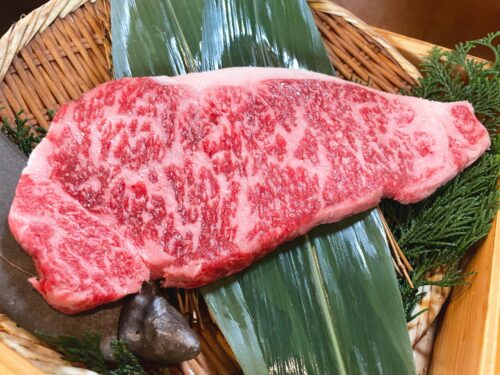
Japanese adaptation often involves not just absorbing a culture, but evolving it independently. A perfect example is Wagyu, our famously marbled beef.
Historically, eating meat was officially prohibited in Japan for about 1,200 years, beginning in 675 AD. People only began eating meat widely after the opening of Japan in 1854. Since then, the Japanese palate seems to have evolved quite differently. We came to adore fatty meat. The average fat percentage of beef sold in Japan was about 23% in 1988; by 2009, it had soared to about 69%. It effectively tripled in just 20 years!
This trajectory shows the speed and intensity of Japanese specialization: starting from zero, we rapidly adapted to meat culture, prioritizing flavor and tenderness through high marbling, creating a global luxury product.
Even Shogun sat on the floor
Another good example is the culture of sitting on a chair. Believe it or not, we just started to use chairs only recently, later than starting to eat meat. About 2000 years ago, chairs were already introduced from China, together with Kanji letters, but they didn’t seem to be embedded into the Japanese culture for some reason. Even Shogun (top samurai commanders) sat on the floor.
The short history of sitting
Another profound example of this selective adaptation lies in the culture of sitting. Believe it or not, we only started using Western-style chairs widely very recently, even later than we started eating meat.
Chairs were introduced from China along with Kanji characters about 2,000 years ago, but for some reason, they never truly embedded into Japanese daily culture. Even the Shōgun (the top samurai commanders) sat on the floor, using tatami mats or cushions.
High-skill woodworking and the unique Japanese chair
Although the history of chair manufacturing in Japan is short—only about 150 years—we possess a long and profound history of high-skill woodworking. This expertise is visible in wooden temples, some over 1,000 years old, built with intricate, flexible, and often nail-less joinery.
This centuries-old, high-skill woodworking tradition did not disappear; instead, it evolved. It was applied to the manufacturing of chairs, transforming a foreign concept into something unique and distinctively Japanese. We didn’t invent the chair, but we refined the craft that builds it.
I sincerely hope you will appreciate the Japanese chair—a product of cultural adaptation and ancient craft—with the same high regard you hold for Wagyu beef.
I confess that as a nation, we are the ultimate ‘late bloomers’—we only started eating meat and sitting on chairs recently, but once we start, we don’t know when to stop. We turned beef into Wagyu with 69% fat, and we turned the foreign concept of a chair into a masterpiece of ancient woodworking. Our Hatsune Miku Art Chair is the pinnacle of this Japanese adaptation: a 2,000-year-old digital legend met with 1,000-year-old timber skills. It’s a seat as rich and refined as the finest marbled beef, minus the calories. Now, here is a prime cut of our craftsmanship: the image below is a link to the special site where our history meets the future. If you prefer the lean, flavorless world of ‘ordinary’ adaptation, do NOT click it. But if you’re ready for a seat that is as expertly ‘marbled’ with skill as a top-grade steak, go ahead. Take a bite of the best. —— The Hatsune Miku Art Chair.


Shungo Ijima
Global Connector | Reformed Bureaucrat | Professional Over-Thinker
After years of navigating the rigid hallways of Japan’s Ministry of Finance and surviving an MBA, he made a life-changing realization: spreadsheets are soulless, and wood has much better stories to tell.
Currently an Executive at CondeHouse, he travels the world decoding the “hidden DNA” of Japanese culture—though, in his travels, he’s becoming increasingly more skilled at decoding how to find the cheapest hotels than actual cultural mysteries.
He has a peculiar talent for finding deep philosophical meaning in things most people ignore as meaningless (and to be fair, they are often actually meaningless). He doesn’t just sell furniture; he’s on a mission to explain Japan to the world, one intellectually over-analyzed observation at a time. He writes for the curious, the skeptical, and anyone who suspects that a chair might actually be a manifesto in disguise.
Follow his journey as he bridges the gap between high-finance logic and the chaotic art of living!
Comments
List of comments (7)
[…] I was writing last time, chairs (chair lifestyle) were imported and embedded into the Japanese culture just recently (about […]
[…] I wrote before, we Japanese people started using chairs just about 150 years ago. Even when he established the […]
[…] had been governed by samurai for about 700 years (from 1185 to 1867). The age of samurai is divided into some periods, and according to a popular theory, samurais in the first period (the […]
[…] I was writing last time, chairs (chair lifestyle) were imported and embedded into the Japanese culture just recently (about […]
[…] Discovery, though. Anyway, the similar thing happened in the wooden furniture industry. As I wrote before, the chair culture was introduced to Japan only 150 years ago. The wooden furniture industry grew […]
[…] only 150 years since chairs were introduced in Japan, as I wrote before. When I was a kid, there was a sofa set in the living room. Most of my family members, however, […]
[…] in this season, though the percentage of the Christian population is only 1% in Japan. As I wrote before, we are good at cream-skimming other cultures but may be wrong a little about Christmas. Guess what […]