
The fortress of paper and power
On March 11, 2011, I was inside the Ministry of Finance building in central Tokyo. I remember staring out the window, convinced I was about to die. The Ministry of Finance building is a historic structure, built during World War II and now registered as a cultural property. Its age made the terror even more visceral. At the time, I was naive; I didn’t realize the building had undergone perfect seismic reinforcement. Looking back, I should have known—the Ministry of Finance, which prides itself as the “beating heart of Japan,” would never fail to allocate a budget for its own headquarters’ safety. But in that moment, even the heart of the nation felt fragile.
Outside, the heavy steel street lamps were swinging wildly like the needles of a giant metronome. Inside the office, the scene was chaotic. In those days, paperless work was still a distant dream, and towers of documents were piled everywhere. Almost every one of those paper towers collapsed simultaneously. While there were no physical injuries, the sight of our orderly world—the world of Japan’s elite bureaucracy—crumbling into a heap of paper doubled the psychological terror.
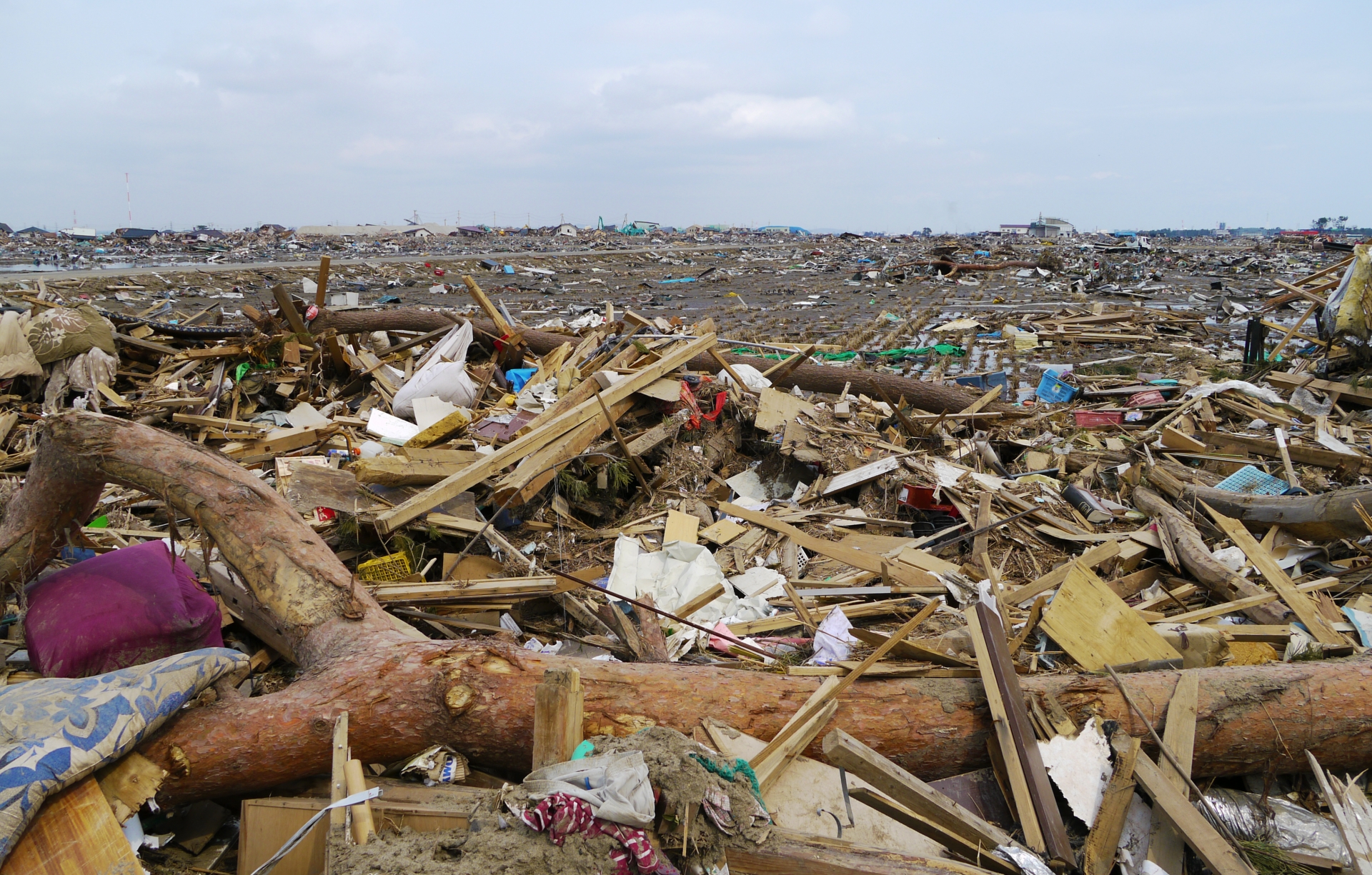
When the shaking finally subsided, a TV was turned on. We stood there in a heavy, suffocating silence, watching as everything—homes, cars, lives—was swept away by the black tide of the tsunami. It felt like the end of the world.
The “realistic” trap
Fast forward to today. Despite the hell we survived, the political winds are shifting back toward building new nuclear plants. According to recent polls, 50% of the Japanese public is against this, yet the voices in power seem to be ignoring the people. Whenever I voice my opposition, the “Pro-NPP” crowd attacks me with the same tired phrase: “Think realistically.”
Let me be clear: I have no patience for “idealists” who offer no concrete solutions. However, what I despise most is the “lack of imagination”—or to put it more bluntly, the “shutdown of thought” (shiko-teishi). Taking the “realistic” path is often the easiest, most comfortable way to live. But I believe the mark of a responsible adult is to fear that easy path, to hold onto an ideal, and then to work desperately to find the concrete measures to reach it.
May the force be with idealists!
From 2013 to 2015, every single nuclear plant in Japan was shut down. And yet, we didn’t return to the primitive times. We saved power, we innovated, and we survived. The “realistic” argument was proven wrong by the reality of our survival.
This is why I find the management of CondeHouse so worthy of respect. Long before “SDGs” was a buzzword, we committed to the ideal of being a truly eco-friendly company. Some of our measures might not offer an immediate “realistic” advantage in a price war. But we refuse to take the easy way out. We believe that choosing the harder, more ideal-driven path is the only way to contribute to society in the long run.
We don’t just make furniture; we make a statement that the world can be better than it is today. To all the idealists struggling against the “realists”: Don’t settle for a shutdown of thought. May the force be with you.
Our “Hatsune Miku Art Chair” is a celebration of this refusal to settle. “Be realistic,” they might say. “Why combine high-end woodcraft with a digital avatar?” We did it because we refused to let our imagination be shut down, just as we refuse to let tradition crumble into a heap of old paper. This chair is a physical proof that we can honor our heritage while embracing a bold, new future. Why not bring home a piece of furniture built by people who refuse the easy path of “realism” and instead work to make the “ideal” a reality?


Shungo Ijima
Global Connector | Reformed Bureaucrat | Professional Over-Thinker
After years of navigating the rigid hallways of Japan’s Ministry of Finance and surviving an MBA, he made a life-changing realization: spreadsheets are soulless, and wood has much better stories to tell.
Currently an Executive at CondeHouse, he travels the world decoding the “hidden DNA” of Japanese culture—though, in his travels, he’s becoming increasingly more skilled at decoding how to find the cheapest hotels than actual cultural mysteries.
He has a peculiar talent for finding deep philosophical meaning in things most people ignore as meaningless (and to be fair, they are often actually meaningless). He doesn’t just sell furniture; he’s on a mission to explain Japan to the world, one intellectually over-analyzed observation at a time. He writes for the curious, the skeptical, and anyone who suspects that a chair might actually be a manifesto in disguise.
Follow his journey as he bridges the gap between high-finance logic and the chaotic art of living!
Comments
List of comments (2)
You are totally correct, without idealism the world will die
[…] selection unique to the island country prone to a lot of natural disasters such as tsunamis, earthquakes, etc. In other words, we can’t work without ambiguity because we’re too anxious and scared. I […]