
The ghosts of the railway
There is a chilling finality in the phrase, “What is done cannot be undone.” Decades ago, Japan’s railways were a proud public service. Today, under the golden rule of neoliberal efficiency, rural lines in Hokkaido are vanishing one by one. Proponents of the free market argue that if we need them later, we can just rebuild the stations. But they are wrong. You can relay the tracks, but you cannot “rebuild” the generation of workers whose lives were a living library of accumulated wisdom. Once that human system is gone, it is gone forever.
I see this same struggle everywhere—the fight to protect “inefficient” beauty from the cold logic of the balance sheet. And nowhere is this fight more spectacular than in our winter festivals.
I know what the critics will say: “But that’s just inefficient ‘personalization’! The goal of a sophisticated business is to systematize everything into a reproducible manual.” To me, that sounds like a shallow understanding of what it means to be human.
So much of our meaningful work relies on “tacit knowledge”—those deep, instinctive skills that even the master cannot fully put into words. You cannot simply “copy and paste” a soul or twenty years of sensory memory into a manual. Of course, this chaotic, human-led process is full of “waste” and “inefficiency.” But often, it is the delicate balance of those very inefficiencies that keeps the entire system alive. To believe that a complex, living world can be completely tamed by a few rigid spreadsheets is, frankly, a peak of human arrogance.
The artisans of the front line
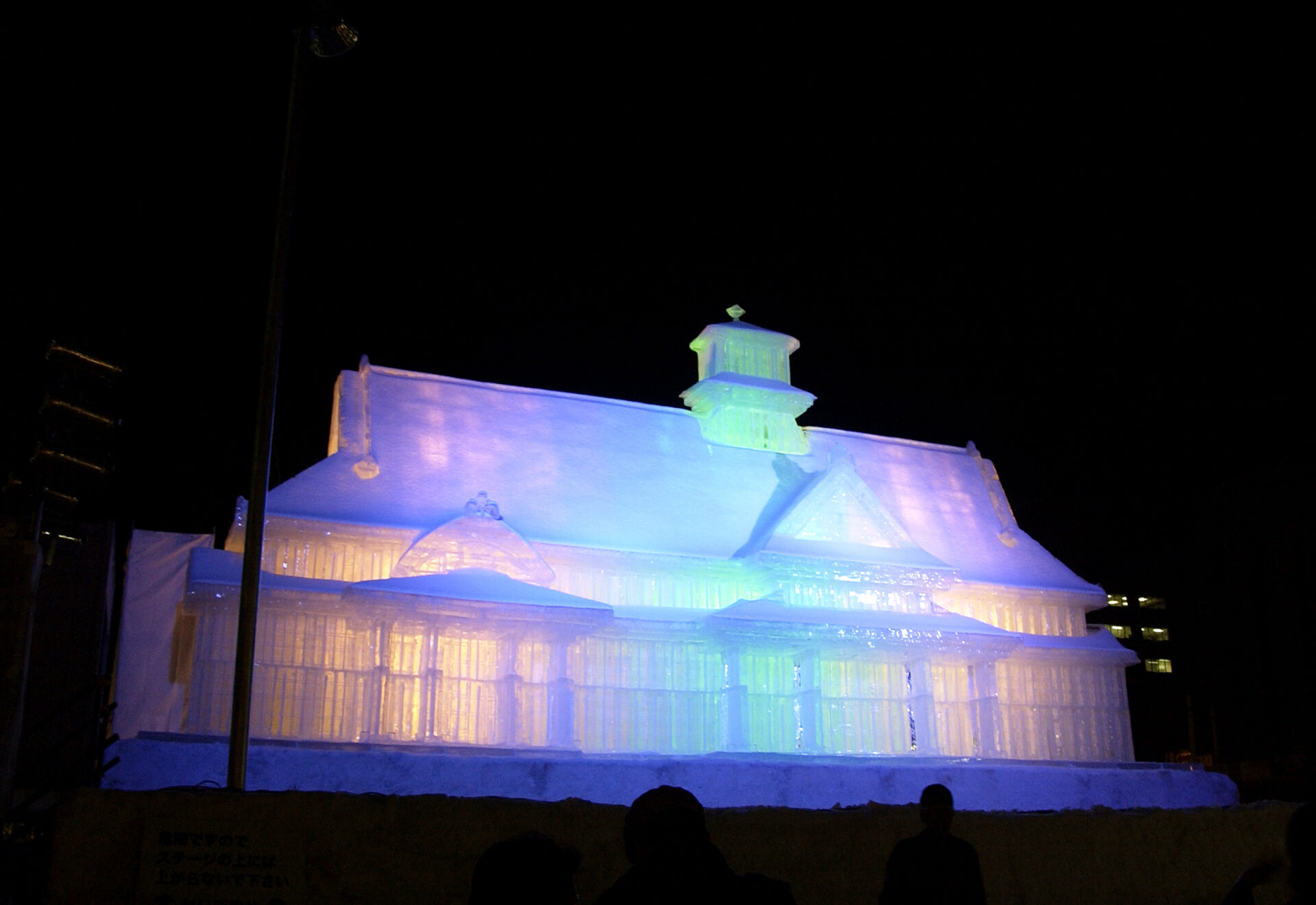
The Sapporo Snow Festival (SSF) and the Asahikawa Winter Festival (AWF) are Hokkaido’s crowning jewels. But here’s the secret: these festivals wouldn’t exist without the Japan Self-Defense Force (JSDF).
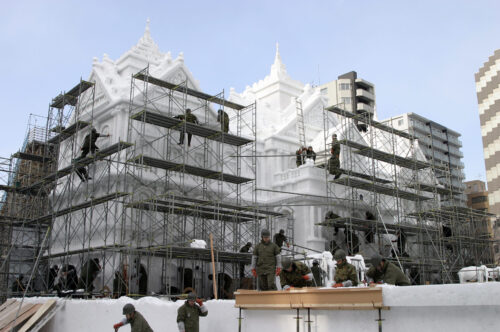
Yes, the people trained to defend our borders are also some of the world’s most elite snow sculptors. Every year, they engage in a battle against gravity and temperature to build massive, Guinness World Record-breaking monuments out of frozen water.
There is a legendary story about the time the JSDF was tasked with carving Disney characters. The Disney design team arrived with a manual of instructions so detailed it would make a heart surgeon sweat. The JSDF members took those “chilling” orders and executed them with such terrifying precision that, in the end, the Disney staff was moved to tears. It turns out that when you apply military discipline to the art of snow, you get a level of perfection that even the House of Mouse can’t deny.
Don’t let the market decide everything
Critics sometimes grumble that using the JSDF for snow festivals is a “waste of tax money.” I couldn’t disagree more.
If we let the market decide everything, we lose the things that make a culture worth living in. You cannot “outsource” the skill required to carve a five-story building out of a blizzard. It is a legacy of craftsmanship that, much like the knowledge of the railway workers, is impossible to regain once it’s extinguished.
The same applies to our workshop at CondeHouse. Our woodworking techniques aren’t just “production systems”; they are a heritage of human touch and sensory memory. If we stop, that history vanishes.
A cold invitation
So, when the winter winds blow, I invite you to witness these ephemeral fortresses in Sapporo and Asahikawa. Come see what happens when “artisans in uniform” take on the elements. And once you’ve seen what Hokkaido can do with snow, drop by our factory to see what we can do with wood. I promise you’ll be convinced that some things are worth preserving, no matter what the accountants say.
I confess that I despise the ‘logic of efficiency’—because you cannot copy and paste a soul, nor can you digitize twenty years of a craftsman’s sensory memory. At CondeHouse, we stand with the ‘Artisans in Uniform’ of our winter festivals, defending the heritage of the human touch against the cold spreadsheets of the world. Our Hatsune Miku Art Chair is the ultimate fortress of this craft. It isn’t a mass-produced product of a ‘reproducible manual’; it is a vibrant, turquoise-green masterpiece born from the tacit knowledge that only a Hokkaido winter can forge. It is a legacy of human skill that refuses to vanish. Now, here is a portal to a beauty that no market logic can ever extinguish: the image below is your link to the special site. If you prefer the shallow, disposable world of ‘perfectly systematized’ things, do NOT click it. But if you’re ready to own a piece of a living, breathing heritage, go ahead. Claim the craftsmanship. —— The Hatsune Miku Art Chair.


Shungo Ijima
Global Connector | Reformed Bureaucrat | Professional Over-Thinker
After years of navigating the rigid hallways of Japan’s Ministry of Finance and surviving an MBA, he made a life-changing realization: spreadsheets are soulless, and wood has much better stories to tell.
Currently an Executive at CondeHouse, he travels the world decoding the “hidden DNA” of Japanese culture—though, in his travels, he’s becoming increasingly more skilled at decoding how to find the cheapest hotels than actual cultural mysteries.
He has a peculiar talent for finding deep philosophical meaning in things most people ignore as meaningless (and to be fair, they are often actually meaningless). He doesn’t just sell furniture; he’s on a mission to explain Japan to the world, one intellectually over-analyzed observation at a time. He writes for the curious, the skeptical, and anyone who suspects that a chair might actually be a manifesto in disguise.
Follow his journey as he bridges the gap between high-finance logic and the chaotic art of living!