
The Asama-Sanso of the forest
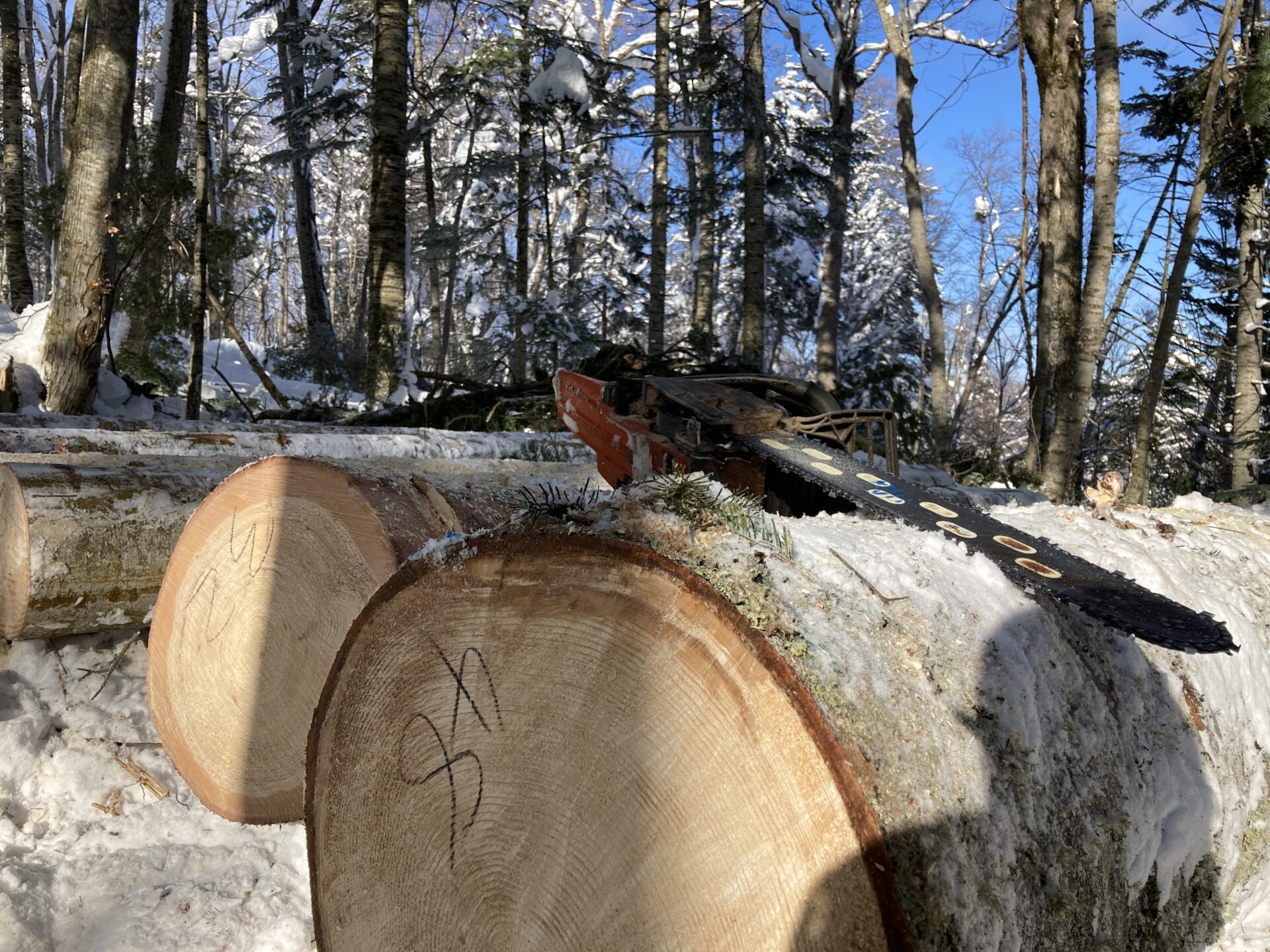
Last week, a logging company invited us to witness the winter harvest in the deep mountains of Hokkaido. As we plowed through the waist-deep snow, listening to the staff recount their daily struggles, my mind drifted to the infamous “Asama-Sanso” hostage crisis of 1972. In that ten-day winter siege, the police found themselves dysfunctional in the brutal cold; food froze instantly, water was non-existent, and the military had to be called in just for logistical survival.
As a side note, this crisis highlighted the fundamental difference between the police and the military. People often wonder, “Who is stronger, police special forces or the army?” as if they are debating “Superman vs. Batman.” But the real difference isn’t firepower; it’s the capacity for self-sufficiency. A military is designed to survive in a single location for months, building its own infrastructure and logistics in the harshest nature. I say this with authority, but let me be clear: that’s the Ground Self-Defense Force (GSDF). I was in the Air Self-Defense Force, and during base security drills, the GSDF “guerrillas” would absolutely crush us every single time. I speak from the perspective of the defeated!
The mountains in winter are not a “scenic getaway.” They are a battlefield where the environment itself is the enemy. It is in this frozen, unforgiving theater that the life of a piece of wood begins.
The “Why winter?” logic
You might wonder, “Why on earth would anyone choose to work in this frozen hell?” The answer is biological. In summer, trees are pumping with water, which makes the wood prone to warping and significantly extends the drying time. Furthermore, the thick canopy of leaves makes it nearly impossible to drag fallen giants down the mountain. Winter is the only time the trees are “ready.”
But don’t mistake summer for a vacation. Between Hokkaido’s brown bears and the giant killer hornets, the forest is always trying to remind you that you are at the bottom of the food chain.
YouTube vs. the chainsaw: The crisis of sustainability
Loggers are not destroyers of nature; they are its stewards. Without their constant maintenance, the forest would choke itself out. Yet, like many primary industries, we are facing a critical labor shortage. In an era where “YouTuber” consistently ranks as the top career choice for young people, finding someone willing to face a brown bear or a -20°C blizzard for the sake of a dining chair is becoming a Herculean task.
Ultimately, the fate of the wooden furniture industry doesn’t depend on the number of trees we have—it depends on the number of humans willing to enter the forest. We are talking a lot about “natural sustainability” these days, but it is the “sustainability of the human spirit” that I am most worried about.
The Hatsune Miku Art Chair might look like a sleek product of the digital age, but its DNA was forged in the frozen, bear-infested trenches where only the “self-sufficient” survive. It is a tribute to the loggers who chose a chainsaw over a camera and a blizzard over a studio—the kind of tenacity I witnessed during my time in the Self-Defense Forces. We believe true beauty requires a touch of “extremity.” When you sit in this chair, you aren’t just supporting a subculture; you are supporting the survival of the human spirit that still dares to enter the woods. Why not sit on a masterpiece that has survived a literal battlefield just to find its way into your living room?


Shungo Ijima
Global Connector | Reformed Bureaucrat | Professional Over-Thinker
After years of navigating the rigid hallways of Japan’s Ministry of Finance and surviving an MBA, he made a life-changing realization: spreadsheets are soulless, and wood has much better stories to tell.
Currently an Executive at CondeHouse, he travels the world decoding the “hidden DNA” of Japanese culture—though, in his travels, he’s becoming increasingly more skilled at decoding how to find the cheapest hotels than actual cultural mysteries.
He has a peculiar talent for finding deep philosophical meaning in things most people ignore as meaningless (and to be fair, they are often actually meaningless). He doesn’t just sell furniture; he’s on a mission to explain Japan to the world, one intellectually over-analyzed observation at a time. He writes for the curious, the skeptical, and anyone who suspects that a chair might actually be a manifesto in disguise.
Follow his journey as he bridges the gap between high-finance logic and the chaotic art of living!