
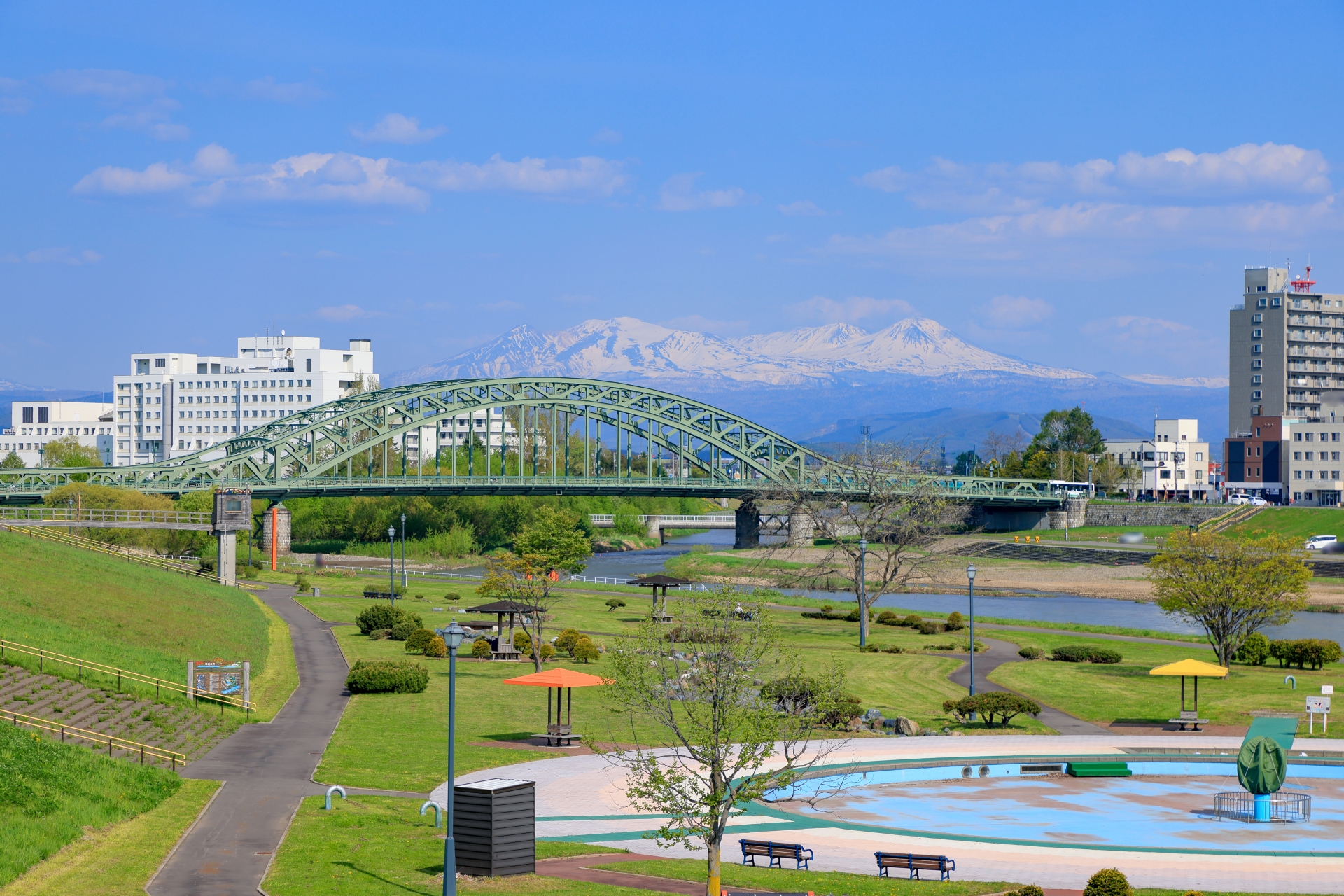
Asahikawa, Hokkaido, it’s the city of rivers
My hometown, Asahikawa, is the second-largest city in Hokkaido, with a population of 330,000. It has produced many things—including, for your information, a genius like myself—and yet its name remains stubbornly obscure. Everyone knows the world’s highest mountain, but few can name the second highest (it is K2, in case you were wondering). As the saying goes, “First place is the only place that matters.” This is the harsh reality of being number two.
Most major cities in the world are born around natural ports, which makes sense given that 99% of global logistics still relies on sea freight. Hokkaido’s first city, Sapporo, and its oldest, Hakodate, are both near the sea. Asahikawa, however, sits right in the dead center of Hokkaido. Its development was artificial and strategic; it was built as a military city—a front line against Russia—hosting one of Japan’s largest army bases.
Despite its rigid military roots, the city is a lush oasis. True to its name (Asahikawa literally means “Morning River”), 160 rivers flow into the city from the surrounding mountains. While Japan is a land of rivers—over 150 of its 1,700 municipalities have the character for “River” in their name—Asahikawa’s water is uniquely beautiful.
In fact, the rivers are so clean that I once saw a businessman in a suit walk down from the central station, pull a fishing rod from his briefcase, and land a trout in seconds. He looked as cool as James Bond. Having such an oasis in the city center is one of our charms, but our chairman is far from satisfied.
Riversides should be for people, not just for “James Bond”
As I’ve mentioned before, our chairman and I have traveled the world together. Melbourne remains one of his favorite cities because its streetscape is a masterclass in urban design—a seamless blend of the old and the new, of nature and art.
I recall many evenings sitting at bars along the Yarra River, where the chairman would gaze at the bustling crowds and complain: “A riverside should be like this. It’s a prime location where people gather, yet the riverside near our own central station remains tragically underutilized.”
Indeed, we’ve seen the same story in Bangkok along the Chao Phraya and in Ho Chi Minh City along the Saigon River. These cities treat their water as a stage for commerce and life. In contrast, Asahikawa’s riverside is a silent, tranquil void. While I personally find the sight of a lone, “James Bond” businessman fishing in solitude to be charmingly poetic, to the chairman’s eyes, it is a missed opportunity of epic proportions.
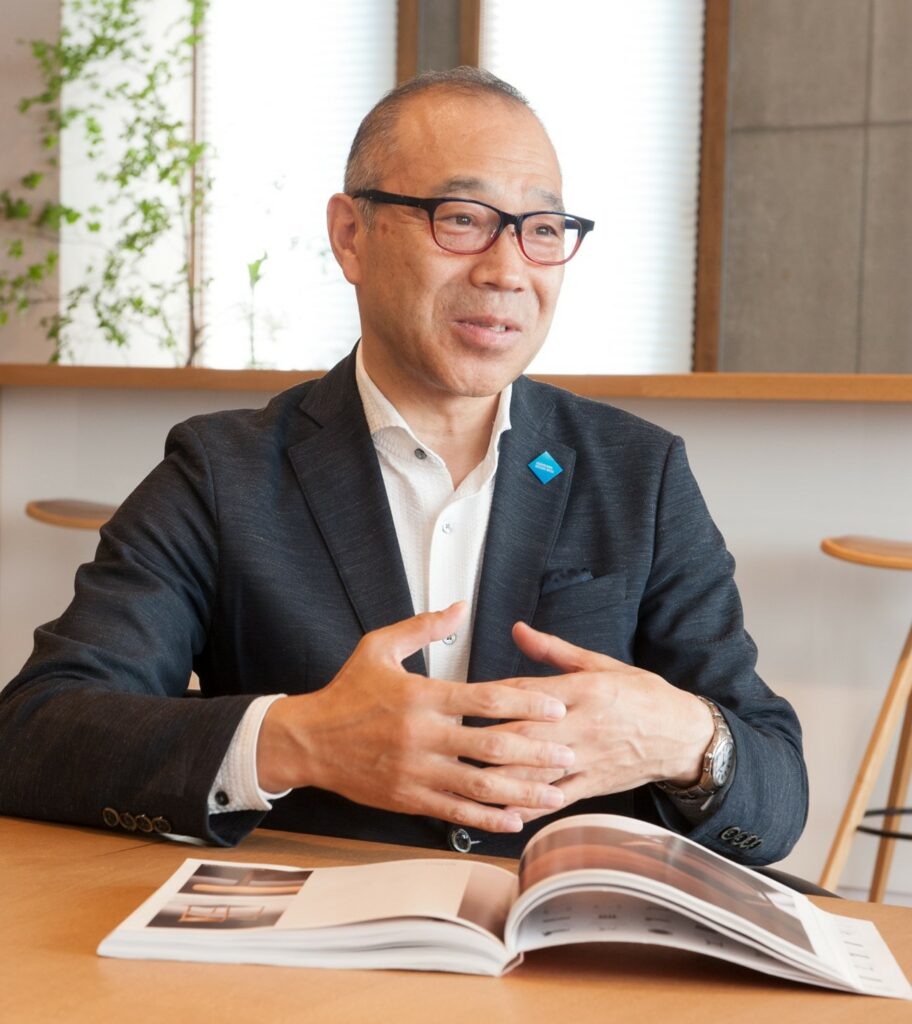
The dream: Converting industrial heritage into a sightseeing masterpiece
The chairman’s point is not about “development” in the sense of building more boring concrete apartments. It’s about making full use of existing resources.
Asahikawa is blessed with over 160 rivers flowing from the surrounding peaks. We are practically drowning in riverside space, yet most of it is relegated to empty baseball parks where no one plays. The current development south of the station is just more of the same—featureless apartment buildings that will result in a neighborhood as exciting as a blank piece of paper.
Driven by this sense of crisis, the chairman has devoted himself to industrial tourism. Asahikawa is one of Japan’s five major furniture production hubs. Why not use this heritage to revitalize the community?
His new challenge is to transform our wooden furniture factory from a mere production site into a destination—a place of discovery and fun that attracts people from across the globe. Our factory tours already receive rave reviews, but we are just getting started. Why spend your holiday at a crowded, generic tourist trap when you can witness the soul of Japanese craftsmanship in a city built for war but refined by wood?
Come and see for yourself. We are ready to prove that being “Number Two” just means we have to work much harder to impress you.
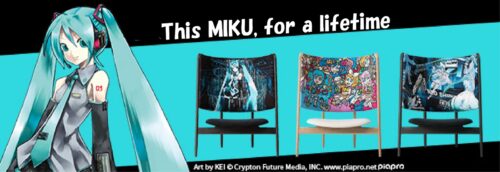
I confess that being number two in Hokkaido only makes us work harder—because while others rely on the sea, we’ve spent a century refining the soul of the ‘Morning River’ into every piece of wood we touch. At CondeHouse, we are turning our factory from a silent military relic into a global destination for craftsmanship. Our Hatsune Miku Art Chair is the ultimate symbol of this transformation: a masterpiece of turquoise-green energy born in the heart of Asahikawa, combining the purity of our 160 rivers with the precision of a master artisan. It is the coolest thing to come out of our city since that trout-fishing businessman. Now, here is a portal to the ‘number two’ city that tries harder: the image below is your link to the special site. If you prefer the crowded, generic tourist traps of the coast, do NOT click it. But if you’re ready to witness the soul of a city refined by wood, go ahead. Discover the masterpiece. —— The Hatsune Miku Art Chair.
Shungo Ijima
Global Connector | Reformed Bureaucrat | Professional Over-Thinker
After years of navigating the rigid hallways of Japan’s Ministry of Finance and surviving an MBA, he made a life-changing realization: spreadsheets are soulless, and wood has much better stories to tell.
Currently an Executive at CondeHouse, he travels the world decoding the “hidden DNA” of Japanese culture—though, in his travels, he’s becoming increasingly more skilled at decoding how to find the cheapest hotels than actual cultural mysteries.
He has a peculiar talent for finding deep philosophical meaning in things most people ignore as meaningless (and to be fair, they are often actually meaningless). He doesn’t just sell furniture; he’s on a mission to explain Japan to the world, one intellectually over-analyzed observation at a time. He writes for the curious, the skeptical, and anyone who suspects that a chair might actually be a manifesto in disguise.
Follow his journey as he bridges the gap between high-finance logic and the chaotic art of living!