
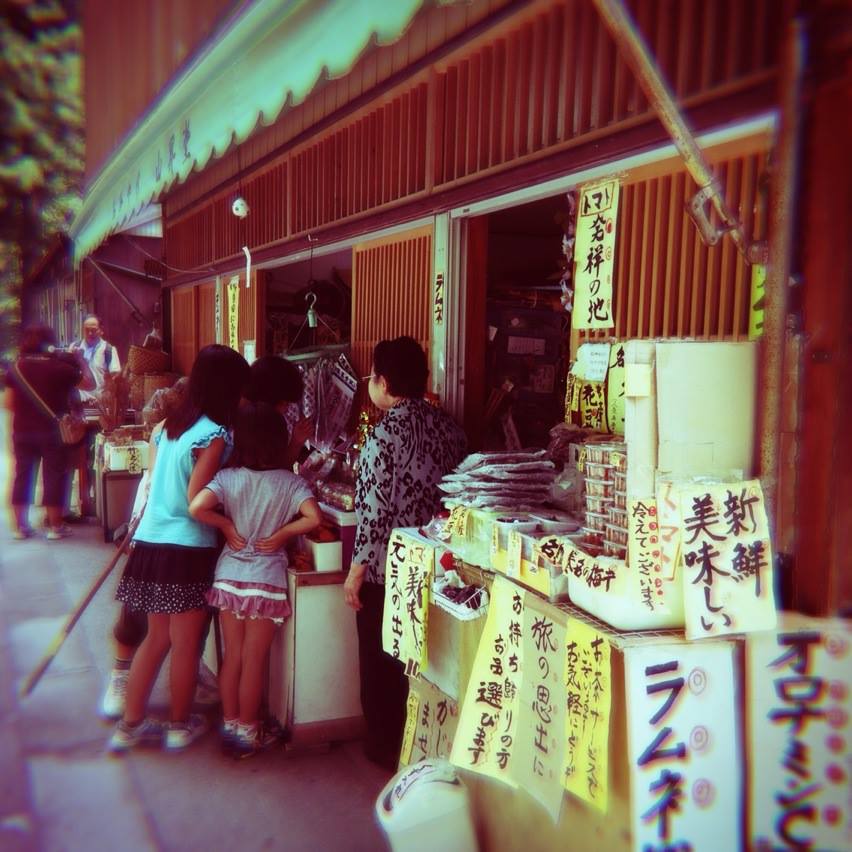
The “banana debate”: A survival strategy
“Are bananas considered a snack?” If you want to make a Japanese person over 30 laugh (or trigger a nostalgic debate), just say this phrase. In Japanese elementary schools, the annual field trip is a sacred event. The highlight isn’t the zoo or the park; it’s the fact that you are allowed to bring snacks.
It is difficult for those who haven’t undergone the “purification ritual” of Japanese elementary school life to understand the weight of this. Back then, consuming anything other than school lunch or tap water on campus was strictly forbidden. Eating snacks at school was a moment of tasting the forbidden fruit—a sweet, rebellious thrill that defied the laws of our universe. However, there was a brutal rule to this rebellion: the total cost must be under 300 yen.
The collapse of the 10-Yen paradise
For decades, Japanese children have used every ounce of their brainpower to maximize “snack utility” within this 300-yen limit. We would visit the neighborhood Dagashi-ya (candy store) with friends and engage in intense negotiations—forming “trade treaties” and carefully calculating every yen with a seriousness that would make any mother yell, “Why don’t you study this hard?!” For a Japanese child, more than half the fun of the field trip lies in this “procurement” phase. This is why the “Banana Debate” was a matter of national security for us. If a banana is “fruit,” it doesn’t count toward the budget. If it’s a “snack,” it consumes a massive chunk of our precious 300 yen. It was our first lesson in resource management under a fixed ceiling.
But as I write this in 2026, that paradise has crumbled. The 10-yen snack, once our last constant in an uncertain universe, is now 15 or 20 yen. Rules in Japan change much slower than prices, and the 300-yen ceiling remains frozen. Children are being squeezed, forced to abandon their favorite chocolate bars just to stay under the bureaucratic limit. This is a miniature version of the “Cost-Push Inflation” nightmare.
Furniture and the crude oil nightmare
This isn’t just about candy. Japan’s energy dependency is still over 80%. When crude oil prices spike and the yen weakens, everything—from the electricity in our factory to the glue in our joints—becomes more expensive.
At CondeHouse, we fought a long, lonely battle to keep our prices stable. We looked at our furniture the way a child looks at that 300-yen budget, trying to find every possible efficiency to avoid passing the cost to you. But we’ve reached the limit. To maintain the craftsmanship and the quality of the timber, we have been forced to make a difficult decision: a price hike.
The “300-yen era” of high-end furniture is coming to an end. If you’ve been waiting for the right moment to bring a piece of Asahikawa craftsmanship into your home, this is the last window before the new reality sets in. Don’t let your favorite piece become the “banana” that you can no longer afford to pack.
Just as the 300-yen snack limit is becoming a relic of a cheaper past, the opportunity to own artisanal furniture at yesterday’s prices is fading. The Hatsune Miku Art Chair is a piece designed to outlast economic cycles. In an age where the “10-yen paradise” is disappearing and the value of currency is shrinking, investing in “real” things—wood, craft, and soul—is the only rational survival strategy. Don’t wait until your favorite design becomes a “forbidden fruit” beyond your reach.
Want to secure a masterpiece before the ceiling rises again? Click the banner below to explore the Art Chair collection at its current value.


Shungo Ijima
Global Connector | Reformed Bureaucrat | Professional Over-Thinker
After years of navigating the rigid hallways of Japan’s Ministry of Finance and surviving an MBA, he made a life-changing realization: spreadsheets are soulless, and wood has much better stories to tell.
Currently an Executive at CondeHouse, he travels the world decoding the “hidden DNA” of Japanese culture—though, in his travels, he’s becoming increasingly more skilled at decoding how to find the cheapest hotels than actual cultural mysteries.
He has a peculiar talent for finding deep philosophical meaning in things most people ignore as meaningless (and to be fair, they are often actually meaningless). He doesn’t just sell furniture; he’s on a mission to explain Japan to the world, one intellectually over-analyzed observation at a time. He writes for the curious, the skeptical, and anyone who suspects that a chair might actually be a manifesto in disguise.
Follow his journey as he bridges the gap between high-finance logic and the chaotic art of living!