

Not the conqueror, but the mutton: A household staple
Genghis Khan (Jingisukan) is a barbecue dish featuring mutton, lamb, and vegetables, and it’s one of the signature specialties of Hokkaido. Mutton and lamb aren’t widely consumed across Japan, and many Japanese people dislike the strong smell. Consequently, it’s difficult to find a dedicated Genghis Khan restaurant outside Hokkaido.
In fact, even here in Hokkaido, they weren’t everywhere when I was a kid, maybe 30 years ago. Back then, Genghis Khan was merely a home-cooked meal—appearing on my family’s dinner table at least twice a month. It wasn’t a special treat at all. To be honest, I still have a little difficulty paying to eat something so routine at an external restaurant. (But, the times change, and so must my wallet.) Having said that, I must admit the best restaurants are genuinely excellent.
The truth about Hokkaido’s “agricultural kingdom”
On the outskirts of Sapporo, the capital city, there’s a famous resort complex with museums, flower fields, a large sheep ranch, and a huge Genghis Khan restaurant. It’s an iconic sightseeing spot for tourists, especially those from outside Hokkaido.
Objectively speaking, the scene is somewhat cruel: visitors enjoy mutton and lamb right after watching contented sheep graze in the nearby fence. Due to the image of this spot and the general impression that Hokkaido is the “Agricultural Kingdom of Japan,” many people assume Genghis Khan is made from Hokkaido-raised sheep.
Here is the big reveal: As a matter of fact, Hokkaido imports more than 90% of the overall mutton and lamb consumption, mainly from Australia and New Zealand. It’s the ultimate imported emperor of Hokkaido cuisine.
The survival of the fittest: A local guarantee
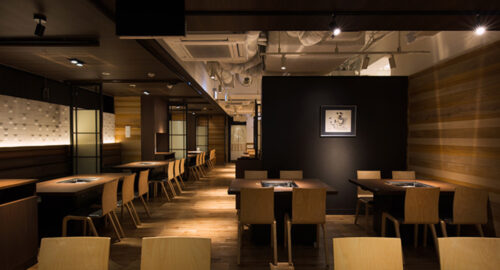
If you are okay with mutton and lamb, you can trust almost any Genghis Khan restaurant in Hokkaido. They are the ones that have survived by passing the extremely strict discerning eye (and tongue) of the local Hokkaido people.
However, there is one crucial practical note: Bring a large plastic bag to put your coat or jacket in. You are expected to help yourself grill the meat right on your table. While some new restaurants have lockers and good ventilation, others do not. Although the smell of grilled mutton and lamb is delicious, you may not be able to bear wearing that smell all the way back to your hotel after you’re full.
Although I said “any restaurant should be fine,” let me introduce one establishment: MATSUO. They have a long history of over 60 years and are headquartered in Hokkaido, but they also operate five restaurants in Tokyo. Crucially, in their newest location in Shibuya, you can enjoy authentic Genghis Khan while seated in our chairs.
I confess my wallet still cries a little when paying for a dish I used to eat twice a month at home, but even I must admit that some things are worth the ‘imperial’ treatment. Hokkaido’s Genghis Khan is a global fusion—Australian mutton met with local grit—and we’ve brought that same spirit to the heart of Tokyo. At the newest MATSUO in Shibuya, you can satisfy your hunger while sitting in our very own chairs. It’s the ultimate collaboration: authentic Hokkaido flavor meets Hokkaido craftsmanship. Now, here is a tip before you head out: the image below is a link to our special site (no plastic bag required for browsing). If you prefer a life without the ‘smell’ of success and the comfort of world-class design, do NOT click it. But if you’re ready to see where the Emperor of BBQ sits, go ahead. Your table is ready. —— The Hatsune Miku Art Chair.

Photo Credit: https://www.matsuo1956.jp/

Shungo Ijima
Global Connector | Reformed Bureaucrat | Professional Over-Thinker
After years of navigating the rigid hallways of Japan’s Ministry of Finance and surviving an MBA, he made a life-changing realization: spreadsheets are soulless, and wood has much better stories to tell.
Currently an Executive at CondeHouse, he travels the world decoding the “hidden DNA” of Japanese culture—though, in his travels, he’s becoming increasingly more skilled at decoding how to find the cheapest hotels than actual cultural mysteries.
He has a peculiar talent for finding deep philosophical meaning in things most people ignore as meaningless (and to be fair, they are often actually meaningless). He doesn’t just sell furniture; he’s on a mission to explain Japan to the world, one intellectually over-analyzed observation at a time. He writes for the curious, the skeptical, and anyone who suspects that a chair might actually be a manifesto in disguise.
Follow his journey as he bridges the gap between high-finance logic and the chaotic art of living!