
The great branding robbery
In Japan, we are obsessed with fish eggs. Salmon roe (Ikura) and pollock roe (Tarako) are the kings of the breakfast table. Hokkaido is, without question, the top producer of both.
However, we Hokkaido locals have a bit of a chip on our shoulder when it comes to pollock roe. If you ask a Japanese person, “Where is the best spicy cod roe (Mentaiko) from?” they will almost certainly say, “Kyushu!” in the far south.
It’s a branding tragedy. Most of that “Kyushu” roe was actually caught in the cold waters of Hokkaido. We provide the “soul” (the eggs), but Kyushu takes the “glory” (the brand). Our former chairman used to lament this as the ultimate example of a failure in local branding. We were the hard-working farmers, while someone else was wearing the tuxedo at the award ceremony.
The kingdom of sweets: Turning milk into gold
Fortunately, we didn’t make the same mistake with our sweets. Hokkaido is the undisputed heavyweight champion of Japanese pastries. We produce over 50% of the nation’s milk and 70% of its flour.
Unlike fish eggs, which are notoriously difficult to brand, our confectionery makers like Royce’ and Rokkatei have mastered the art of turning local ingredients into global icons. Royce’ is already a superstar in New York and Singapore, but today, I want to talk about the “soul” of Hokkaido sweets: Rokkatei.
The true heart of this “Sweets Kingdom” is the Tokachi area, where giants like Rokkatei are headquartered. Here’s a little secret for you: many of the factories there sell “imperfect” products—sweets with minor cosmetic flaws—at incredibly low prices. Naturally, these are so popular that you have to queue up long before the doors open.
Now, I live about a three-hour drive from Tokachi. Yet, several times a year, I wake up at the crack of dawn and make the journey just to snag these bargains. Sadly, once you get used to these “factory-direct” prices, your brain refuses to pay full price at a regular store. If I sat down and did the math—the hours of labor, the fuel for my hybrid car—this is a completely irrational, loss-making activity. But why do we do it? The mystery of human irrationality is a topic for another day.
A sanctuary in a vineyard
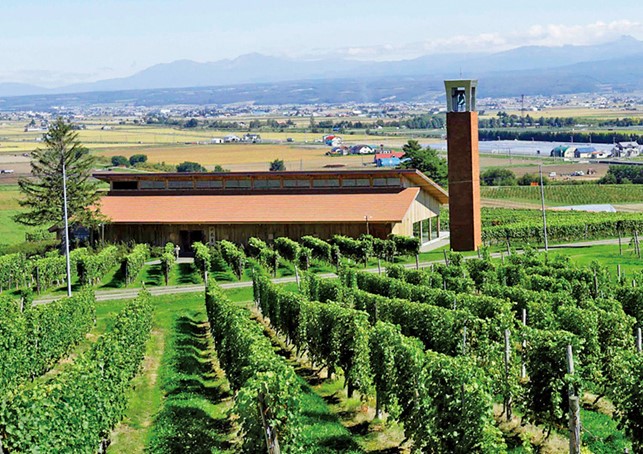
If you prefer a more “rational” (and luxurious) experience, there is one “Must-Visit” location: Campana Rokkatei in Furano. Imagine a stunning architectural space sitting right in the middle of a 24-hectare vineyard (see the image above). It’s not just a shop; it’s a cafe, a restaurant, and an art gallery. Sitting on the terrace, eating their fresh ice cream while staring at the Tokachi mountain range, is as close to heaven as you can get in Hokkaido.
Furniture with a side of coffee
For those who can’t make it to Furano, don’t worry—Rokkatei has a strong presence here in Asahikawa too. Two of their local shops feature cafe areas where you can enjoy their legendary sweets and coffee while sitting on CondeHouse chairs. It’s a perfect harmony: the best ingredients, the best branding, and the best craftsmanship. Just as Rokkatei took Hokkaido’s milk and made it legendary, we took Hokkaido’s wood and made it a global standard. We learned the lesson from the pollock roe—never just provide the material; always provide the masterpiece.
Human beings are beautifully irrational. We drive three hours for a bargain, and we fall in love with objects that speak to our souls. Our “Hatsune Miku Art Chair” isn’t just about the “logic” of fine woodworking; it’s about the “emotion” of owning something truly iconic. It combines Hokkaido’s world-class materials with a global cultural legend to create a piece that defies simple market value. Why not treat yourself to a masterpiece that celebrates both craftsmanship and the joy of being a fan?
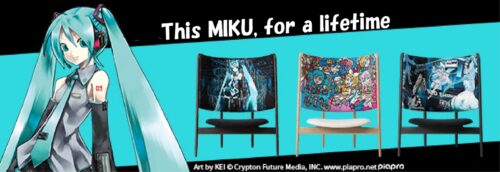
Photo Credit: https://www.rokkatei.co.jp/en/

Shungo Ijima
Global Connector | Reformed Bureaucrat | Professional Over-Thinker
After years of navigating the rigid hallways of Japan’s Ministry of Finance and surviving an MBA, he made a life-changing realization: spreadsheets are soulless, and wood has much better stories to tell.
Currently an Executive at CondeHouse, he travels the world decoding the “hidden DNA” of Japanese culture—though, in his travels, he’s becoming increasingly more skilled at decoding how to find the cheapest hotels than actual cultural mysteries.
He has a peculiar talent for finding deep philosophical meaning in things most people ignore as meaningless (and to be fair, they are often actually meaningless). He doesn’t just sell furniture; he’s on a mission to explain Japan to the world, one intellectually over-analyzed observation at a time. He writes for the curious, the skeptical, and anyone who suspects that a chair might actually be a manifesto in disguise.
Follow his journey as he bridges the gap between high-finance logic and the chaotic art of living!