
The noble grain: Why Soba is Japan’s elegant noodle
There are so many kinds of wheat-based foods across the world. Wheat is one of the world’s three major grains. (The other two, for your information, are rice and corn.) But what about buckwheat? Is buckwheat food popular in your country? Perhaps you know the galette, which originated in Bretagne, France.
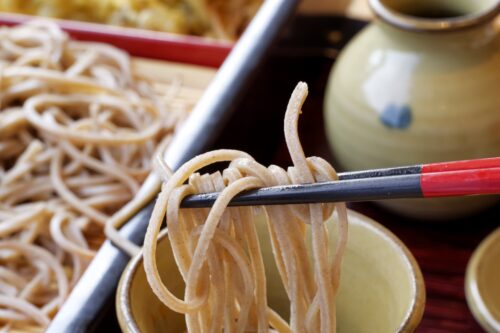
In Japan, we have buckwheat noodles called Soba. It is immensely popular, standing alongside Ramen and Udon as one of the three major Japanese noodles. (The former two are made from wheat; the difference between them is the inclusion of alkaline brine solution.)
Here lies an interesting cultural paradox: Many Japanese people perceive Soba noodles as far more elegant than Ramen or Udon. This is undeniably true. If you took a first date to a Ramen or Udon shop, your date would likely conclude that this is the maximum level of effort you are prepared to expend for a future relationship. If you take them to a Soba restaurant, however, they will likely think you have good taste. This is funny because buckwheat itself has historically been the iconic crop of poor, mountainous regions in Japan.
The seasonal charm: The Pavlovian response to “New Soba”
Another key difference that sets Soba apart from the other two noodles is its seasonal importance. While we can eat Soba year-round, October and November are the special months. In the season just before winter, many restaurants put up a sign announcing “Shin-Soba” (New Soba). Such signs instantly make us crave Soba; it is like a major cultural event marking the changing season.
I must confess to a certain level of Pavlovian obedience here: I genuinely cannot tell the difference between new Soba and non-new Soba. Yet, when the season arrives, I eat it with uncritical gusto. This is funny as well. Wheat also has a harvest season, but I have never seen anyone reveling in “New Ramen” or “New Udon.” It is a truly human reaction to celebrate the ritual, even if the difference is imperceptible.
The local pride: Asahikawa, the buckwheat heartland
I once assumed this intense focus on the “new” Soba might be due to Japan’s high reliance on wheat imports. As I made a quick search, I found that the self-sufficiency rate of buckwheat is only about 20%. This is relatively low and not much different from that of wheat.
This fact is surprising to me personally because our hometown of Asahikawa is one of the major buckwheat-producing areas in Hokkaido. For us, it is a matter of local pride that we can take it for granted to enjoy Soba noodles made from local buckwheat. While the country may struggle with self-sufficiency, we in Asahikawa get to live in the buckwheat heartland.
The perfect setting: A cultural property you must visit
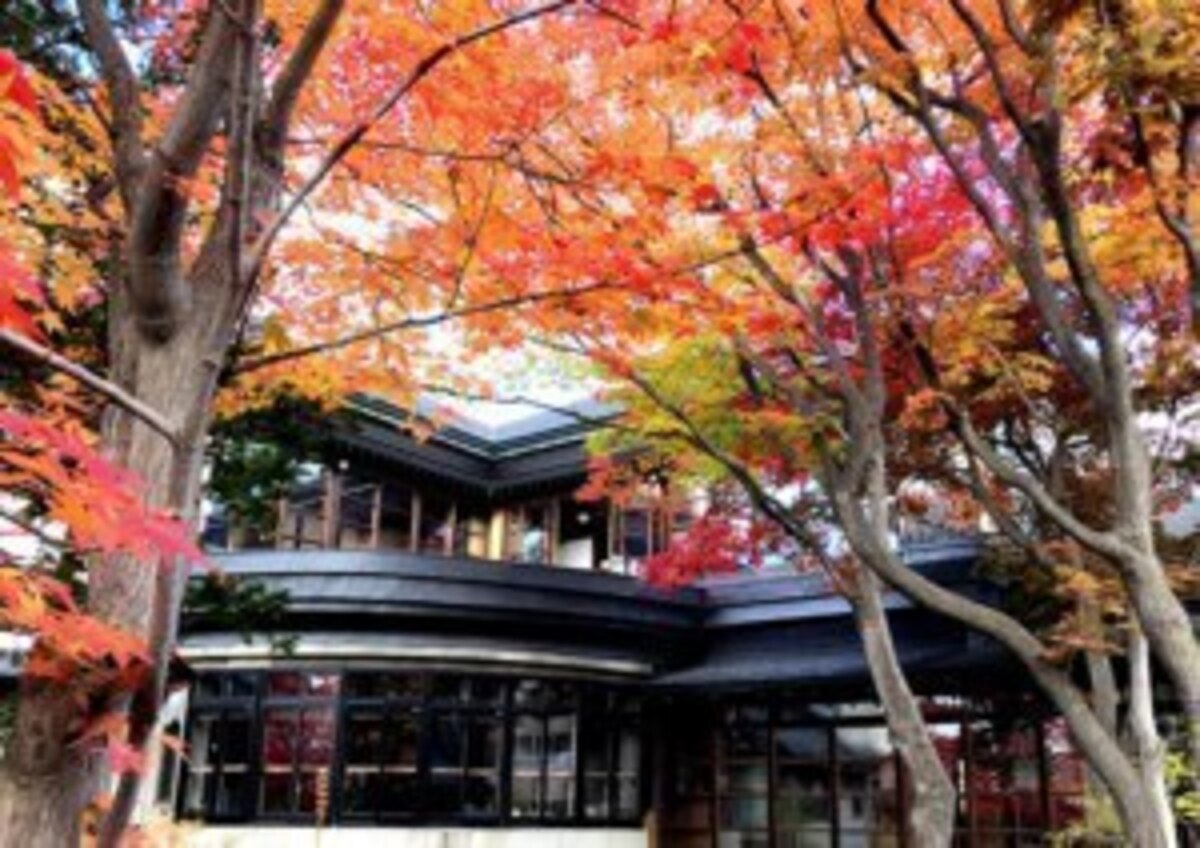
As a matter of fact, there are many excellent Soba restaurants here. If I had to pick one to recommend—a place that encapsulates the elegance of the Soba paradox—it would be OKADA (see the first image).
The restaurant building and its traditional Japanese garden are exceptionally beautiful. The site is registered as a Tangible Cultural Property. The historic interior design and the serene garden view seen from the window elevate the Soba noodles, making them taste even better.
(Alas, a small point of disappointment: they do not have our furniture, so you won’t be able to enjoy their exquisite Soba on our tables and chairs.) Nevertheless, if you are seeking a genuinely elegant, seasonal, and culturally deep experience in the buckwheat heartland of Hokkaido, OKADA is the definitive choice.
I may be a Pavlovian fool who can’t tell the difference between ‘New Soba’ and the old stuff, but I still believe in the power of an elegant ritual. It’s a tragedy that you can’t enjoy the buckwheat heartland of Hokkaido while sitting in our chairs at OKADA, but perhaps that’s for the best—our furniture might just distract you from the garden view. If you want to experience a ‘New Soba’ level of seasonal excitement that you can actually feel, our Hatsune Miku Art Chair is waiting. It’s the ultimate ‘Shin-Soba’ of the furniture world: a fresh, cultural delicacy that requires no prior knowledge to appreciate, only a taste for the exquisite. Come for the noodles, stay for the craftsmanship, and find the elegance you’ve been looking for. —— The Hatsune Miku Art Chair.

Photo Credit: https://www.liner.jp/news/2019092622405/

Shungo Ijima
Global Connector | Reformed Bureaucrat | Professional Over-Thinker
After years of navigating the rigid hallways of Japan’s Ministry of Finance and surviving an MBA, he made a life-changing realization: spreadsheets are soulless, and wood has much better stories to tell.
Currently an Executive at CondeHouse, he travels the world decoding the “hidden DNA” of Japanese culture—though, in his travels, he’s becoming increasingly more skilled at decoding how to find the cheapest hotels than actual cultural mysteries.
He has a peculiar talent for finding deep philosophical meaning in things most people ignore as meaningless (and to be fair, they are often actually meaningless). He doesn’t just sell furniture; he’s on a mission to explain Japan to the world, one intellectually over-analyzed observation at a time. He writes for the curious, the skeptical, and anyone who suspects that a chair might actually be a manifesto in disguise.
Follow his journey as he bridges the gap between high-finance logic and the chaotic art of living!