

The scent of home: The unexpected smell of Japan
What do you think your country smells like? This may be a difficult question to answer because, as the saying goes, we can’t smell our own house. Our sense of smell tends to decrease easily, allowing us to quickly get used to even bad odors—a sort of defense mechanism, perhaps. Regardless, I always like to take a sniff when getting off an airplane and taking the first step in an overseas airport. The scent of the unfamiliar always makes me realize, “I am far away from home.”
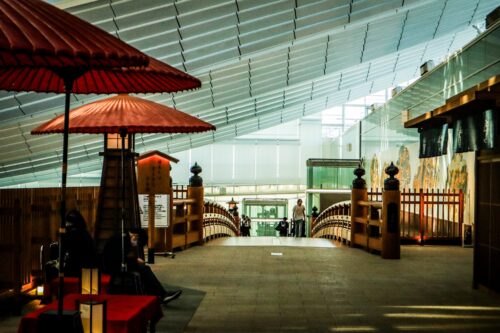
I’ve heard rumors that people arriving from overseas often detect something like soy sauce in Japan. Curious, I Googled it and found a lighthearted survey of foreign tourists arriving at Tokyo Haneda Airport. The questionnaire was close-ended, offering only three choices: soy sauce, miso, and others. About half of the respondents confirmed the rumor.
What delighted me, however, were the respondents who chose “others.” They frequently commented that “Japan just smells fresh and clean!” Someone even said, “It’s like what I smell when opening a box of a new electronic device.” I believe this is true, because Tokyo Haneda Airport has won the No. 1 spot for the World’s Cleanest Airports by Skytrax almost every year since 2016.
Haruko Niitsu: The charismatic cleaner who redefined service
This great feat is largely attributed to Haruko Niitsu, a legendary cleaner at Haneda. She came to Japan from China in 1987 at the age of 17, learned all the basic skills at a vocational school, and continued improving until she became the youngest winner of the National Building Cleaning Competition in 1997.
She is an astonishing study in professionalism: Her business books are massive bestsellers, yet she refuses to receive the royalty, choosing instead to continue working as a cleaner while training hundreds of new staff.
She cited her turning point as the moment she won the competition. Before the contest, her boss told her: “Your cleaning skills are great, but you look heartless when you work.” She realized that in her dedication to the task, she had forgotten the feelings of airport users or how they perceived her. That insight completely changed her perspective. She began seeing herself as the first and closest service staff visitors see upon arriving in Japan. Since then, she has been meticulous about her behavior, her facial expression, and even proactively helps lost travelers.
The unsung heroes of Hokkaido: From cleaners to snow plowers
Niitsu-san’s story shows us that true mastery involves not just skill, but empathy. Her work proves that cleaning is not a utilitarian necessity; it is a profound act of service and hospitality (omotenashi).
Now, here is the inevitable, humble turn to my local pride: Our headquarters and furniture factory are located in Asahikawa City, which has a small airport. It is much smaller than Haneda, but there is one area where our small airport can actually claim superiority.
Asahikawa Airport boasts one of the lowest flight cancellation rates in Japan, despite the harsh natural environment. We have heavy snow in winter, but the cancellation rate is consistently less than 1%. This achievement isn’t luck; it requires unseen dedication. Just as Haneda has its master cleaners, Asahikawa must have its unsung masters of snow clearing.
A challenge to the traveler

This dedication to professionalism, whether in cleaning a floor or clearing a runway, is the genuine “smell” of Japanese kaizen.
So, after all that insight into cleanliness, empathy, and national pride, what is the ultimate conclusion? Please come to Asahikawa and drop by our factory, even in the harsh winter! I want you to witness firsthand the evidence of this Hokkaido spirit—the same relentless focus on mastering the difficult task that keeps our small, snowy airport running flawlessly. (And perhaps you can tell me what you think our factory smells like.)
If the scent of Japan is the smell of a ‘new electronic device’—the fragrance of meticulous care—then I hope our factory smells like the heart of a craftsman. Like Niitsu-san, we’ve learned that technical mastery is hollow without empathy. Our Hatsune Miku Art Chair is the ultimate expression of this spirit: it’s not just a ‘clean’ piece of engineering, but a soulful partnership between Hokkaido’s resilience and a digital legend. Come to Asahikawa, witness our unsung masters at work, and see for yourself what happens when ‘kaizen’ meets ‘omotenashi.’ I can’t promise the scent of soy sauce, but I can promise a seat that feels like home. —— The Hatsune Miku Art Chair.


Shungo Ijima
Global Connector | Reformed Bureaucrat | Professional Over-Thinker
After years of navigating the rigid hallways of Japan’s Ministry of Finance and surviving an MBA, he made a life-changing realization: spreadsheets are soulless, and wood has much better stories to tell.
Currently an Executive at CondeHouse, he travels the world decoding the “hidden DNA” of Japanese culture—though, in his travels, he’s becoming increasingly more skilled at decoding how to find the cheapest hotels than actual cultural mysteries.
He has a peculiar talent for finding deep philosophical meaning in things most people ignore as meaningless (and to be fair, they are often actually meaningless). He doesn’t just sell furniture; he’s on a mission to explain Japan to the world, one intellectually over-analyzed observation at a time. He writes for the curious, the skeptical, and anyone who suspects that a chair might actually be a manifesto in disguise.
Follow his journey as he bridges the gap between high-finance logic and the chaotic art of living!