
The Colonel’s gift: How marketing created Japan’s Christmas tradition
Do you know what the world’s most popular Christmas song is? In 2022, Spotify confirmed it was Mariah Carey’s “All I Want for Christmas Is You.” While standard Christmas songs are played everywhere in Japan just like the rest of the world, that’s where the similarity ends.
As I’ve written before, the Christian population in Japan is barely 1%. Due to this cultural blank slate, we celebrate Christmas in a uniquely strange and hilarious way. The most famous example, of course, is rushing to Kentucky Fried Chicken restaurants on Christmas Eve.
The popular anecdote is that this tradition started in the 1970s with a brilliant, aggressive marketing campaign called “Kurisumasu ni wa Kentakkī! (Kentucky for Christmas!)” which filled the cultural void. To outsiders, this might seem absurd, but I find it illuminating that, lacking historical context, Japanese culture is uniquely susceptible to commercial adoption as tradition. Today, I’ll tell you some more of our Christmas customs that may appear absurd to outsiders.
The day of shame: Christmas as an avoidance strategy
In Hollywood movies, Christmas is universally portrayed as the time for family gatherings. In Japan, the situation is completely different: Christmas is predominantly viewed as the time for lovers.
Especially for young people, Christmas Eve is the most critical social event of the year. If you are found to be spending the time alone, or worse, just with your family, you risk being labeled a “loser” (or a make-inu in the social sense).
To avoid this fatal blow, desperate young people sometimes even create an imaginary partner just for the season—a behavior driven not by romance, but by the intense social pressure to conform. This rush is so potent that while Christmas is the easiest time to find a date in Japan, relationships initiated during this “Christmas rush” I suspect tend not to last long. It’s a fascinating study in collective anxiety and the lengths people go to escape the stigma of solitude. It makes me smile to observe the persistence of the human drive to belong.
The cult of the cream cake: A phenomenon of commercial mastery
I am absolutely convinced that almost all Japanese people believe Christmas is the time to eat cake. A Japanese Christmas without cake is simply unthinkable. On Christmas Eve, it’s virtually impossible to buy one without a prior reservation.
Why don’t you Google “Japanese Christmas cake“? You will see countless images of white cream cakes topped with bright red strawberries. While traditions like France’s Bûche de Noël and Germany’s Stollen have deep religious stories related to Christmas, the Japanese Christmas cake has absolutely none. It’s a cultural phenomenon that I have to admit confirms we’ve all been brilliantly manipulated by confectionery companies for decades.
And the children? They hold the biggest misunderstanding of all. For most Japanese kids, Christmas is merely the day they receive a present—and they become highly effective, pre-emptive information collectors, mapping out strategies for future negotiations with their parents.
The real white Christmas: Finding silent beauty in Hokkaido

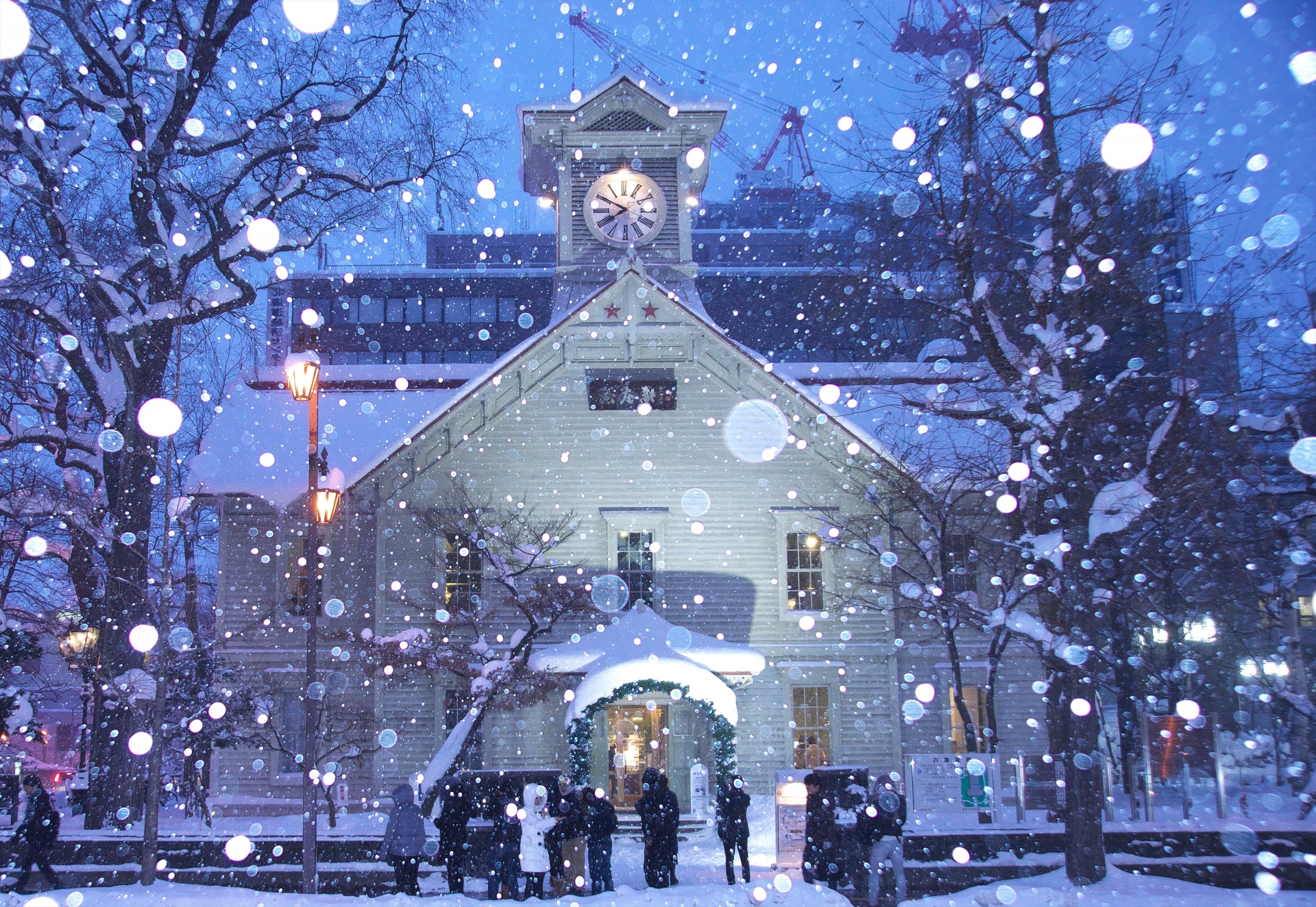
Japanese ways of celebrating Christmas are full of differences and misunderstanding, driven by commercial zeal and social pressure. But there’s one thing we can genuinely brag about here in the North: a beautiful White Christmas in Hokkaido.
If you want to see a real Christmas tree—one that embodies the silent, profound beauty of the season—you should visit Biei town (see the image above). The tree stands alone on a remote hill. There are no tacky Christmas ornaments on it. At night, it is decorated only by the vast array of stars twinkling in the sky, undisturbed by city lights.
This is the only Japanese Christmas tradition I know that requires no cake, no partner, and no understanding of Christian theology—just a coat, silence, and an appreciation for true, natural beauty. Come visit Hokkaido and trade the crowded commercial chaos for the world’s quietest, most genuine White Christmas.

Shungo Ijima
He is travelling around the world. His passion is to explain Japan to the world, from the unique viewpoint accumulated through his career: overseas posting, MBA holder, former official of the Ministry of Finance.
Comments
List of comments (2)
This is such an important and often overlooked topic Thank you for bringing attention to it and offering valuable advice
Thank you so much for your thoughtful comment!
We’re really glad this topic resonated with you — it’s something we feel deserves more attention too. Your support means a lot!