
The curse of the comfy shoe, and the wandering introduction
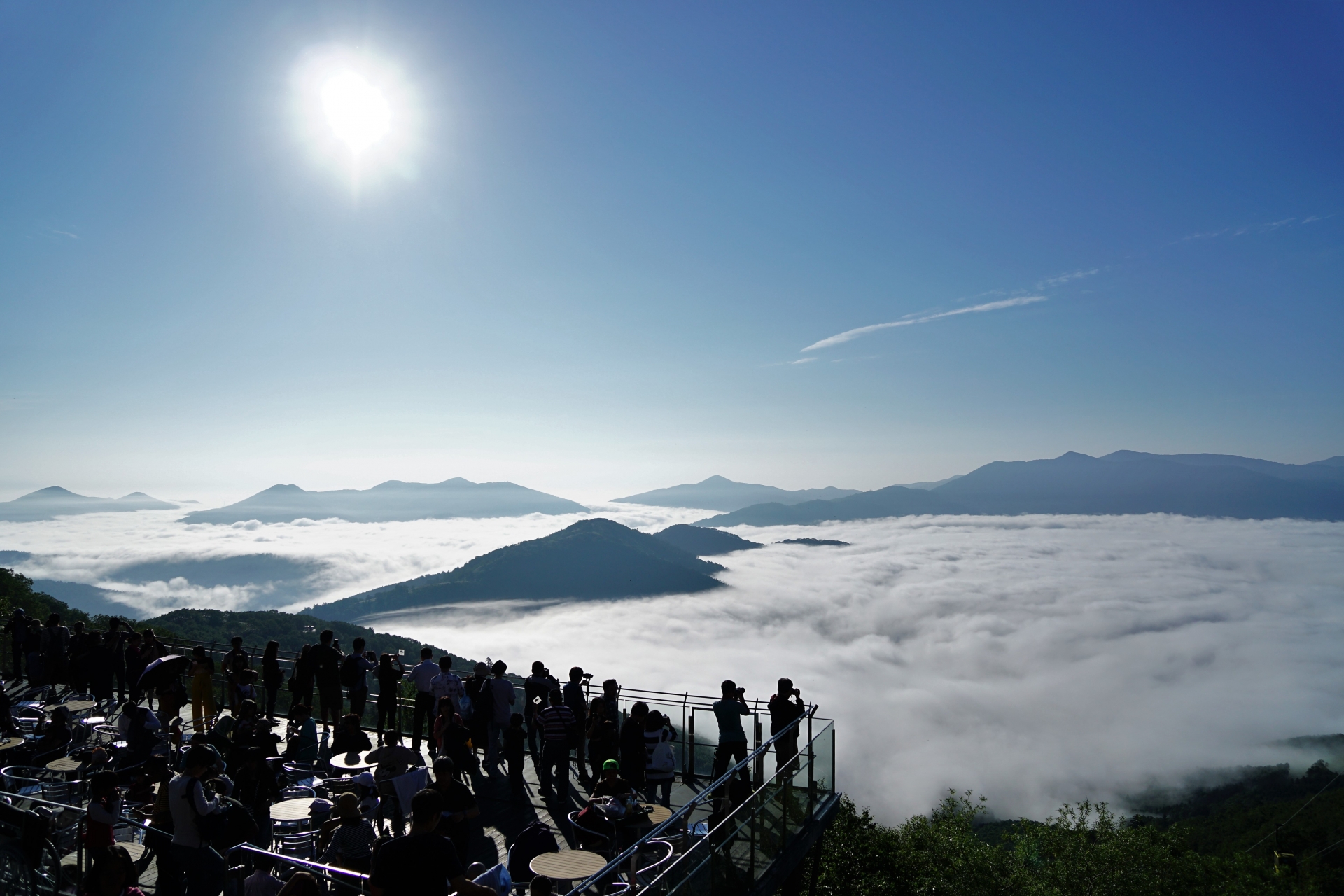
Let’s be honest: my introductions always wander, perhaps because my mind is constantly adrift in a metaphorical cloud. Today, we’re talking about the sea of clouds (Unkai) in Hokkaido, a place where you can genuinely feel like you are walking among them. This concept of “walking on clouds” has always captivated us. Some of you might associate that phrase with the New Balance M1300—the sneaker Ralph Lauren famously praised as “It’s like walking on the clouds.” (For the record, in Japan, New Balance is beloved for comfort, while Nike and Adidas are chosen for style—a perfect reflection of our national priorities.)
My apologies for the quick detour, but my point stands: the attraction of a place that literally allows you to walk above the world is irresistible. I will introduce a special place in Hokkaido that embodies this fantasy.
From bubble economy ruin to accidental tourism genius
The place is Tomamu, a small resort town nestled among the mountains. It was developed four decades ago, at the height of Japan’s frantic Bubble Economy. Money flowed like water, resulting in massive tower hotels and ski slopes. When the bubble inevitably burst, the money, people, and buzz vanished overnight. Tomamu became a ruin, a sad monument to our national excess, and frankly, I forgot it even existed.
The turning point came in 2004 when a famous hotel management company specializing in corporate turnaround took over. The biggest challenge was obvious: a massive ski resort with zero appeal outside the three winter months. The company president kept pressing the staff: “What possible summer attractions do we have?”
The answer did not come from a super-consultant or a high-priced marketer. It came from a lift maintenance staffer who simply said: “The scenery seen from the summit area on a summer morning is so beautiful, I think people will love it, too.” This humble observation was the moment the killer content, “Unkai Terrace,” was born. The resurrection of a national disaster ruin was achieved not through financial wizardry, but through the simple, often-ignored perspective of a grunt-level employee.
The Unkai Terrace: coffee, clouds, and the tyranny of luck
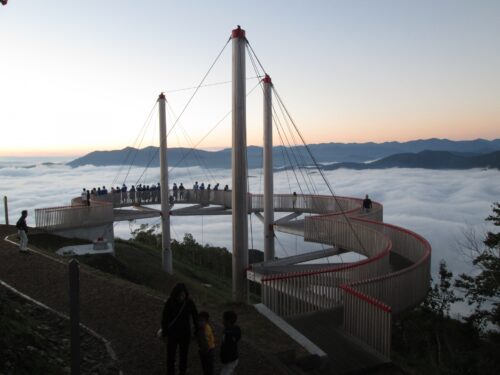
The Unkai Terrace is a café and series of dramatic observation decks where you can sip coffee while looking down at a vast, swirling sea of clouds. It operates only for three hours—5 to 8 AM—during the summer season.
The difficulty is two-fold: First, you must wake up early on your vacation. Second, seeing the sea of clouds is entirely dependent on meteorological luck. For your information, I am pathologically persistent, but it took me four separate, three-hour drives from my home to finally witness the phenomenon. It is a tourism product based on the tyranny of weather and luck, yet we keep coming back. Why? Because the payoff—that fleeting moment of walking above the world—is worth the three hours of driving and the numerous failures.
As you can see, achieving that “walking on clouds” feeling requires a huge investment of time and luck. But I can offer a much more reliable simulation at home: our Mola sofa. While many Japanese sofas are intentionally firm for ergonomic stability (because we prioritize efficiency, remember?), Mola is specifically tuned to be soft and fluffy. It manages the seemingly impossible: combining stable back support with cloud-like comfort.
I highly recommend it. Why spend nine hours driving just for a chance at a cloud, when you can guarantee a perfect simulated cloud experience on a sofa designed to capture that very sensation?
I confess that I drove 12 hours in total just to see a sea of clouds that might not appear—a pathological persistence that defines my life. But I’ve learned that you shouldn’t have to rely on luck to feel like you’re walking on air. At CondeHouse, we’ve turned the ‘cloud experience’ into a reliable science. Our MOLA sofa and Hatsune Miku Art Chair are the furniture equivalents of that perfect Hokkaido sunrise—designed to cradle you in a fluffy, turquoise-green sanctuary that never fades or disappears at 8 AM. It’s the ultimate turnaround for your living room. Now, here is a guaranteed view from the summit: the image below is your link to the special site. If you prefer the cold, hard ground of the ordinary, do NOT click it. But if you’re ready to claim your own permanent piece of the clouds, go ahead. Your terrace is waiting. —— The Hatsune Miku Art Chair.


Shungo Ijima
Global Connector | Reformed Bureaucrat | Professional Over-Thinker
After years of navigating the rigid hallways of Japan’s Ministry of Finance and surviving an MBA, he made a life-changing realization: spreadsheets are soulless, and wood has much better stories to tell.
Currently an Executive at CondeHouse, he travels the world decoding the “hidden DNA” of Japanese culture—though, in his travels, he’s becoming increasingly more skilled at decoding how to find the cheapest hotels than actual cultural mysteries.
He has a peculiar talent for finding deep philosophical meaning in things most people ignore as meaningless (and to be fair, they are often actually meaningless). He doesn’t just sell furniture; he’s on a mission to explain Japan to the world, one intellectually over-analyzed observation at a time. He writes for the curious, the skeptical, and anyone who suspects that a chair might actually be a manifesto in disguise.
Follow his journey as he bridges the gap between high-finance logic and the chaotic art of living!