
The dopamine paradox: Why we seek fictional fear
Do you like thrill rides? What about horror movies? Fear is inherently unpleasant, yet millions of us actively seek it out. Science explains this as the Dopamine Paradox: a pleasure chemical is released after the fear subsides, acting like a self-administered “brain drug.”
However, a critical question remains unanswered: Why are we genuinely scared of fictions like thrill rides and horror movies?
You might argue, “My emotions are out of control!” But let’s test that. Consider Armageddon, a popular weepie. You’d likely stop crying instantly if I constantly whispered, “Hey, easy, easy! This is just a made-up story.” (Of course, you’d likely cut off all contact with me forever, but the tears would certainly stop.) Now, imagine doing the same on a roller coaster, repeating, “This is completely safe, and there is zero chance of death or injury.” Does that reduce the fear? I argue it makes it worse. The feeling of fear, especially when physical danger is simulated, tends to overwhelm the rational knowledge of whether the threat is fiction or reality. Our bodies believe the lie. Today, we explore this powerful feeling through horror.
The great divide: Physical terror vs. psychological anxiety
What is the scariest movie you have ever watched? Hollywood horror often relies on physical attacks and jump scares—powerful, ugly, evil monsters (zombies, aliens, chainsaw-wielding maniacs) that kill without mercy. While uncomfortable, the fear caused by a physical, recognizable threat is ultimately adaptable.
In contrast, J-Horror (Japanese Horror) operates on a more psychological level. Take The Ring (2002, remade from the Japanese original Ringu), a global hit. Its evil doesn’t attack physically; it just crawls silently out of a well and stares wordlessly at you through the hair covering its eyes to kill you. The fear it induces is not primarily fear of a bodily attack, but anxiety about the unknown and the breach of reality.
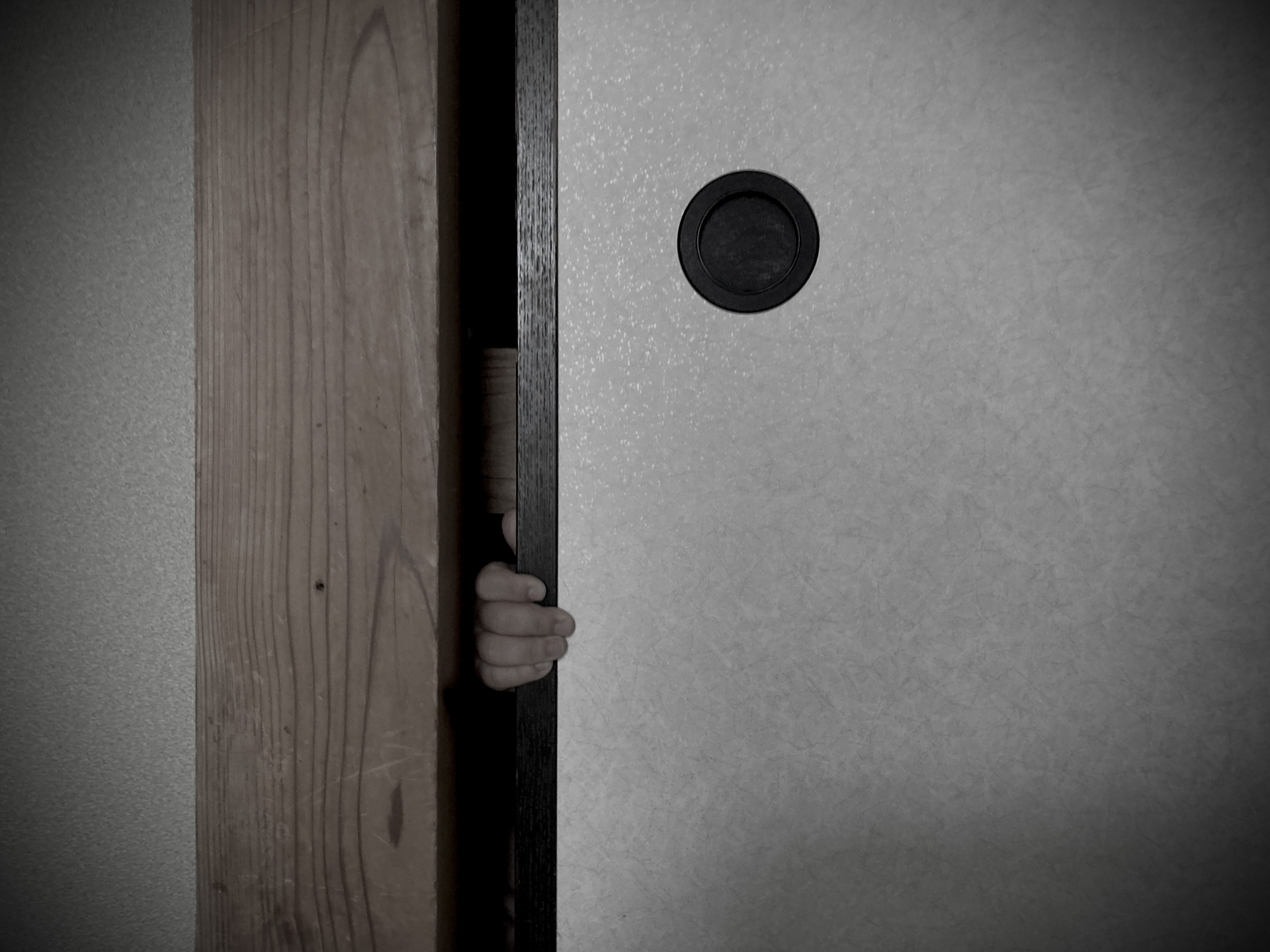
Another crucial distinction is the setting. J-Horror depicts the extraordinary that appears suddenly in everyday life. The evil in The Ring doesn’t make a grand appearance from deep space or a creepy, hidden graveyard. It resides in a simple video cassette—not from another world, but right next to us. This subtle, pervasive creepiness is what shocked and terrified audiences outside Japan.
Elevating the everyday: The art of subtle transformation

I believe we Japanese people excel at finding enjoyment by creating a small dose of the extraordinary within the ordinary.
The public bath (Sentō) is a great example. Once critical social infrastructure when most homes lacked a bath, 95% of houses now have one. Yet, sentō are still everywhere. I go to one sometimes, even though I have a bath at home. We enjoy turning the routine act of daily bathing into a slightly special, communal event.
Speaking of making the ordinary slightly special, I believe our furniture serves a similar cultural function. Whether you are having meals in the dining room or relaxing while watching movies in the living room, our carefully crafted, comfortable, and beautiful furniture turns such everyday activities into something a little more profound, a little more special. (We aim to bring the subtle aesthetic of J-Horror, minus the actual well-crawling ghost, into your home.)
I confess that I’m more afraid of a silent ghost crawling out of a TV than a chainsaw-wielding monster—because the unknown within the ordinary is the most powerful force on earth. We’ve harnessed this J-Horror principle (without the ghosts) to elevate your everyday life. Our Hatsune Miku Art Chair takes a routine act like ‘sitting’ and transforms it into a profound encounter with high art and turquoise-green elegance. It’s the extraordinary, appearing right in your living room. Now, here is a doorway to a beautiful transformation: the image below is your link to the special site. If you prefer the dull, predictable safety of the ordinary, do NOT click it. But if you’re ready to see how a digital legend can turn your daily life into a masterpiece, go ahead. Step into the light. —— The Hatsune Miku Art Chair.


Shungo Ijima
Global Connector | Reformed Bureaucrat | Professional Over-Thinker
After years of navigating the rigid hallways of Japan’s Ministry of Finance and surviving an MBA, he made a life-changing realization: spreadsheets are soulless, and wood has much better stories to tell.
Currently an Executive at CondeHouse, he travels the world decoding the “hidden DNA” of Japanese culture—though, in his travels, he’s becoming increasingly more skilled at decoding how to find the cheapest hotels than actual cultural mysteries.
He has a peculiar talent for finding deep philosophical meaning in things most people ignore as meaningless (and to be fair, they are often actually meaningless). He doesn’t just sell furniture; he’s on a mission to explain Japan to the world, one intellectually over-analyzed observation at a time. He writes for the curious, the skeptical, and anyone who suspects that a chair might actually be a manifesto in disguise.
Follow his journey as he bridges the gap between high-finance logic and the chaotic art of living!
Comments
List of comments (1)
Your blog is a shining example of excellence in content creation. I’m continually impressed by the depth of your knowledge and the clarity of your writing. Thank you for all that you do.