
The “New Year Nightmare”
Happy New Year! It is the first week of January, 2026. Like many of you, I have just been dragged back from the blissful New Year holidays into the harsh reality of work. Every morning, I hope this is all just a bad dream and that I’ll wake up to find I’m still on vacation, but alas, the alarm clock says otherwise.
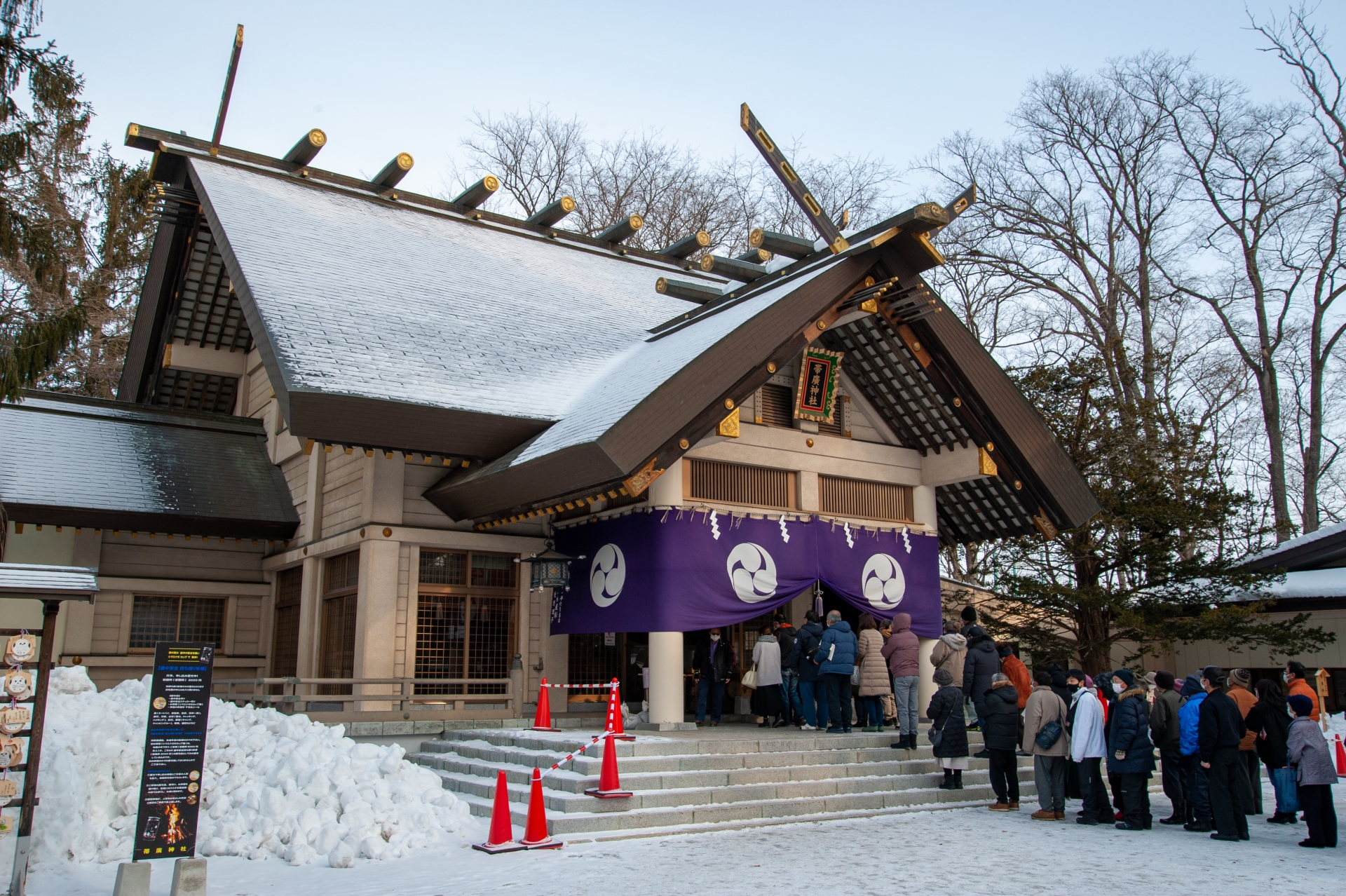
In Japan, most people spend the end of the year watching special TV programs over a feast, waiting for the “Joya no Kane” (the midnight bells). The truly energetic souls—or perhaps the masochistic ones—head straight to a shrine at the stroke of midnight. Even here in Hokkaido, where the outside temperature is a brutal sub-zero, thousands of people stand in long, shivering queues.
Me? Absolutely not. I’m usually in bed by my normal time, not even wait for the midnight bells. I know, I sound like a hermit or poor Ebenezer Scrooge, but I have my reasons.
Pity the poor gods
You might think Japanese people are deeply religious. The truth? Not really. We have over 8 million gods, and I bet 99% of the people in that midnight queue couldn’t tell you which specific god they are praying to.
Technically, we go to a shrine to offer “gratitude” for the past year. But in reality, it’s a one-sided negotiation. People hurl their endless desires at the altar: “Let me win the lottery,” “Let me pass my exams,” “I want to go on a date with that girl/boy,” or just “Make me rich.”
And the price for these miracles? I recently talked to my hairdresser, and surprisingly she told me she only offers a 5-yen coin ($0.03 USD) because the word for 5-yen (go-en) sounds like the word for “good fate.”
Honestly, I feel sorry for the gods. In this era of global inflation, they are expected to manage a mountain of greedy requests for the price of a single piece of candy. It’s a miracle they haven’t gone on strike yet.
The shrine: A gourmet’s secret hunting ground
Don’t misunderstand me—just because I don’t go to the shrine at midnight doesn’t mean I disrespect the gods. I always visit the shrine for my first prayer of the year around 11:00 AM, dressed formally to show my respect (and more to survive the freezing cold). Coincidentally, the shrine’s traditional “Mochi-maki” (rice cake scattering ceremony) happens to take place at 11:00 AM every year. It’s purely for the gods, of course.
In fact, I visit shrines more than anyone—I’m just not there for the prayers. From spring to autumn, I am a regular at every shrine in Asahikawa. Why? Because shrines are the ultimate mushroom hunting grounds. Shrines are perfectly manicured forests. For some reason, they always have cherry trees—the favorite neighbor of the legendary Morel mushroom. In Hokkaido, everyone is obsessed with “Larch Boletes,” but they completely ignore all the other mashrooms including the delicacies of French cuisine like Morels or Porcini. While others are praying for the lottery, I’m on my hands and knees under a cherry tree. To me, finding a cluster of Morels is a much more reliable blessing than a 5-yen prayer.
From forest floors to luxury lodges
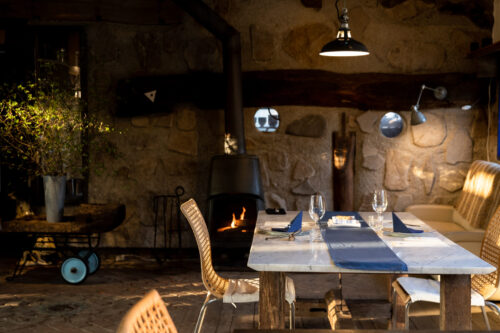
This “mushroom obsession” recently took a professional turn. I paid a sales visit to “Norheim,” a stunning new luxury lodge tucked away in the forests on the outskirts of my hometown, Asahikawa.
In Hokkaido, as Niseko becomes overcrowded, global travelers are discovering that Asahikawa has something better: colder air and “true” powder snow. Norheim is the perfect response to this demand—beautifully designed rental houses paired with an exquisite French restaurant.
I went there to sell CondeHouse furniture, but as usual, I ended up talking about my hobby. The moment I mentioned “Morels and Porcini,” just as I planned, the French chef’s eyes lit up. “If you can supply me with those, I’ll buy them all!” he exclaimed.
The blessing of the forest
I didn’t manage to sell any furniture that day (I’m afraid my offering was too small), but I left with a huge smile. My knowledge of the local forest had connected a world-class chef with the hidden treasures of my hometown.
Whether it’s the “magic” of a shrine or the craftsmanship of a chair, Asahikawa is full of hidden value waiting to be discovered. If you visit Norheim, you might sit on our furniture, eat a meal flavored by the forest, and realize that some blessings don’t cost 5 yen—they just require a little bit of curiosity.
Just as a rare Morel mushroom hides in the grass of a quiet shrine, true art often hides in the fusion of tradition and pop culture. Our “Hatsune Miku Art Chair” is a hidden gem of Hokkaido—a masterpiece of craftsmanship that most people haven’t discovered yet. You don’t need a 5-yen prayer to bring a miracle into your home; you just need an eye for the extraordinary. Why not start your 2026 by owning a piece of the “Hokkaido Soul” that even a French chef would envy?


Shungo Ijima
Global Connector | Reformed Bureaucrat | Professional Over-Thinker
After years of navigating the rigid hallways of Japan’s Ministry of Finance and surviving an MBA, he made a life-changing realization: spreadsheets are soulless, and wood has much better stories to tell.
Currently an Executive at CondeHouse, he travels the world decoding the “hidden DNA” of Japanese culture—though, in his travels, he’s becoming increasingly more skilled at decoding how to find the cheapest hotels than actual cultural mysteries.
He has a peculiar talent for finding deep philosophical meaning in things most people ignore as meaningless (and to be fair, they are often actually meaningless). He doesn’t just sell furniture; he’s on a mission to explain Japan to the world, one intellectually over-analyzed observation at a time. He writes for the curious, the skeptical, and anyone who suspects that a chair might actually be a manifesto in disguise.
Follow his journey as he bridges the gap between high-finance logic and the chaotic art of living!