
How a Disciple of Le Corbusier and Japan’s Most Combustible Artist Built a House That Still Smells of Turpentine
There is a side street in Minami Aoyama that almost everyone walks past on their way to somewhere more famous. It runs between the Nezu Museum and the cafés of Omotesando, lined with the kind of low buildings Tokyo has been quietly losing for thirty years — small, residential in scale, slightly out of step with the glass-and-glamour competition happening one block over. Halfway down, behind a low wall, sits a modest white house with a glass-fronted atelier and a garden full of sculptures that look as though they have all just shouted something at each other and are waiting for the next round.
This is the Taro Okamoto Memorial Museum. It is not large. It is not loud. In a neighborhood that uses architecture as a press release, this house is a private conversation that someone forgot to end — and that is exactly why it is one of the most honest cultural spaces in Tokyo.
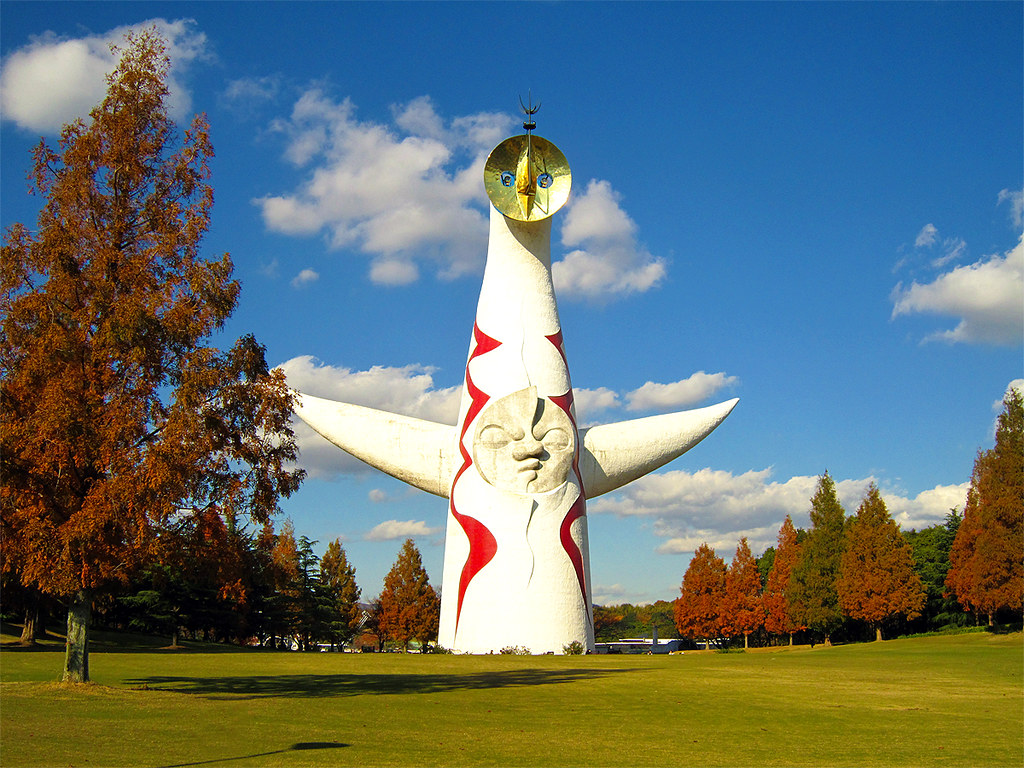
Most visitors to Tokyo know Okamoto without realising it. He is the man behind the Tower of the Sun at Expo ’70 in Osaka — the giant white figure with three faces and the expression of a Bond villain who has forgotten the password to his own email. He is the man behind Myth of Tomorrow, the apocalyptic mural that hangs above the busiest pedestrian intersection in Shibuya Station, witnessed daily by a million commuters who have never once looked up. He is the man who, on national television in 1981, shouted “Geijutsu wa bakuhatsu da!” — Art is an explosion! — and was instantly memed into the spine of postwar Japanese culture decades before the word “meme” existed.
And then he came home, every evening, to this small white house in Aoyama.
The House That Le Corbusier Almost Designed
The building was completed in 1954 and designed by Junzo Sakakura, one of the few Japanese architects who worked directly under Le Corbusier in Paris before the war. What does a Le Corbusier disciple do when handed a tight plot, a tight budget, and a client who paints in oils the size of small cars? He builds the studio first and lets the rest of the house apologetically arrange itself around it.
The result is a compact two-story modernist box with a glass-fronted, double-height atelier on the south side. Light pours in. The living spaces wrap around the studio like a coat around a fire. This is a house designed around the act of making — with the act of living politely accommodating itself to the schedule.
When Taro died in 1996, his partner and lifelong collaborator Toshiko Okamoto did the most curatorially radical thing anyone has ever done with an artist’s residence in Tokyo: she changed almost nothing. The atelier was opened to the public in 1998 in essentially the state he left it. Brushes. Half-squeezed paint tubes. The unsettling sense that he has just stepped out for a cigarette and any minute now will return to ask why you are touching his things.
My Visit: Outshouted by a Garden
I tried to do the museum chronologically — entrance, exhibition, atelier, garden, exit — the way one is supposed to do museums in Tokyo. The Taro Okamoto Memorial Museum laughs at this strategy. Within roughly six minutes I was lost in a house the size of a generous apartment.
The reason is the garden. It is, by any reasonable Tokyo standard, impossibly small. But it has been packed with bronze sculptures at a density that converts a 60-square-meter courtyard into something like an outdoor argument. The pieces are arranged with the spatial logic of a Tokyo train at 8:30 a.m. — pressed shoulder to shoulder, all looking past each other, all aggressively at peace. Each one is staring at, gesturing toward, or emphatically ignoring another. Walking through is less a stroll and more a hostage negotiation. I lost twenty minutes there before I had even seen a single canvas.
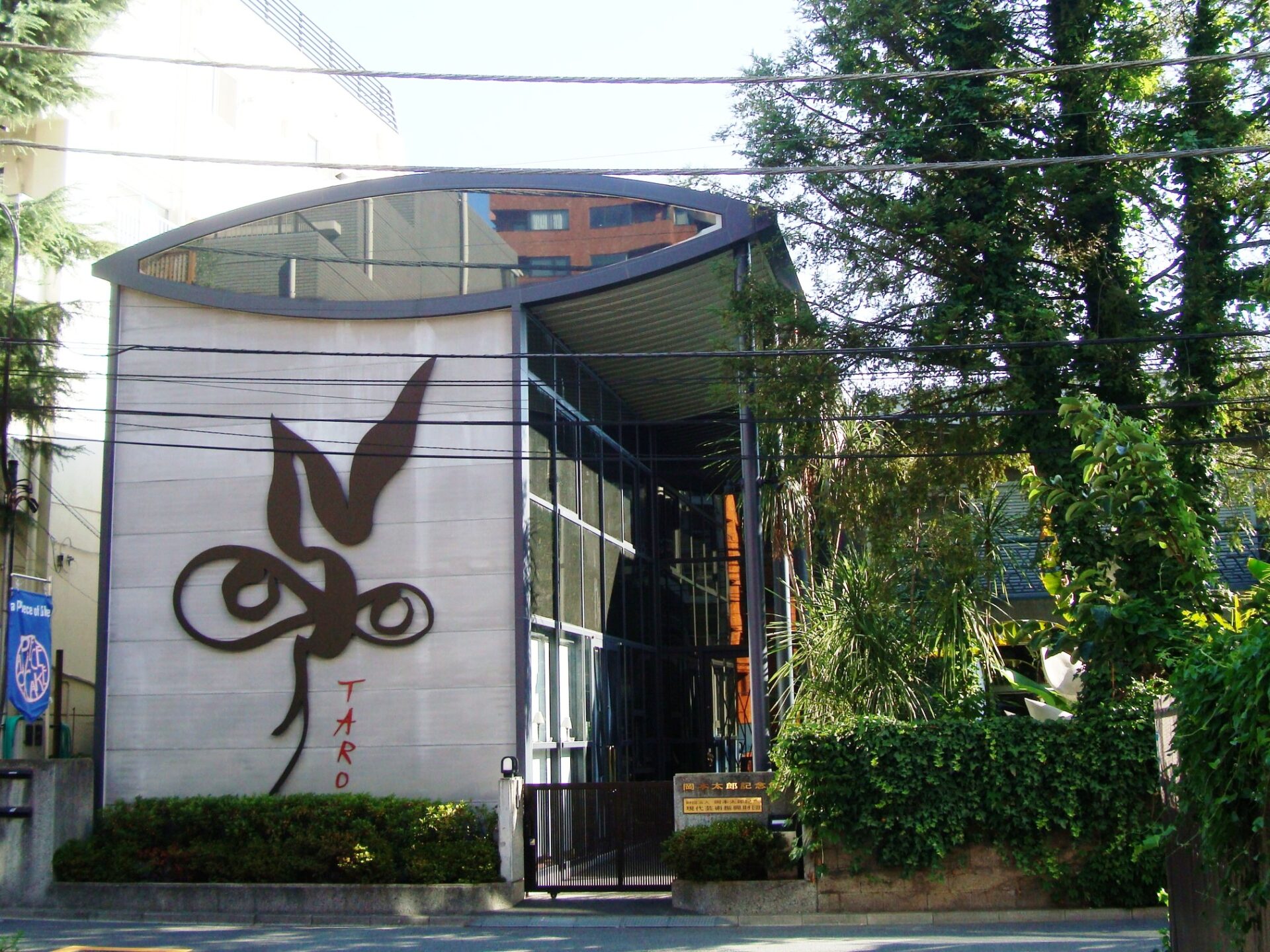
When you finally reach the atelier, the trick is masterful. A single waist-high glass partition separates you from the studio. You cannot enter. You can only stand at the edge and look in. The effect is exactly that of a stage set ten seconds before the actor walks on. Brushes arranged. Canvases stretched. Light correct. The atelier is not preserved like a relic; it is preserved like a tool put down on the workbench between two hammer strikes.
From Sakakura’s Atelier to Hokkaido’s Workshop
Walking back out onto the side street, I found myself thinking about something Sakakura clearly understood — and that most contemporary Tokyo architects have spent the last decade trying to forget: a building is shaped by what is made inside it.
The Taro Okamoto Memorial Museum is not a museum that was retrofitted into a former house. It is a house that was built around an act — painting — and that act has left the building’s bones permanently honest. The proportions of the atelier are the proportions of Taro’s largest canvases. The height of the ceiling is the height of his ladder. The position of the window is the position of his easel at 2 p.m. on a workday in 1955. You cannot un-build those decisions. They are baked in.
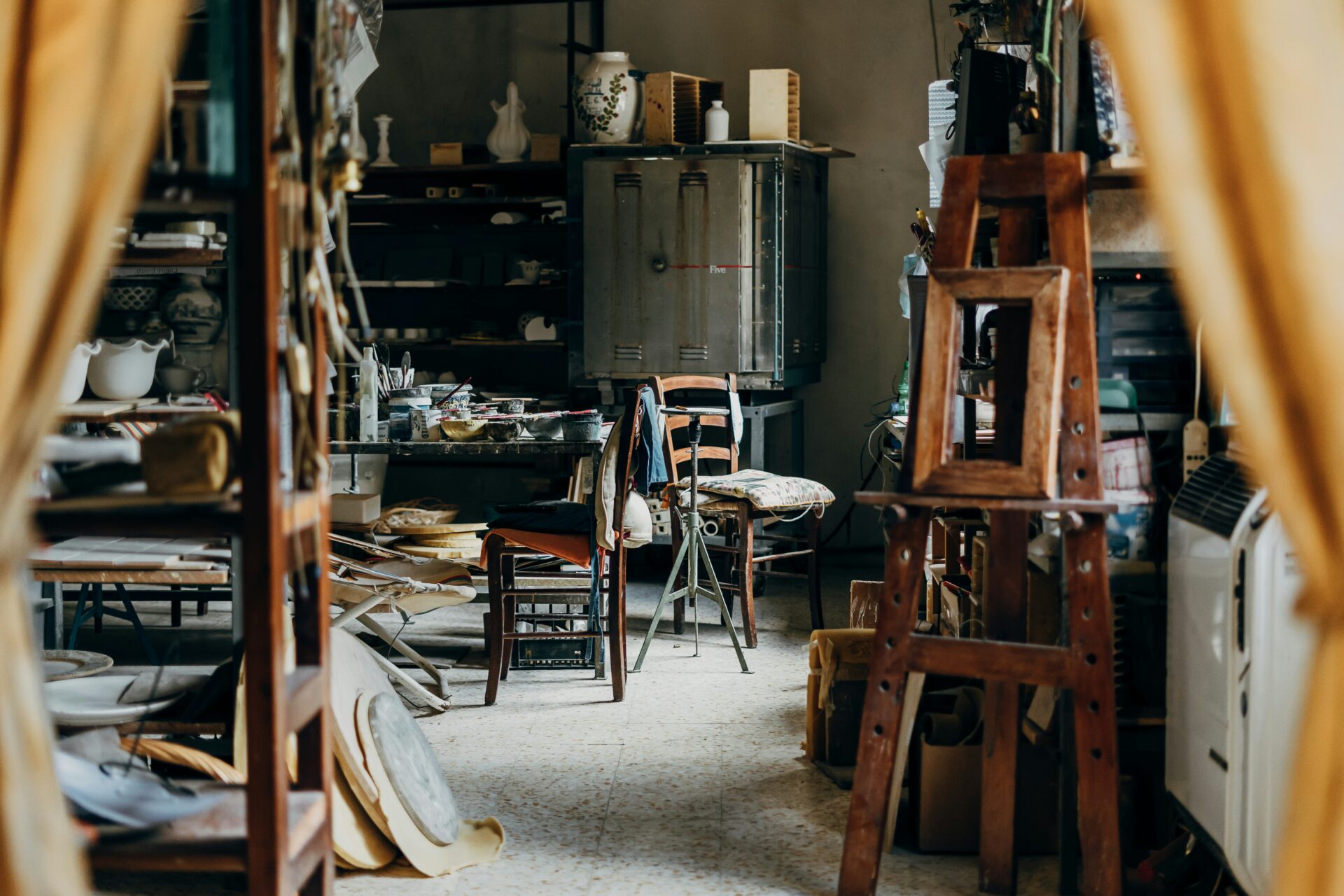
This is, I think, the same argument the craftsmen at CondeHouse make every day in Asahikawa, only at a different scale. A chair is not designed at a desk and then handed to wood to obey. A chair is shaped by the wood, by the hand, by the body that will eventually sit in it for forty years. The proportions of a CondeHouse dining chair are the proportions of someone actually eating a meal. The angle of the backrest is the angle of a real shoulder leaning back after a long day. The grain is allowed to argue.
Sakakura built Taro a house that listened to him. Our craftsmen build chairs that listen to you. Different scale. Same posture.
If the atelier puts you in the mood for objects made by hands that knew exactly what they were doing, our showroom is a short walk on the other side of Aoyama. The brushes will be in their jars. The wood will be behaving. And we promise not to ask why you are touching things.

Noel
Part design-critic, part coffee enthusiast, and a full-time devotee to Japan’s timeless aesthetics. Noel is the bridge between the craft of Hokkaido and the neon pulse of Tokyo. He believes that a chair is only as good as the conversation held in it. Whether you want to dive deep into woodcraft, discuss the best-hidden galleries in the city, or finally master the subtle phonetics of “Hokkaido,” Noel is here to guide you.Reach out anytime to swap stories, make an appointment, or get the inside track on where Tokyo’s design heart is beating today.