
The terror of emotional aging: My anti-aging blog strategy
Human aging, according to psychiatrists, starts not in the body, but in the emotion. As the prefrontal cortex ages, we lose the drive for new experiences—willingness, creativity, and self-motivation. We stop trying new things and simply strive to maintain the status quo. This rut accelerates brain function decline, creating a strong negative spiral.
In short, if you stop being curious, you will emotionally crumble before your physical body does. The prevalence of expressionless elderly people is not due to weakened facial muscles, nor is it because they avoid smiling due to fear of wrinkles. It is because their emotion is dying first.
In that sense, keeping this blog is my most serious anti-aging strategy. To find topics, I must keep my eyes open, feeding my curiosity. For example, my initial research for an article about the infamous Japanese giant hornets (one of my popular earlier pieces) accidentally led me down a rabbit hole concerning the honeycomb structure—which is our topic today. This kind of research continually broadens my interest, forcing my aging forebrain to work. Let’s talk about why nature loves the hexagon.
The law of the hexagon: My unconvinced mind
The simple mathematical law of nature regarding the hexagon is widely known, but honestly, I was unconvinced until very recently.
The law states: If you try to fill a plane surface with a single kind of regular polygon, you have only three efficient options: equilateral triangles, squares, and regular hexagons. Bees and hornets choose the hexagon because it offers the best space-efficiency and the second-best strength.
What do you think? Does it sound convincing? To me, it didn’t, because a simple, practical question immediately came to mind: “Okay, but is it not a massive bother for the bees and hornets to build?” In other words, the theoretical work efficiency seemed terrible. I couldn’t reconcile the geometric beauty with the presumed effort of construction.
The contact point revelation: A simple answer to a complex problem
My doubt was unexpectedly resolved recently when I stumbled upon a simple explanation on a mathematics website.
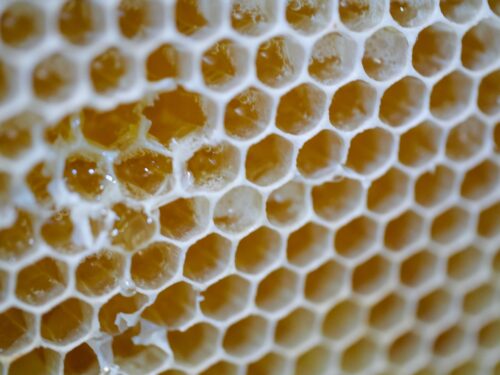
The honeycomb structure looks complex to us because we focus on the number of corners (six). But if you focus instead on the point of contact between the cells, you see the genius of the hexagon:
- In the case of hexagonal cells, only three lines extend from one contact point.
- If they chose equilateral triangles, six lines would extend from each contact point.
This simplification drastically reduces the required effort and material management during construction. I was finally and fully convinced: Regular hexagonal cells are indeed better even in work efficiency.
The hexagonal flower and the butter sandwich
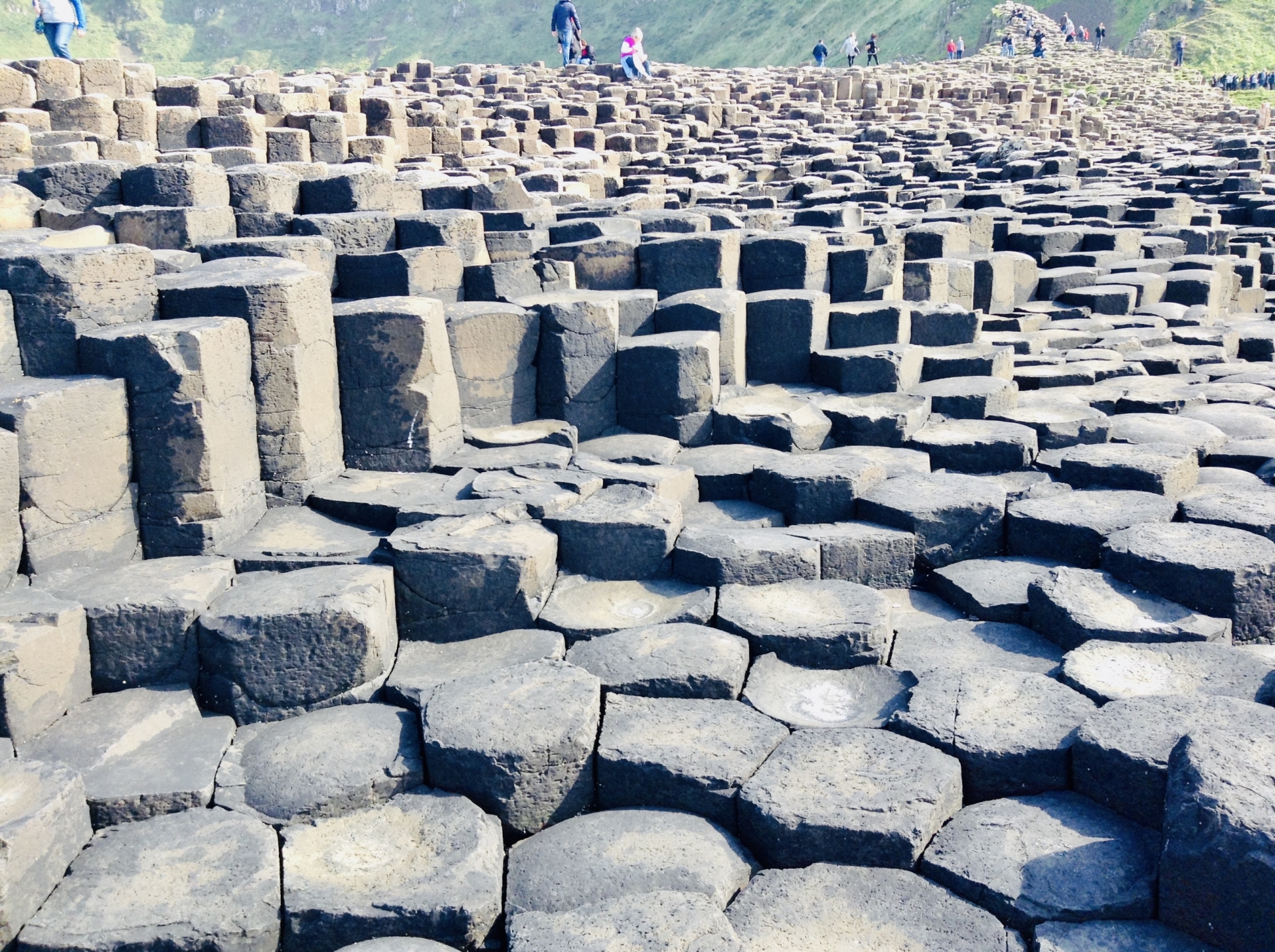
This geometrical rationality explains why hexagons spontaneously emerge in nature: hexagonal clouds on Saturn, Giant’s Causeway in Northern Ireland (as shown in the image), and the structure of snowflakes.
For your information, snowflakes were called Rokka in old Japanese, which literally means “hexagonal flower.” Our ancient ancestors, seeing only the beauty, were already grappling with the mystery of nature’s geometry.
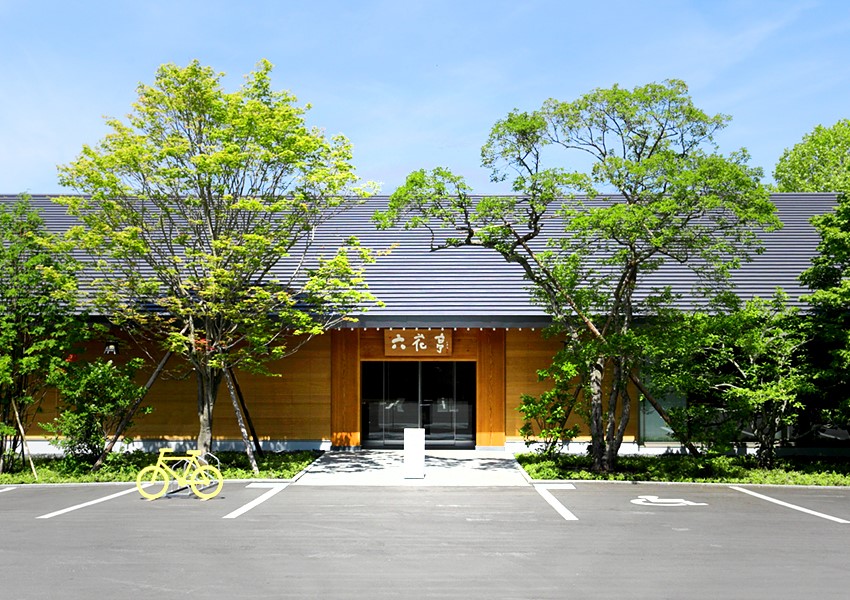
Speaking of Rokka, the name of Hokkaido’s leading confectionary maker, Rokkatei, comes from this term. Their signature raisin-butter cream cookie (Marusei Butter Sandwich) is a gem, often ranked as the most popular souvenir in Japan.
Rokkatei also runs two cafes right here in Asahikawa. You can enjoy their masterful sweets and drinks in a comfortable space furnished with Asahikawa wooden furniture. If you haven’t yet, please visit a Rokkatei café immediately—it’s the perfect, low-effort way to activate your forebrain and boost your creativity with a delicious new experience.
I confess that I write this blog as a desperate shield against emotional aging—because the moment we stop being curious about the ‘why’ of a hexagon, we start to fade. At CondeHouse, we keep our prefrontal cortexes firing by merging the geometric genius of nature with the vibrant energy of the future. Our Hatsune Miku Art Chair is our ‘Rokka’—a hexagonal flower of design that blooms at the intersection of Hokkaido’s wooden soul and a digital icon’s spirit. It’s an experience designed to spark your curiosity and keep your emotions young. Now, here is a portal to a new experience for your forebrain: the image below is your link to the special site. If you prefer the expressionless, status-quo decay of a life without wonder, do NOT click it. But if you’re ready to taste the sweetness of a new, geometric masterpiece, go ahead. Activate your creativity. —— The Hatsune Miku Art Chair.
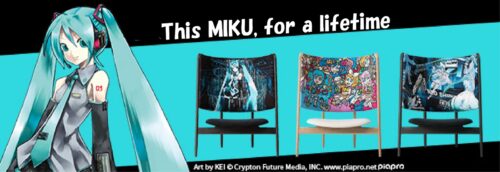
Photo credit: Rokkatei Confectionery Co.Ltd

Shungo Ijima
Global Connector | Reformed Bureaucrat | Professional Over-Thinker
After years of navigating the rigid hallways of Japan’s Ministry of Finance and surviving an MBA, he made a life-changing realization: spreadsheets are soulless, and wood has much better stories to tell.
Currently an Executive at CondeHouse, he travels the world decoding the “hidden DNA” of Japanese culture—though, in his travels, he’s becoming increasingly more skilled at decoding how to find the cheapest hotels than actual cultural mysteries.
He has a peculiar talent for finding deep philosophical meaning in things most people ignore as meaningless (and to be fair, they are often actually meaningless). He doesn’t just sell furniture; he’s on a mission to explain Japan to the world, one intellectually over-analyzed observation at a time. He writes for the curious, the skeptical, and anyone who suspects that a chair might actually be a manifesto in disguise.
Follow his journey as he bridges the gap between high-finance logic and the chaotic art of living!