
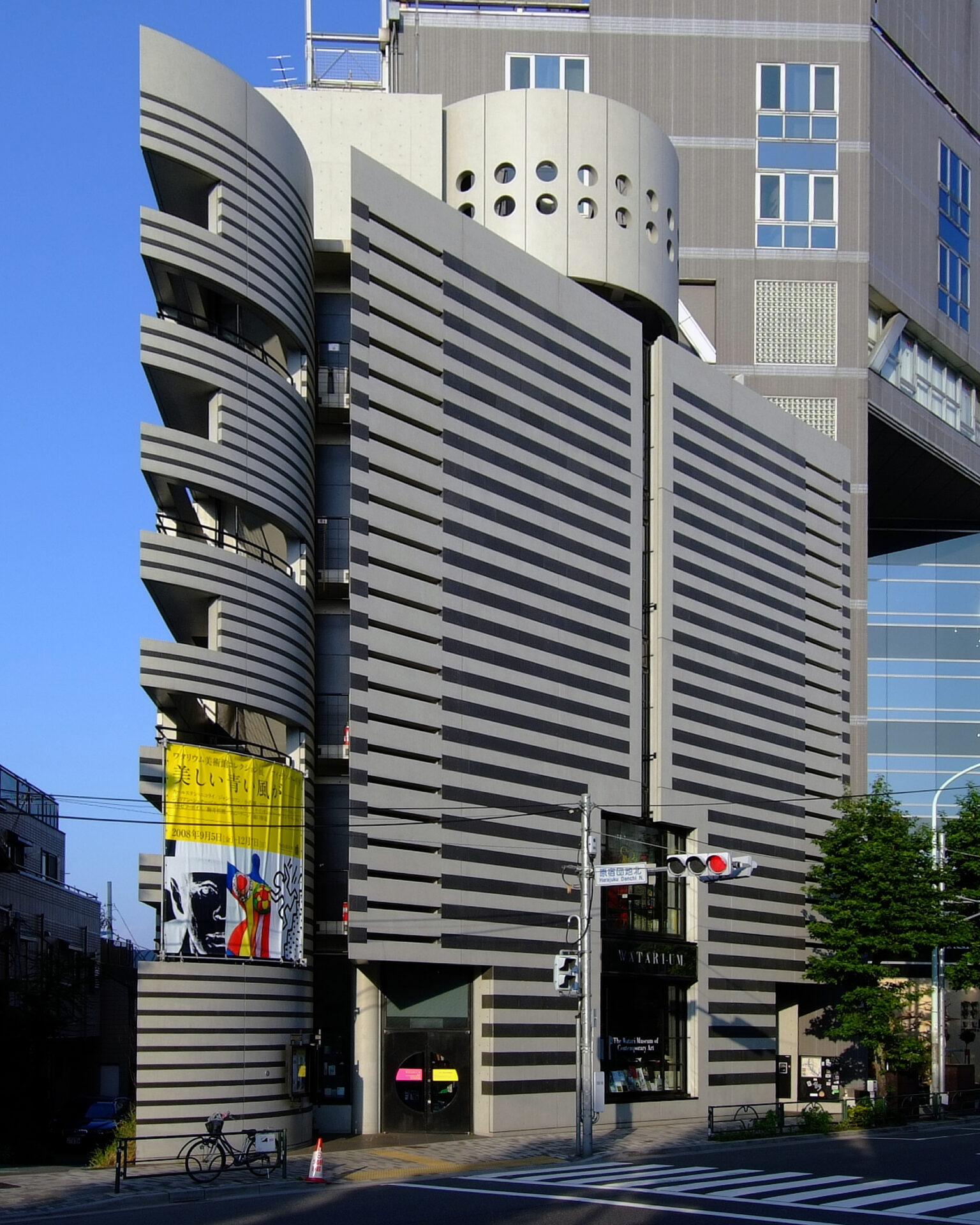
How Mario Botta’s Impossible Building on a Triangular Lot Became Tokyo’s Most Opinionated Art Space
There is a road in the heart of Aoyama — formally called Gaien Nishi Dori, but known to locals simply as “Killer Street” — whose very name is a small Tokyo mystery. The nickname was coined by fashion designer Junko Koshino when she moved her boutique here, inspired by the proximity of Aoyama Cemetery and the reckless speed of the traffic. At the time, “killer” was less “assassin” and more 70s English slang for “fantastic” — and that ambiguity, dark and chic at the same time, turned out to be the perfect brand for a street that has been doing exactly that ever since.
Walk it today and the buildings compete for your attention with the quiet desperation of résumés at a job fair. Glass. Neon. Minimalist concrete in twelve shades of beige. And then, wedged into a triangular plot of land that a lesser architect would have used to build a parking structure, something stops you cold. Stripes.
Thick, horizontal stripes of granite and concrete, stacked up five floors like a building that got dressed in the dark and somehow became iconic because of it. No apologies. No attempt to blend in. Just a Swiss architect named Mario Botta looking at a bizarre triangular lot and thinking: “Perfect. I’ll make it look like a referee.”
Welcome to the Watarium Museum of Contemporary Art — one of Tokyo’s most important art institutions, and the one most likely to make you feel slightly guilty for never having visited sooner.
The Private Museum That Introduced the World to Japan
The Watarium isn’t a city project or a corporate vanity play. It is fiercely, defiantly private. Founded by curator Shizuko Watari, the museum opened in 1990 with a singular mission: to bring the world’s contemporary art to Japan for the first time. Andy Warhol. Keith Haring. Joseph Beuys. Yoko Ono. These names landed in Tokyo largely because of her. The museum’s permanent collection reads like the guestlist of the coolest party of the late 20th century — and Shizuko was the one handing out the invitations.
The building itself was Mario Botta’s answer to an almost impossible brief. Designed on a sharply triangular plot, the structure had to negotiate three entirely different spatial conditions at once — a main boulevard, a side street, and a narrow rear section. His solution was characteristically Swiss in its logic and un-Swiss in its drama: a symmetrical facade of alternating granite and concrete bands that turns the corner of Killer Street like a ship’s prow cutting into the intersection. Locals refer to it simply as “the striped building near Gaien-mae.” This is, somehow, both deeply accurate and a spectacular understatement.
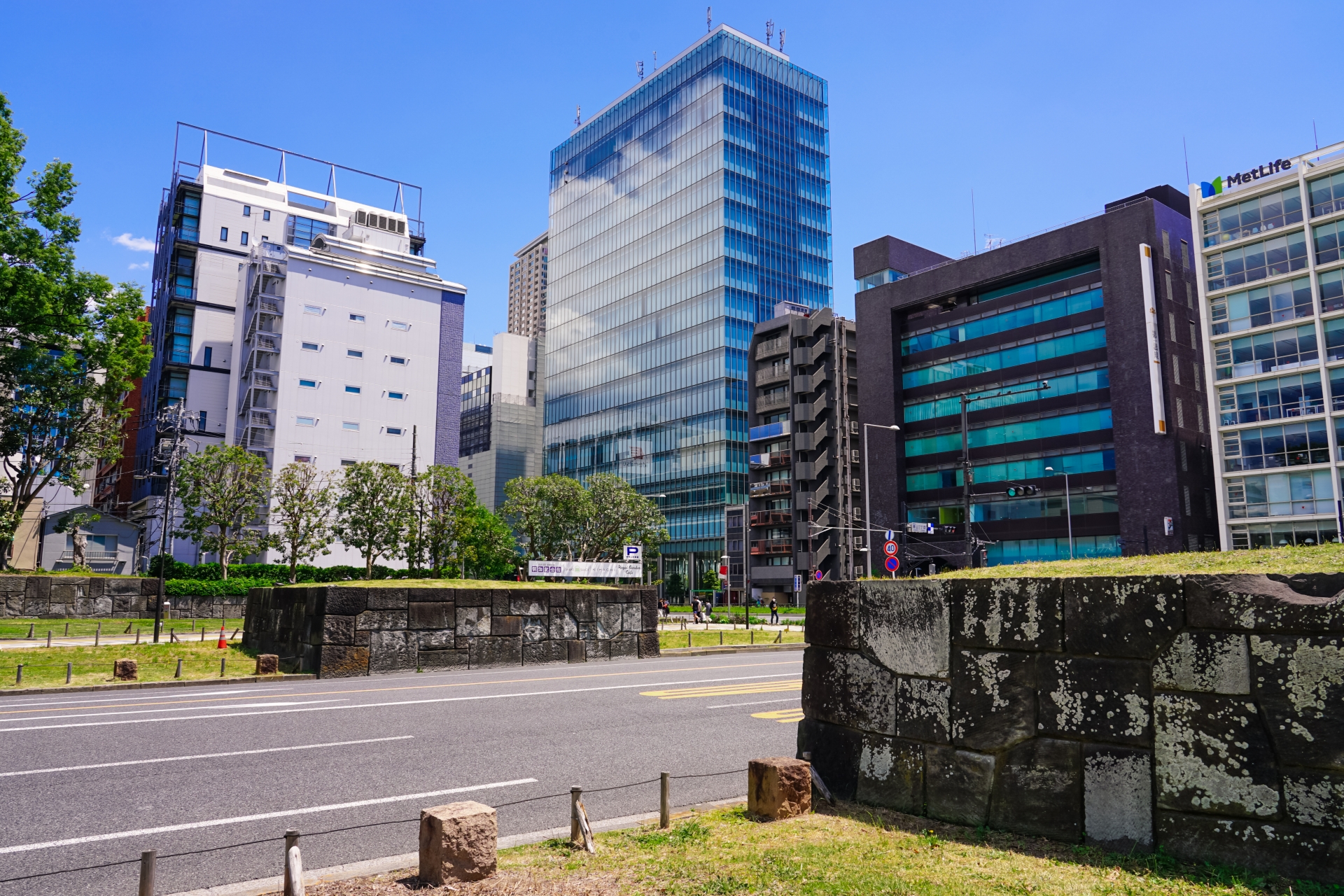
My Visit: A Masterclass in Getting Lost on Purpose
I will be honest: the first time I tried to find the Watarium, I walked past the entrance. Not because it’s hidden — it is literally the most visible building on the block — but because my brain, trained by years of museums with grand lobbies and intimidating foyers, simply couldn’t process that that corner was the way in. A compact entrance, tucked into the acute angle of the triangle, beside an external staircase that appears to have been bolted to the outside of the building as a last-minute decision.
It was not a last-minute decision. The exterior staircase was placed outside deliberately, so that every square meter of the interior floors could be freed up for exhibition space. This is the Watarium’s design philosophy expressed in a single detail: no space is wasted, no compromise is left unexamined, and what initially appears to be an awkward necessity almost always turns out to be the best feature of the building.
Inside, the building runs from basement to fifth floor, connected by a single small elevator Wikipedia that has the atmosphere of a confessional booth — intimate, slightly charged, full of people who are either deeply committed to contemporary art or who pressed the wrong button entirely. The exhibition floors are not vast. They are, to use a diplomatic term, focused. Critics might say “cramped.” I would say the Watarium has simply decided that great art doesn’t need to breathe — it needs to corner you.
On the day I visited, the permanent collection featured work by Beuys, Magritte, and Nam June Paik, which is either a masterclass in curation or the description of a very surreal dinner party. Probably both. I stood in front of a Magritte for a full ten minutes — not because I’d never encountered his work before, but because in a room this size, you simply cannot pretend to have looked at something and then shuffle on. The Watarium removes the escape routes. It insists.
What a Striped Building on an Impossible Lot Teaches Us About Craft
Walking back out onto Killer Street — or “Fantastic Street,” depending on which translation of Koshino-san’s intent you prefer — I found myself thinking about what the Watarium actually argues. Because this is a building with a clear position: a bad location can become an identity. Constraints, taken seriously enough, become character. The most honest thing a building can do in a city this loud is to show up exactly as it is, refuse to apologise, and let the quality of what happens inside make the case.
It occurred to me, somewhere between the stripes and the Magritte, that the craftsmen in Asahikawa have been making the same argument with Hokkaido wood for decades at CondeHouse.
A piece of timber doesn’t arrive at our workshop pre-perfect. It arrives with its grain running in inconvenient directions, its knots exactly where you didn’t want them, its personality fully formed and largely indifferent to your floor plan. What our craftsmen do — like Botta on that triangular lot — is find the argument inside the constraint. They don’t fight the wood. They listen to it. They don’t hide the grain; they make the grain the point.
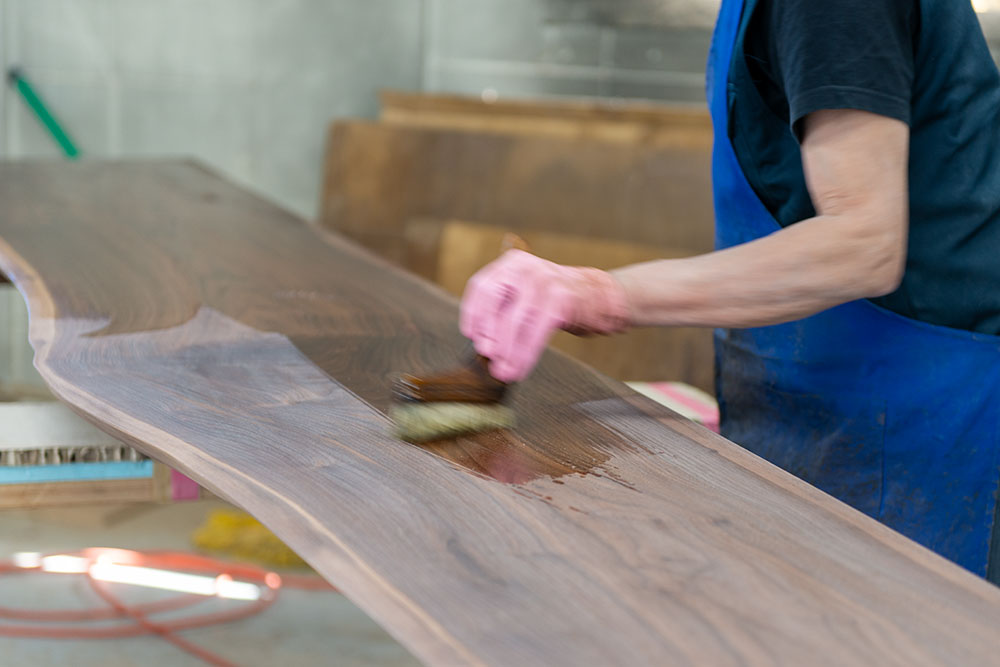
The Watarium’s stripes are not decoration. They are the honest expression of a material used with the confidence of someone who stopped asking permission. Our walnut, our oak, our ash from Hokkaido: same spirit. Different scale. Equally uninterested in blending in.
If the Watarium gave you a taste for things that show up with their identity fully formed, perhaps it’s time to visit our showroom — a short walk from the striped building, and a world away from furniture that forgot to have an opinion.

Noel
Part design-critic, part coffee enthusiast, and a full-time devotee to Japan’s timeless aesthetics. Noel is the bridge between the craft of Hokkaido and the neon pulse of Tokyo. He believes that a chair is only as good as the conversation held in it. Whether you want to dive deep into woodcraft, discuss the best-hidden galleries in the city, or finally master the subtle phonetics of “Hokkaido,” Noel is here to guide you.Reach out anytime to swap stories, make an appointment, or get the inside track on where Tokyo’s design heart is beating today.