

The biological failure of the sofa
It is a historical fact: Japanese people, including the Shoguns who once ruled this land with iron fists, have been sitting on the floor for millennia. Chair culture arrived a mere 150 years ago—a blip in our civilization’s timeline.
I grew up in a household with a perfectly functional, expensive sofa. Yet, my family consistently performed a bizarre tactical retreat: we would sit on the floor, using the sofa not as a seat, but as a giant, plush backrest. Meanwhile, our dogs—with a natural instinct for hierarchy—would promptly occupy the cushions, gazing down at us as if they were the new lords of the manor and we were their ground-dwelling subjects. The sofa, intended for human relaxation, became a canine throne. This is not a “choice.” It is a pre-programmed failure in our cultural software. We are biologically incapable of trusting a piece of furniture that lifts us too far from the earth.
The Tatami hack: Living in the “Ordinary”
The Western world views the floor as a “boundary.” We view it as a multipurpose platform. Historically, the tiny footprint of Japanese homes necessitated a brilliant architectural life hack: the Tatami mat. It is a modular, humidity-regulating masterpiece that allows a single room to serve as a dining hall, a lounge, and a bedroom within minutes.
For us, a chair represents the realm of Hare (the formal, the ceremonial, the rigid). But when we are at home, we enter a state of Ke (the Japanese concept of the ordinary and relaxed), often lying flat on our back or stomach, or sitting with knees held. On the floor, your posture is a chaotic expression of freedom.
I have an older and a younger sister, both of whom were devout practitioners of this floor-dwelling freedom. Observing their—shall we say—unfiltered manners while they prepared for their dates, I was spared from ever harboring any fragile, idealized illusions about the opposite sex. Perhaps I should be grateful to them for forcing me into such a cynical maturity at such a young age. This freedom is entirely antithetical to the formalized posture expected by a chair, which belongs to the more formal realm of Hare.
The Home Alone trauma: Why shoes are a biological threat
This “floor-centric” freedom is only possible because of our most sacred rule: No shoes inside. In Japan, the floor is an inner sanctuary. The removal of shoes is not just polite; it is a ritual to separate the “clean” interior from the Kegare (defilement) of the outside world. This is why Hollywood movies can be a source of genuine horror for us.
Watching Kevin in Home Alone gleefully jump on his parents’ bed while wearing his sneakers is, for me, more traumatizing than the actual burglars. To a Japanese eye, those sneakers on the bedding are a form of biological warfare. Then there is the “bed throw”—that strip of fabric at the foot of hotel beds. To us, this is a pathetic defensive fortification. The fact that you need a “dedicated shield” to protect your bed from your own shoes highlights a fundamental cultural divide. We don’t need shields because we don’t bring the battlefield into the bedroom.
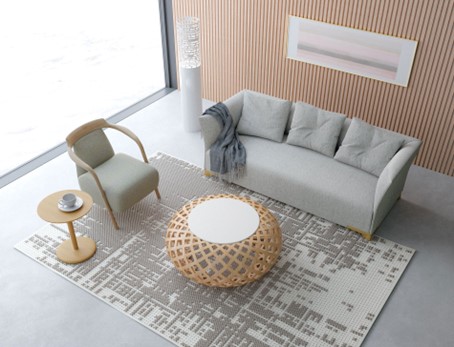
MOLA: The sofa that accepts your defeat
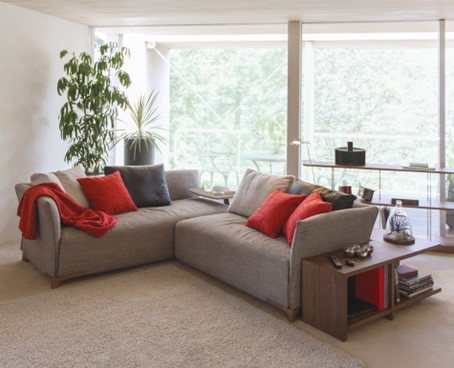
As furniture makers, we faced a paradox: How do we sell sofas to people who refuse to sit on them? Our answer was MOLA. It was not designed to be “a sofa.” It was designed to be a sanctuary for the fallen.
We abandoned the formal constraints of Western design. We increased the depth to an almost absurd degree and used a mountain of feathers to create a “Floor Posture Diversity” zone. MOLA doesn’t tell you how to sit. It accepts that you will sprawl, curl up, and eventually, attempt to slide back to the floor—only to find that the MOLA is already there, supporting you in your natural, primitive state.
It’s not just furniture. It’s a peace treaty between the floor and the chair.
I confess that I’m a servant to the floor’s gravity, using expensive sofas only as backrests while my dogs rule the cushions. We Japanese are biologically incapable of leaving the ground—so we built the MOLA to accept our ‘sprawling defeat.’ But our Hatsune Miku Art Chair takes this further: it’s the ultimate ‘Hare and Ke’ masterpiece that brings the sanctuary of the floor into the realm of high art. It’s a peace treaty between 2,000 years of tradition and a digital legend. Now, kick off your shoes and prepare for the final frontier: the image below is your portal to the chair that redefines our civilization. If you’re happy being a decorative prop for your own furniture, do NOT click. But if you’re ready to claim a throne that feels as grounded as the earth itself, go ahead. Click now—your legend awaits. —— The Hatsune Miku Art Chair.


Shungo Ijima
Global Connector | Reformed Bureaucrat | Professional Over-Thinker
After years of navigating the rigid hallways of Japan’s Ministry of Finance and surviving an MBA, he made a life-changing realization: spreadsheets are soulless, and wood has much better stories to tell.
Currently an Executive at CondeHouse, he travels the world decoding the “hidden DNA” of Japanese culture—though, in his travels, he’s becoming increasingly more skilled at decoding how to find the cheapest hotels than actual cultural mysteries.
He has a peculiar talent for finding deep philosophical meaning in things most people ignore as meaningless (and to be fair, they are often actually meaningless). He doesn’t just sell furniture; he’s on a mission to explain Japan to the world, one intellectually over-analyzed observation at a time. He writes for the curious, the skeptical, and anyone who suspects that a chair might actually be a manifesto in disguise.
Follow his journey as he bridges the gap between high-finance logic and the chaotic art of living!
Comments
List of comments (2)
[…] space where people eat, sleep, and socialize without the need for Western-style furniture. The small size of Japanese houses made this no-chair approach a wise solution for making the most of limited space, allowing rooms to […]
Hi, thank you very much to stop in our blog.
Hopping you are enjoying the contents and see you once again here.
Have a good day. Noel