
japanese history– tag –
-

The Sacred Chaos: Why Japanese Summer Festivals Are Essential for Local Relationships (And Our Complicated Faith)
We are a nation that is both deeply pragmatic and quietly spiritual. We have three times more shrines than convenience stores. Natsu Matsuri is essential, not for the gods, but for workplace harmony—and convincing ourselves that summer is finally, truly over. -
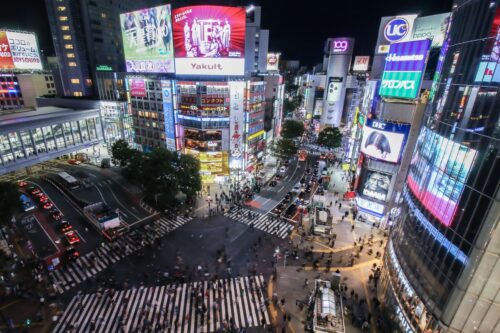
The Art of Adaptation: Why Japan Does Christmas, Worships Wagyu, and Perfects the Chair
If Japanese culture is defined by one word, it’s "adaptation." We celebrate Christmas as a 6.5 billion USD economic event despite only 1% of the population being Christian—we adopted the party, ignored the religion. Similarly, after 1,200 years of banning meat, we rapidly evolved beef culture, tripling the fat percentage in 20 years to create Wagyu. Though the history of the chair in Japan is short, our centuries-old high-skill woodworking tradition has transformed this foreign concept into uniquely refined furniture. We didn't invent the chair, but we perfected the craft that builds it. -
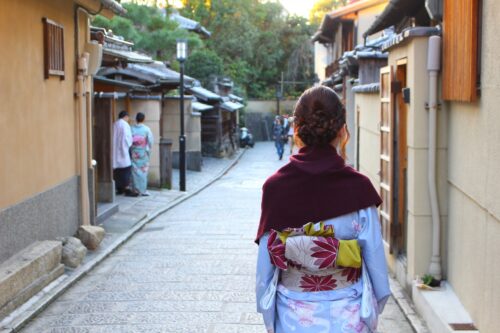
The Silent Code of Kyoto: Why Their “Yes” Actually Means “You Are Doing It Wrong”
Kyoto's language is a social minefield. We decode the hidden meanings behind their polite phrases—like why "Your children are so cheerful" is actually code for "Shut them up!" I explore how this high-context culture evolved as a life-saving political skill, and argue that this unique Japanese ability to read unspoken intentions is now essential for transmitting traditional craftsmanship. -
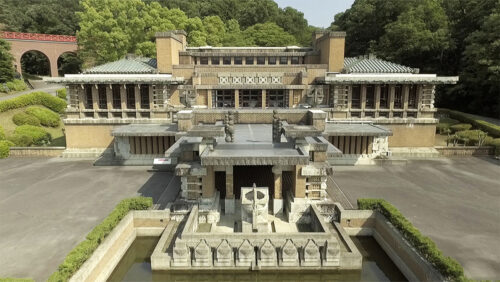
God in the Details, Disaster in the Whole: Frank Lloyd Wright’s Imperial Hotel and the Japanese Paradox
Frank Lloyd Wright’s Imperial Hotel survived the Great Kanto Earthquake on its opening day in $1923$ due to his innovative floating structure—a profound, immediate validation of his genius. Seeing the meticulous carvings, I recall the dictum: "God is in the details." This detail-orientation is a Japanese trait (our furniture is "full of God"), but it’s a paradox: some Japanese products, like certain cars, excel in detail yet "can't see the wood for the trees," resulting in a poor overall design. This is the Japanese Paradox: excelling at the micro-level while sometimes faltering at the macro-level. We strive to master both the detail and the clean, coherent form.
12