
September 2020– date –
-
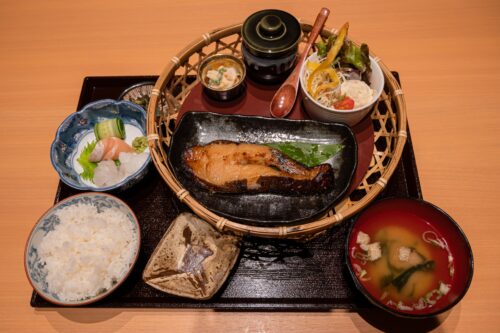
The Secrets of Japanese Food to Enrich Your Daily Meal
【Make life happy without money】 Do you believe money can't buy you love? I may be too old to believe in such a naive world as the Beatles song went. According to Daniel Kahneman, a genius winning a Nobel Prize in 2002, money can buy yo... -
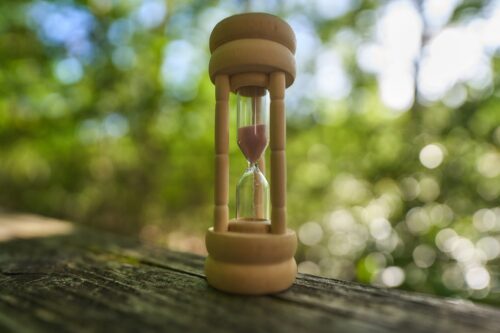
The Entropy of Embarrassment: Why Time is Cruel (and What Makes a Design Timeless)
The flow of time is truly that cruel. I saw my middle school graduation album and instantly wished for death. We explore the physics of 'timeless design' through the concept of entropy. Try replacing "So much time has passed" with, "Entropy has increased significantly." Perhaps timelessness is the design quality that remains low in entropy regardless of the chaotic passing of the years. -

The Unconscious Ritual: Unraveling Japan’s “No-Shoe” Culture and Its Impact on Furniture Design
Why do Japanese people take off their shoes? It's not just about humidity, but about sleeping on the floor (futon). We sleep on the floor because abundant wood makes for warm, soft houses, and futons are exceptionally space-efficient in a small, mountainous country. This creates a simple logical chain: Abundant Wood --> No-Shoe Culture. The unintended cultural consequence is that our standard chair and table heights are slightly lower than the global standard. Ultimately, our furniture's proportions were dictated by the floor on which a great Shogun (or a salaryman exhausted from the Tokyo commute) once sat. -

Why Kyushoku (School Lunch) is the Best Part of School in Japan
Japanese school lunch (Kyushoku) is the biggest thing I want to be proud of in the Japanese social system. In most elementary and junior high schools in Japan, lunch is served fresh off each school kitchen. Of course, professional dietitians prepare the menu. It's good not only in taste and nourishment but also as a learning opportunity. -

How to Co-exist with Nature in Japan
【Necessity is the mother of geographical characteristics】 As you can see it in the image below, Japan is a country of backward parking. Even speeding drivers follow the rule. Do you know why that is? Some people outside Japan may think... -

Can We Be Free from What Others Think?
【Can we free ourselves from other people's values?】 Martin Luther said "Even if I knew that tomorrow the world would go to pieces, I would still plant my apple tree." The words first reminded me of wall paintings in Lascaux Cave where ... -
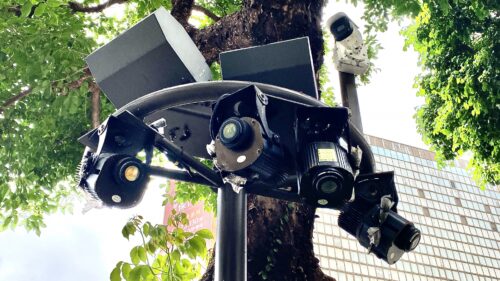
The Invisible Hand: Why Peer Pressure is Japan’s Greatest Quality Control (and Worst Creativity Killer)
A famous joke suggests the only way to get Japanese people to jump off a sinking ship is to say, "Everybody else has already jumped." This strong peer pressure acts as an Invisible Hand—a mutual monitoring system. This system ensured high compliance during COVID-19 without legal restrictions, but it’s a double-edged sword: it guarantees meticulous quality control (Japan’s strength) but stifles the radical creativity needed in the new economy. Surprisingly, CondeHouse continues to empower me, a management anomaly who questions the consensus. Therefore, expect both the impeccable quality you rely on and the unconventional creativity you might not expect. -

What Is True Rich Life? Market Principles Are Always Right?
【Furniture making is an endangered business in Japan】 Last month, the Ministry of the Environment announced that a butterfly species (shown in the above image) endemic to Japan might have been extinct. The butterflies inhabited only in... -
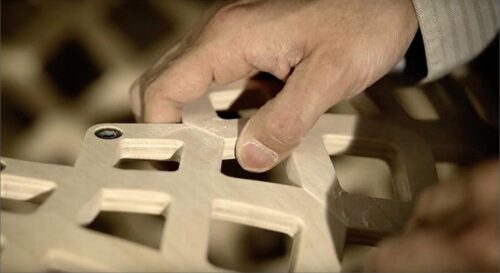
Why We Should Escape from the Control of the Invisible Hand
【The world becomes more economically rational】 Adam Smith is one of the 18th century's leading philosophers and also economists. He said that the market might appear chaotic but was actually guided by an invisible hand. People act or c... -
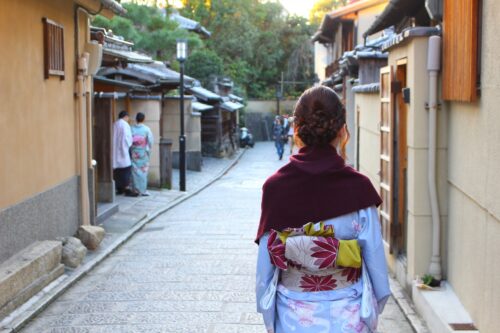
The Silent Code of Kyoto: Why Their “Yes” Actually Means “You Are Doing It Wrong”
Kyoto's language is a social minefield. We decode the hidden meanings behind their polite phrases—like why "Your children are so cheerful" is actually code for "Shut them up!" I explore how this high-context culture evolved as a life-saving political skill, and argue that this unique Japanese ability to read unspoken intentions is now essential for transmitting traditional craftsmanship.
1