

The “gorgeous” girlfriend paradox
In Japan, modesty is a sacred virtue. We almost never brag about ourselves, or even our families. But the “curse of youth” has a way of breaking even the strongest cultural norms.
When I was in college, I had a friend who was hopelessly in love. He boasted incessantly about his girlfriend: “She’s gorgeous! She looks exactly like a famous movie star!” One day, I finally saw them walking together. It was my first time seeing her, and… well, let’s just say she was drastically different from the mental image his descriptions had built. The gap was so vast that I stood there in a state of cognitive dissonance, unable to even say hello.
Since that day, I’ve been fascinated not by what is “beautiful,” but by the subject who does the evaluating. Why does the same person look like a movie star to one person and a complete stranger to another?
The “three-day” rule of adaptation
The truth is, our standards of beauty are not fixed; they are remarkably fluid. Our ego is designed to be flexible to help us navigate social connections. If our relationships or social values shift, our ego dutifully updates its “Beauty 2.0” software. What was once invisible or even “ugly” can suddenly become the height of sophistication.
To be clear, I’m not talking about waiting for some “macro-level” shift in global trends—the kind of hope where you think, “If I just live long enough, maybe the world will finally decide I’m handsome.” No, I’m talking about a “micro-level” shift in individual perception. In Japan, there is a famous (if slightly cynical) saying: “You’ll get used to an ugly face in three days, and you’ll get bored of a beautiful face in three days.” It’s a crude way of saying that our brains are incredibly efficient at normalizing what we see every day. Familiarity and connection don’t just breed contempt; they breed a new kind of beauty that logic can’t explain.
The redemption of the knot
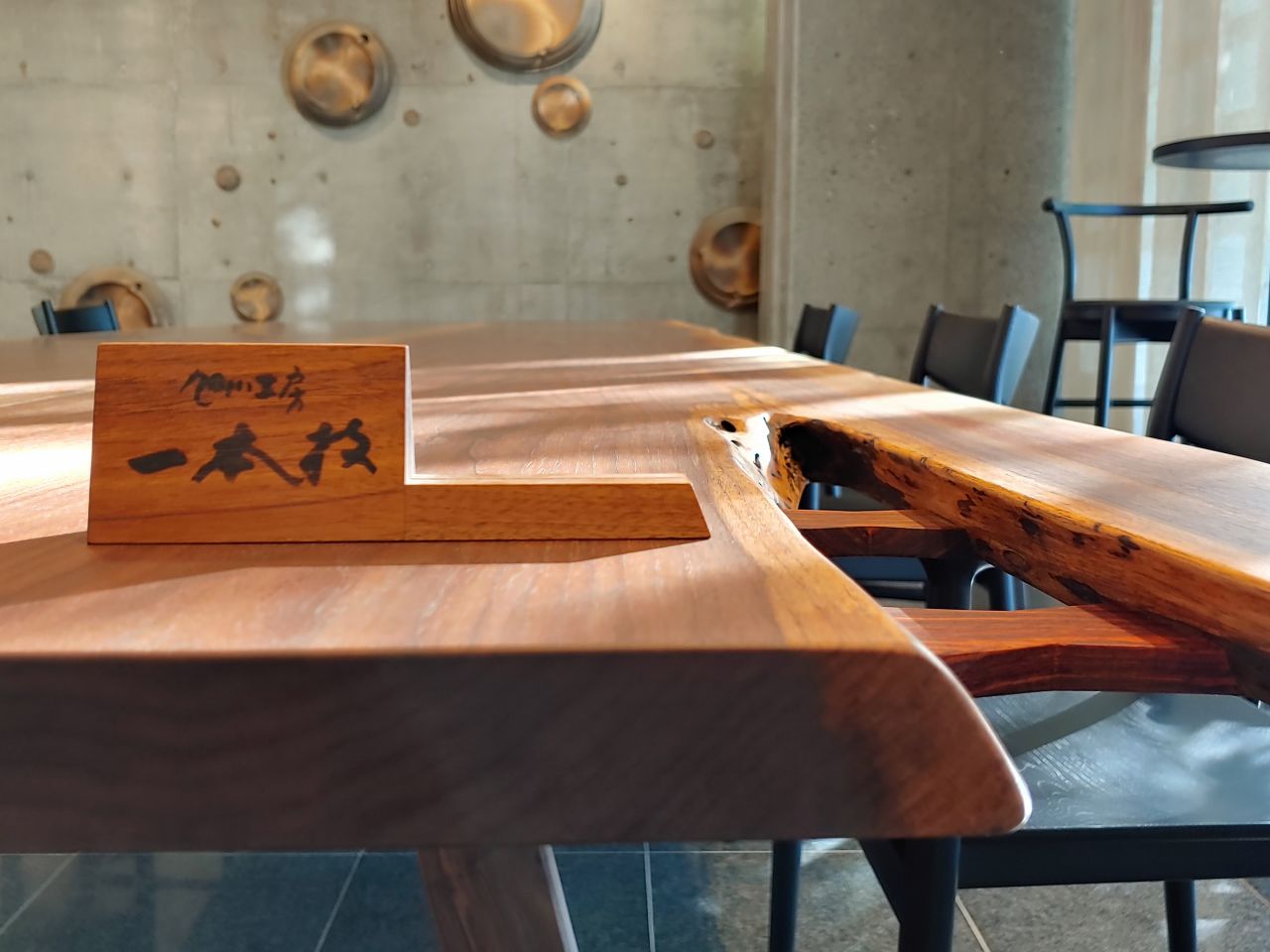
This “Value Shift” is exactly what happened in the world of furniture. Decades ago, wood with knots, knobs, or erratic grain was treated as “defective”—the “ugly” face of the timber yard.
However, our founder at CondeHouse believed it was human arrogance to judge a tree’s worth only by its lack of “imperfections.” We decided to launch a table collection that embraced these natural characters. At first, we received complaints. Customers asked, “Why is there a hole in my table?”
But then, the “Three-Day Rule” kicked in. As people lived with these tables, they stopped seeing “defects” and started seeing “character.” Just as you get used to a face and begin to love its unique quirks, our customers began to find peace in the knots and grains. Today, that collection is one of our mainstays. We didn’t change the wood; we just waited for the human heart to “get used to” the truth of nature.
Beauty is not in the object; it is a reflection of our own growth. So, the next time you see a “flaw” in a piece of wood, give it three days. You might find you can’t live without it.
Our “Hatsune Miku Art Chair” is a bold challenge to your “Three-Day” adaptation. Some might see the fusion of a digital icon and high-end woodcraft as an “unusual” pairing at first. But give it three days. As you live with it, the contrast between technology and tradition will stop being a surprise and start being a symphony. This chair is designed for the flexible ego—someone who knows that true beauty is something you grow into. Why not trust your evolving eyes and embrace a masterpiece that gets better every single day?


Shungo Ijima
Global Connector | Reformed Bureaucrat | Professional Over-Thinker
After years of navigating the rigid hallways of Japan’s Ministry of Finance and surviving an MBA, he made a life-changing realization: spreadsheets are soulless, and wood has much better stories to tell.
Currently an Executive at CondeHouse, he travels the world decoding the “hidden DNA” of Japanese culture—though, in his travels, he’s becoming increasingly more skilled at decoding how to find the cheapest hotels than actual cultural mysteries.
He has a peculiar talent for finding deep philosophical meaning in things most people ignore as meaningless (and to be fair, they are often actually meaningless). He doesn’t just sell furniture; he’s on a mission to explain Japan to the world, one intellectually over-analyzed observation at a time. He writes for the curious, the skeptical, and anyone who suspects that a chair might actually be a manifesto in disguise.
Follow his journey as he bridges the gap between high-finance logic and the chaotic art of living!