
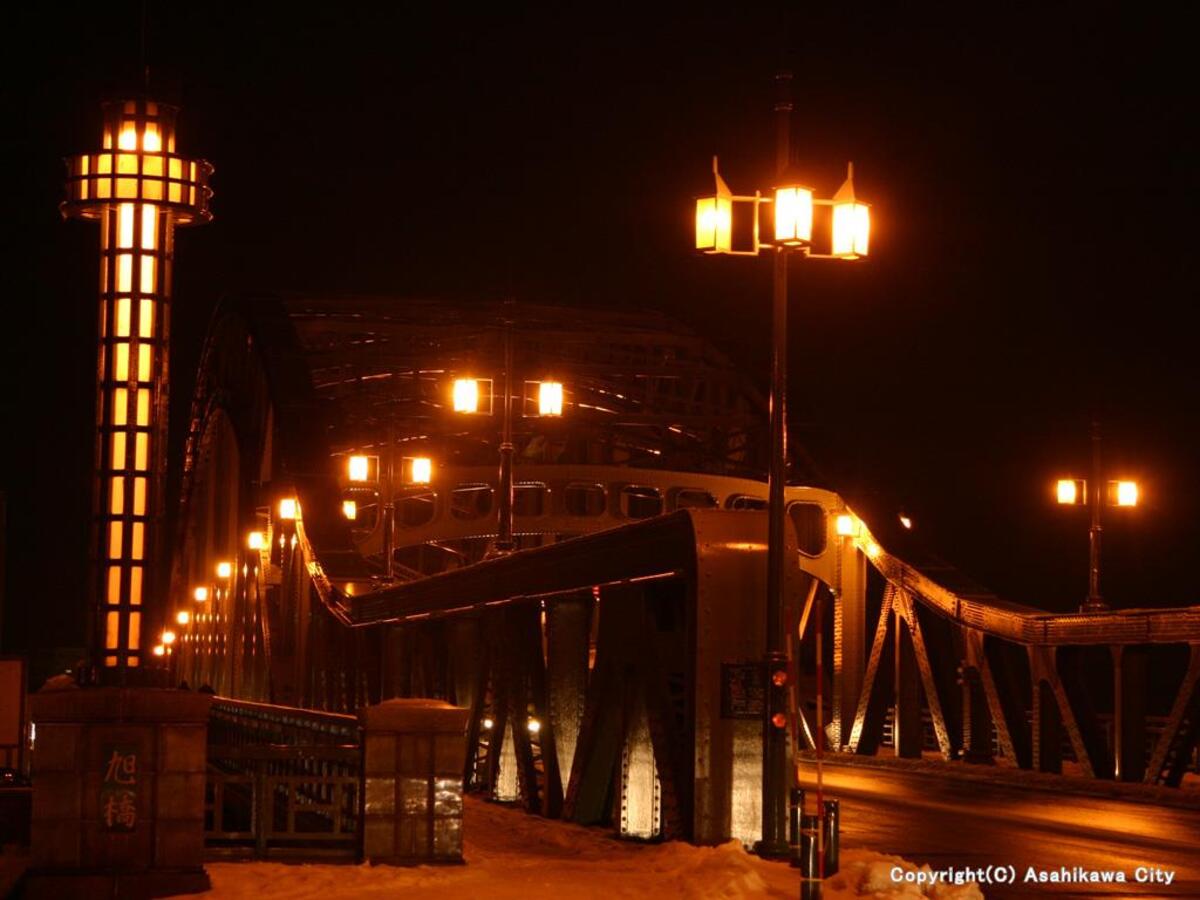
The humiliation of a “secret”: Streetlights and snow
Let secrets be secrets. Have you ever seen the Green Flash? It’s the phenomenon where the upper rim of the Sun appears to flash green for a fleeting moment at sunrise or sunset—a spectacle popularized by the movie Pirates of the Caribbean.
For years, I believed I harbored a similarly strange natural secret unique to Hokkaido: when it snows heavily at night, the sky looks distinctly tinged with orange. It was my special, romantic secret about my hometown.
One day, a few years ago, with an air of great importance, I shared this secret with my wife. Surprisingly, and quite casually, she replied: “Oh, that? Snow in the sky just reflects the streetlights.” At that moment, I decided in my heart never to tell her any more secrets. (The arrogance of my personal discovery was instantly extinguished by her superior logic.)
The quiet loss of the orange glow
The reason for that orange glow was the high-pressure sodium lamps used for street lighting in Hokkaido. The orange tint improved visibility on snowy roads. My wife, who is not originally from Hokkaido, once told me the light had been very impressive, making her feel warm even when the world outside was deep in sub-zero winter temperatures.
However, as society moves toward eco-friendliness, those iconic orange lamps have been gradually replaced with brighter, more energy-saving LED lamps.
When I first noticed the orange disappearing, what came to my mind was not sentimentality for the changing scenery, but stag beetles. My bad feeling was confirmed: I learned that insects are not attracted to LED light because it doesn’t emit UV rays.
The end of an era: Kids, beetles, and oak trees
This means that future generations of kids will lose an easy, beloved means of collecting beetles. In my childhood, every kid knew the best orange streetlights in the neighborhood and went the rounds at night to collect them. As I’ve written before, our hometown is surrounded by mountains, and the beetles came flying to the lights from there. (A free, natural distribution system, now defunct.)
Of course, we sometimes ventured into the mountains, too. Do you know what we used as a point of reference to find trees where beetles gather? It was acorns. Yes, the oak trees.
The material trees for our wooden furniture grow stag beetles. I should have noticed this connection sooner, but I keenly feel I have benefited immensely from the mountains around my hometown since I was a kid—not just as a craftsman, but as a child hunting for treasure. (By the way, is it only Japanese kids who are so intensely into beetles?)
The shared legacy: Oak, whisky, and furniture
The oak trees (Mizunara in Japanese) that drop those acorns and host those beetles have another important legacy: they have been used to make casks for aging some of the world’s most prized Japanese Whisky. Just like the beetles, the whisky draws its character from the deep, damp woods of Hokkaido.
And, of course, these same resilient Hokkaido Oak trees provide the strong, beautiful material for our furniture. The wood that attracts insects, flavors whisky, and constitutes our products is all sourced from the same rich, natural environment that used to be illuminated by the warm orange glow.
The light may be gone, but the legacy of the Hokkaido Acorn Tree remains, quietly connecting the past—beech hunting—to the present—fine furniture and world-class whisky.
I confess that my ‘romantic discovery’ about the orange snowy sky was dismantled by my wife’s logic in under ten seconds, but I still believe in the magic of the Hokkaido woods. The orange streetlights may be fading, but the legacy of the Mizunara oak—the tree of beetles, world-class whisky, and our finest furniture—remains as strong as ever. Our Hatsune Miku Art Chair is a tribute to this resilient spirit, crafted from the very timber that gives Japanese whisky its legendary character. It’s a seat designed for those who, like me, still want to believe in a little bit of mystery. Now, here is a secret I’ve decided NOT to tell my wife: the image below is a link to the very source of our craft. If you prefer the cold, logical glow of LED lights, do NOT click it. But if you want to experience the warmth of a legacy that connects the forest to your living room, go ahead. Let’s keep this between us. —— The Hatsune Miku Art Chair.


Shungo Ijima
Global Connector | Reformed Bureaucrat | Professional Over-Thinker
After years of navigating the rigid hallways of Japan’s Ministry of Finance and surviving an MBA, he made a life-changing realization: spreadsheets are soulless, and wood has much better stories to tell.
Currently an Executive at CondeHouse, he travels the world decoding the “hidden DNA” of Japanese culture—though, in his travels, he’s becoming increasingly more skilled at decoding how to find the cheapest hotels than actual cultural mysteries.
He has a peculiar talent for finding deep philosophical meaning in things most people ignore as meaningless (and to be fair, they are often actually meaningless). He doesn’t just sell furniture; he’s on a mission to explain Japan to the world, one intellectually over-analyzed observation at a time. He writes for the curious, the skeptical, and anyone who suspects that a chair might actually be a manifesto in disguise.
Follow his journey as he bridges the gap between high-finance logic and the chaotic art of living!