

The boy without a Nintendo
Let me start with a confession: I am completely useless at video games. When I was a kid, the Nintendo Entertainment System was the center of the universe. Every single classmate had one—except me. No matter how many times I begged, my parents gave me a firm “No.”
Now, if you’re reading this and thinking, “Maybe I was too strict with my kids… I should let them play more games,” please stop right there. You don’t need to feel sorry for me. While it’s true that I never developed the ability to enjoy gaming, I spent all that extra time reading books instead. As a result, I acquired a highly sophisticated ability to spin logical-sounding nonsense on the fly.
Thanks to this “talent,” I can attend company meetings with zero preparation. Even if I’m daydreaming about what’s for dinner and haven’t listened to a single word, I can offer a perfectly plausible opinion the moment I’m called upon. I may never make millions in e-sports, but I’ve learned to make just enough to survive by using my mouth instead of a controller.
Because of this background, I couldn’t understand the rise of e-sports for the longest time. But then I saw the revenue numbers, and my jaw dropped. We are talking about teenage millionaires. How does “playing games” create that much wealth?
The mystery of the $180 million man
Look at the top athletes of 2021: Conor McGregor, Messi, Ronaldo. McGregor’s estimated income was $180 million. Now, I’m not here to complain about income inequality. I’m here to ask a marketing question: Why do these “Superstars” exist in entertainment, but rarely in other fields?
The answer was solved by Sherwin Rosen, a University of Chicago economist, in his theory: “The Economics of Superstars.” The Scalability Trap According to Rosen, a Superstar is born from two things: Market Scalability and Commodity Substitutability. Think about a world-class chef. No matter how much of a genius they are, they can only cook for maybe 50 people at a time. Their talent is “unscalable.” This is why you don’t see many billionaire chefs. However, the Internet is changing the game. While you can’t eat a chef’s meal through a screen, millions can watch their cooking videos on YouTube. Suddenly, the chef becomes scalable. The same thing happened to those gamers I couldn’t understand—the Internet turned a bedroom hobby into a global stadium.
Architecture without walls
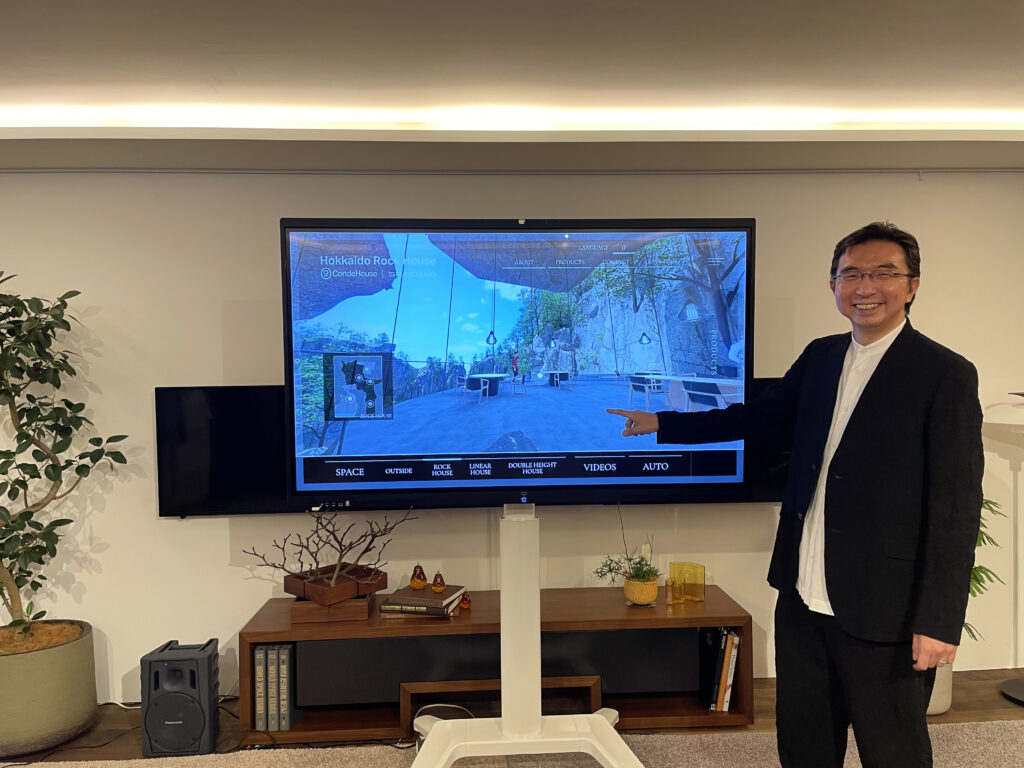
I believe this “Superstar Economy” is about to hit the world of architecture. Traditionally, an architect is like a chef—only the people who physically enter the building can experience it. Its scalability is limited by its location in the real world.
But what happens when we move architecture into the digital realm? With VR, a building is no longer stuck in one city. It becomes a digital “content” that millions can explore simultaneously.
This is the vision behind “Hokkaido Rock House,” our virtual condominium project designed by the legendary Sou Fujimoto. By moving design into the virtual space, we are expanding the “scalability” of architecture. We are inviting the whole world to experience Fujimoto’s genius and our craftsmanship without needing a plane ticket to Hokkaido. Who knows? In the future, the world’s next billionaire might not be a soccer player or a gamer—it might be the architect of the world’s most visited virtual house.
The digital world allows us to scale a vision, but the physical world is where we truly feel it. You don’t need a “Superstar” salary or professional gaming skills to appreciate true quality. Why not bring a piece of world-class design into your home today? (And we promise, our chairs are much more reliable than my meeting notes!)


Shungo Ijima
Global Connector | Reformed Bureaucrat | Professional Over-Thinker
After years of navigating the rigid hallways of Japan’s Ministry of Finance and surviving an MBA, he made a life-changing realization: spreadsheets are soulless, and wood has much better stories to tell.
Currently an Executive at CondeHouse, he travels the world decoding the “hidden DNA” of Japanese culture—though, in his travels, he’s becoming increasingly more skilled at decoding how to find the cheapest hotels than actual cultural mysteries.
He has a peculiar talent for finding deep philosophical meaning in things most people ignore as meaningless (and to be fair, they are often actually meaningless). He doesn’t just sell furniture; he’s on a mission to explain Japan to the world, one intellectually over-analyzed observation at a time. He writes for the curious, the skeptical, and anyone who suspects that a chair might actually be a manifesto in disguise.
Follow his journey as he bridges the gap between high-finance logic and the chaotic art of living!