
The national trait: The cult of reading between the lines
Did you have a debate class in school? In Japan, certainly not when I was a student, even 30 years ago. After entering the real world, we are culturally programmed to avoid stating things in black and white. This tradition—arguably an ancient wisdom to prevent making lasting enemies in our insular community—creates a problem: Consensus is formed so vaguely that even attendees sometimes miss it.
Consequently, instead of practicing the art of effective discussion, we are forced to become masters of reading between the lines (kūki o yomu).
Fortunately, I received extensive debate training while working for the government. We debated classic topics: the death penalty, daylight saving time, and, critically, volunteering. In some countries, volunteering is mandatory in schools and workplaces, but not in Japan. This cultural aversion might explain why Japan ranked embarrassingly low (second worst) in the 2022 World Giving Index.
The volunteering dilemma: Why free will is a myth
One of the central attacks in our “Mandatory Volunteering” debate was a philosophical contradiction: “How can something based on free will become mandatory?”
While not a fatal debate blow, this strict philosophical thinking highlights a cultural barrier to charity. Many people hesitate, asking: “Am I doing this for self-satisfaction?”
The dark truth, depicted in films like Poverty, Inc., is that unsolicited charity driven by pure self-satisfaction can be incredibly destructive. My solution, however, is not to fight the impulse but to embrace it: We must establish a common-sense understanding that charity is fundamentally for self-satisfaction. This approach simplifies everything, making it easier to start giving and easier to politely refuse ill-fitting charity offers.
This fear of impure motivation is particularly ironic because, as I’ve discussed before, neuroscience suggests there is no free will in the first place. Let’s face the harsh reality: 95% of our daily actions are unconscious biological reactions. What about the remaining 5%? I suspect it’s mostly rational decisions driven by cold cost-benefit analyses.
Taking the red pill: The joy of irrationality
In the capitalistic world, we are driven by profit, guided by market forces, and stripped of free will. If that’s all there is, life sounds futile.
So, here’s my advice: Let’s take the red pill, step outside the matrix of capitalism, and do something irrationally kind once in a while!
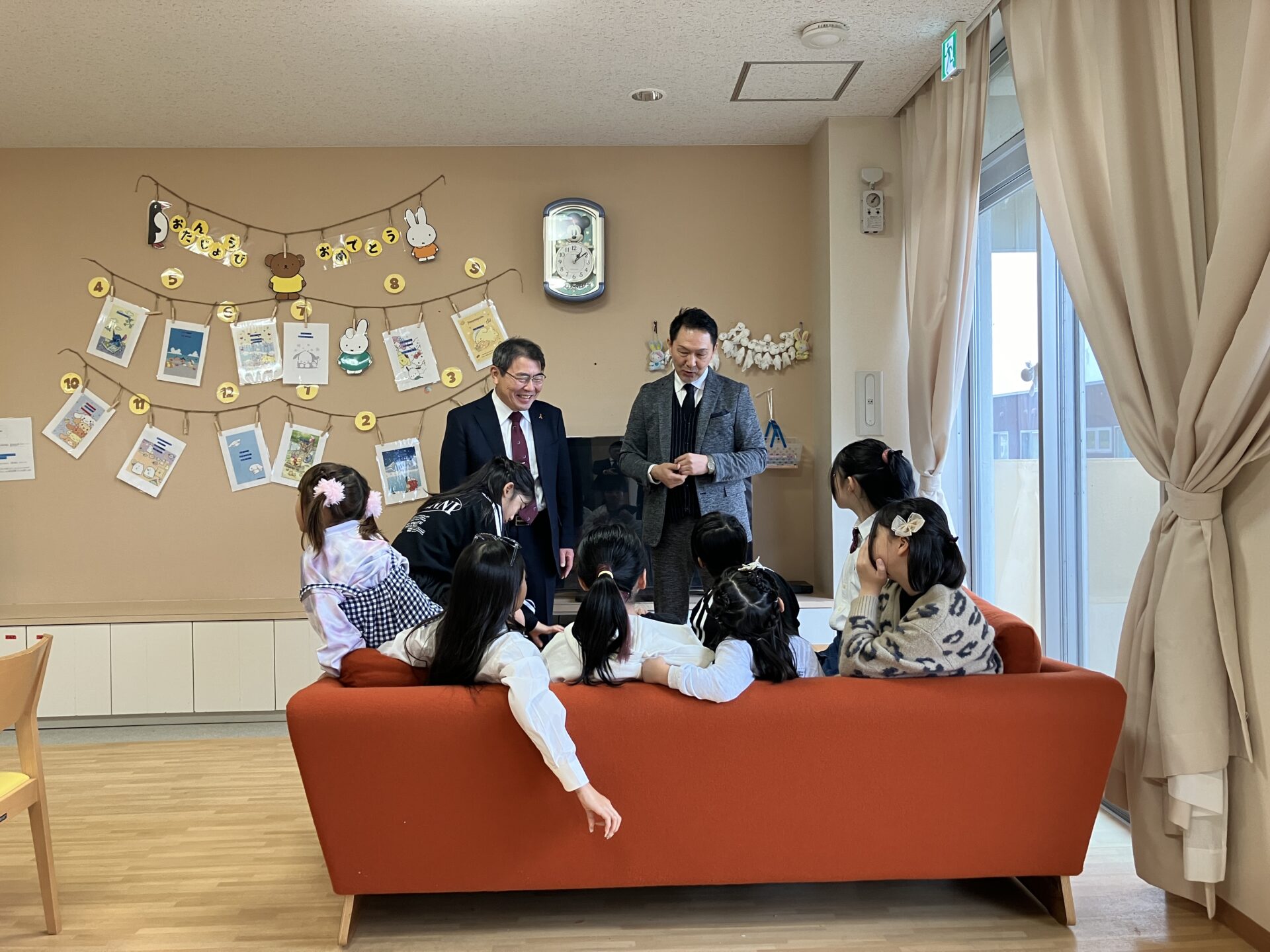
Last month, we donated our furniture to a local children’s home. I personally helped with the delivery and felt genuinely happy watching the kids cluster around our new sofas with huge smiles. I am confident their smiles motivated us far more than any small pay raise ever could.
In that sense, charity work may be rational even within the market mechanism: it’s the purest form of non-monetary profit. We get to feel good, and the furniture serves its highest purpose. It’s a win-win, regardless of the myth of free will.
I confess that I’m a fan of ‘self-satisfied’ kindness, because in a world of cold biological reactions, choosing to be irrationally kind is the ultimate act of free will. At CondeHouse, we’ve taken the red pill: we believe that high-end furniture should do more than just exist—it should make both the maker and the owner feel genuinely, irrationally good. Our Hatsune Miku Art Chair is the ultimate expression of this profit-less joy. It’s a bold, turquoise-green sanctuary born from a collaboration that shouldn’t make sense, yet brings a smile that no paycheck can match. Now, here is a portal to our most joyful ‘irrationality’: the image below is your link to the special site. If you prefer the predictable, grey matrix of 100% rational choices, do NOT click it. But if you’re ready to embrace the non-monetary profit of owning a masterpiece with a soul, go ahead. Choose the red pill. —— The Hatsune Miku Art Chair.


Shungo Ijima
Global Connector | Reformed Bureaucrat | Professional Over-Thinker
After years of navigating the rigid hallways of Japan’s Ministry of Finance and surviving an MBA, he made a life-changing realization: spreadsheets are soulless, and wood has much better stories to tell.
Currently an Executive at CondeHouse, he travels the world decoding the “hidden DNA” of Japanese culture—though, in his travels, he’s becoming increasingly more skilled at decoding how to find the cheapest hotels than actual cultural mysteries.
He has a peculiar talent for finding deep philosophical meaning in things most people ignore as meaningless (and to be fair, they are often actually meaningless). He doesn’t just sell furniture; he’s on a mission to explain Japan to the world, one intellectually over-analyzed observation at a time. He writes for the curious, the skeptical, and anyone who suspects that a chair might actually be a manifesto in disguise.
Follow his journey as he bridges the gap between high-finance logic and the chaotic art of living!
Comments
List of comments (1)
Blue Techker You’re so awesome! I don’t believe I have read a single thing like that before. So great to find someone with some original thoughts on this topic. Really.. thank you for starting this up. This website is something that is needed on the internet, someone with a little originality!