
Conde House Japan– Author –

-
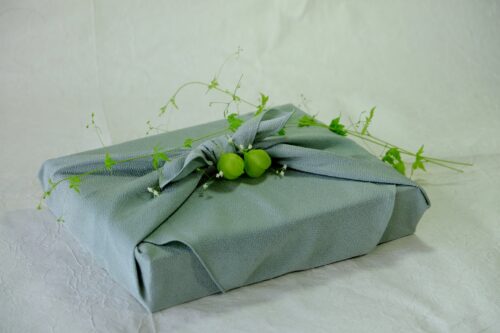
The Hidden Rule of Wrapping: Why Japanese Gifting is Driven by Anxiety (And Why We Don’t Tear Paper)
The hidden rule of wrapping is driven by anxiety: I feel terrible if I force someone to perform instantaneous joy. We joke that Japanese gift packaging is more expensive than the contents. The wrapping is an extension of the giver's dedication; destroying it is impolite. -
What Do You Work for? Money Is Not Worth Our Limited Time!
【Investing is more profitable than working according to Thomas Piketty】 Life is hard. No matter how hard we work, we will never be rich, and the gap between rich and poor is widening. This is not my personal feeling but a truth proved ... -
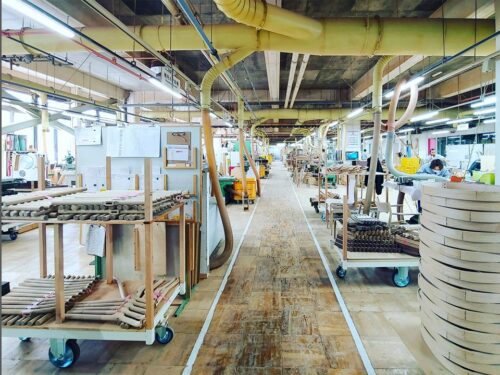
The Reality of Japanese Companies: Why We Are So Neat and Tidy
【Most of your actions are not done by your free will】 How many times did you reach for a cup/glass to drink something today? Can you believe that you did it not by your free will but by a biological reaction? It is a well-known fact th... -
The Art of Adaptation: Why Japan Does Christmas, Worships Wagyu, and Perfects the Chair
If Japanese culture is defined by one word, it’s "adaptation." We celebrate Christmas as a 6.5 billion USD economic event despite only 1% of the population being Christian—we adopted the party, ignored the religion. Similarly, after 1,200 years of banning meat, we rapidly evolved beef culture, tripling the fat percentage in 20 years to create Wagyu. Though the history of the chair in Japan is short, our centuries-old high-skill woodworking tradition has transformed this foreign concept into uniquely refined furniture. We didn't invent the chair, but we perfected the craft that builds it. -

Red Pill or Blue Pill? Find Your Path
【All good lies are mixed with some truths】 The new Prime Minister took office in Japan last month (September, 2020). He was the most unpopular candidate early this year, but now boasts a high approval rate of more than 70%. I think thi... -
What Makes Japanese Food Culture So Special?
【Respect for nature, the core spirit of Japanese food】 UNESCO listed washoku (Japanese traditional cuisine) as an Intangible Cultural Heritage in 2013. I think many Japanese people seem to misunderstand the key point of the event. They... -
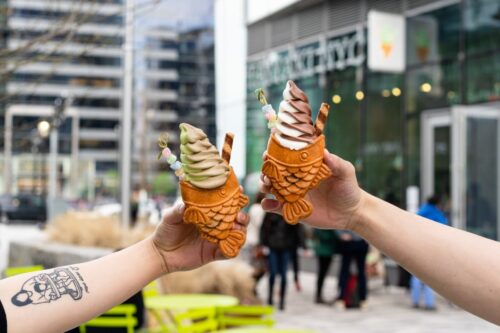
How to Think Outside the Box
【Taiyaki in NYC】 Have you ever seen the above ice cream (in the thumbnail image)? It's Tayiyaki ice cream from TAIYAKI NYC. I've heard it's extremely popular in NY now. When seeing the image, some Japanese people would have mixed feeli... -
The Secrets of Japanese Food to Enrich Your Daily Meal
【Make life happy without money】 Do you believe money can't buy you love? I may be too old to believe in such a naive world as the Beatles song went. According to Daniel Kahneman, a genius winning a Nobel Prize in 2002, money can buy yo... -

The Entropy of Embarrassment: Why Time is Cruel (and What Makes a Design Timeless)
The flow of time is truly that cruel. I saw my middle school graduation album and instantly wished for death. We explore the physics of 'timeless design' through the concept of entropy. Try replacing "So much time has passed" with, "Entropy has increased significantly." Perhaps timelessness is the design quality that remains low in entropy regardless of the chaotic passing of the years. -

The Unconscious Ritual: Unraveling Japan’s “No-Shoe” Culture and Its Impact on Furniture Design
Why do Japanese people take off their shoes? It's not just about humidity, but about sleeping on the floor (futon). We sleep on the floor because abundant wood makes for warm, soft houses, and futons are exceptionally space-efficient in a small, mountainous country. This creates a simple logical chain: Abundant Wood --> No-Shoe Culture. The unintended cultural consequence is that our standard chair and table heights are slightly lower than the global standard. Ultimately, our furniture's proportions were dictated by the floor on which a great Shogun (or a salaryman exhausted from the Tokyo commute) once sat.