
japanese culture– tag –
-

The Necessary Slacker: Why Your High-Performance Team Needs More “Lazy Ants”
Can laziness save your company? Starting with the challenge of defining life (like the virus test), I pivot to the Worker Ant Theory, which suggests every team needs a 20% "lazy reserve" to build resilience. I analyze the potential fragility of our highly efficient Hokkaido factory and propose the bold solution: strategic resource allocation—starting with me leaving the office early. -

The Hidden Rule of Wrapping: Why Japanese Gifting is Driven by Anxiety (And Why We Don’t Tear Paper)
The hidden rule of wrapping is driven by anxiety: I feel terrible if I force someone to perform instantaneous joy. We joke that Japanese gift packaging is more expensive than the contents. The wrapping is an extension of the giver's dedication; destroying it is impolite. -
The Art of Adaptation: Why Japan Does Christmas, Worships Wagyu, and Perfects the Chair
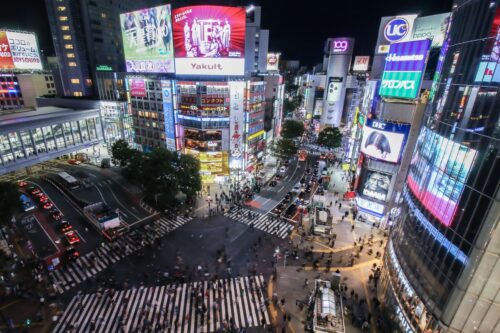
If Japanese culture is defined by one word, it’s "adaptation." We celebrate Christmas as a 6.5 billion USD economic event despite only 1% of the population being Christian—we adopted the party, ignored the religion. Similarly, after 1,200 years of banning meat, we rapidly evolved beef culture, tripling the fat percentage in 20 years to create Wagyu. Though the history of the chair in Japan is short, our centuries-old high-skill woodworking tradition has transformed this foreign concept into uniquely refined furniture. We didn't invent the chair, but we perfected the craft that builds it. -
What Makes Japanese Food Culture So Special?
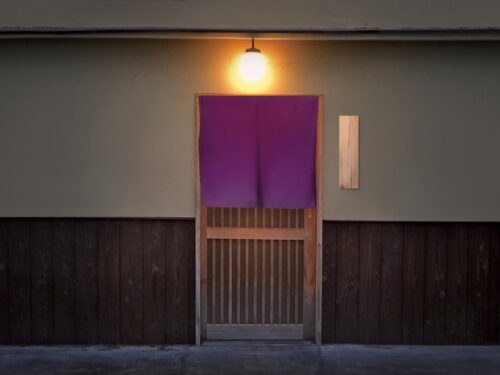
【Respect for nature, the core spirit of Japanese food】 UNESCO listed washoku (Japanese traditional cuisine) as an Intangible Cultural Heritage in 2013. I think many Japanese people seem to misunderstand the key point of the event. They... -

The Unconscious Ritual: Unraveling Japan’s “No-Shoe” Culture and Its Impact on Furniture Design
Why do Japanese people take off their shoes? It's not just about humidity, but about sleeping on the floor (futon). We sleep on the floor because abundant wood makes for warm, soft houses, and futons are exceptionally space-efficient in a small, mountainous country. This creates a simple logical chain: Abundant Wood --> No-Shoe Culture. The unintended cultural consequence is that our standard chair and table heights are slightly lower than the global standard. Ultimately, our furniture's proportions were dictated by the floor on which a great Shogun (or a salaryman exhausted from the Tokyo commute) once sat. -

Why Kyushoku (School Lunch) is the Best Part of School in Japan
Japanese school lunch (Kyushoku) is the biggest thing I want to be proud of in the Japanese social system. In most elementary and junior high schools in Japan, lunch is served fresh off each school kitchen. Of course, professional dietitians prepare the menu. It's good not only in taste and nourishment but also as a learning opportunity. -

The Invisible Hand: Why Peer Pressure is Japan’s Greatest Quality Control (and Worst Creativity Killer)
A famous joke suggests the only way to get Japanese people to jump off a sinking ship is to say, "Everybody else has already jumped." This strong peer pressure acts as an Invisible Hand—a mutual monitoring system. This system ensured high compliance during COVID-19 without legal restrictions, but it’s a double-edged sword: it guarantees meticulous quality control (Japan’s strength) but stifles the radical creativity needed in the new economy. Surprisingly, CondeHouse continues to empower me, a management anomaly who questions the consensus. Therefore, expect both the impeccable quality you rely on and the unconventional creativity you might not expect. -
The Silent Code of Kyoto: Why Their “Yes” Actually Means “You Are Doing It Wrong”
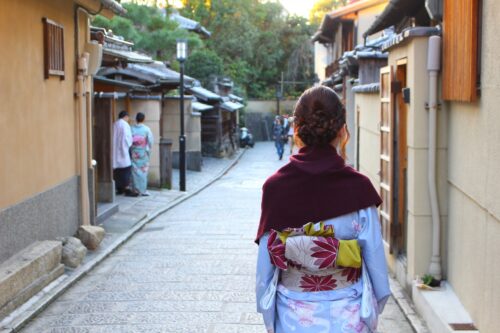
Kyoto's language is a social minefield. We decode the hidden meanings behind their polite phrases—like why "Your children are so cheerful" is actually code for "Shut them up!" I explore how this high-context culture evolved as a life-saving political skill, and argue that this unique Japanese ability to read unspoken intentions is now essential for transmitting traditional craftsmanship. -
The 1,400-Year Life: Why Japan’s Oldest Temple Outlives Our Modern Houses (The Secret of Continuous Care)
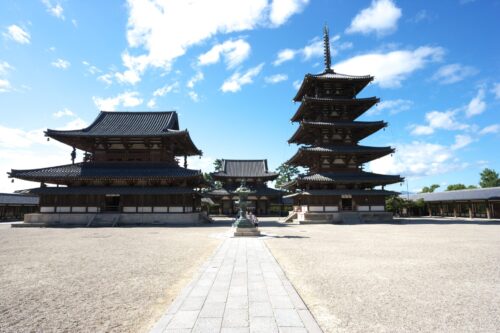
HJapan’s national shame: the average lifespan of our modern houses is only 30 years. We explore the paradox with Hōryū-ji—the world’s oldest wooden building—whose secret lies in flexible joints and continuous, generational care. Ultimate strength comes not from rigidity, but from the ability to flex and absorb shock. The lifetime of our furniture often exceeds that of the house it sits in. -
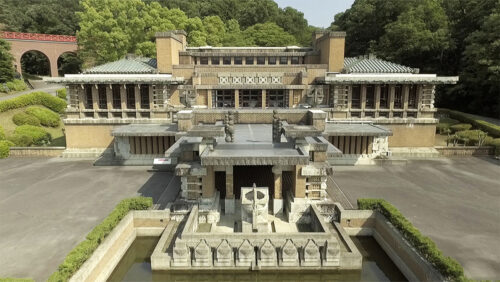
God in the Details, Disaster in the Whole: Frank Lloyd Wright’s Imperial Hotel and the Japanese Paradox
Frank Lloyd Wright’s Imperial Hotel survived the Great Kanto Earthquake on its opening day in $1923$ due to his innovative floating structure—a profound, immediate validation of his genius. Seeing the meticulous carvings, I recall the dictum: "God is in the details." This detail-orientation is a Japanese trait (our furniture is "full of God"), but it’s a paradox: some Japanese products, like certain cars, excel in detail yet "can't see the wood for the trees," resulting in a poor overall design. This is the Japanese Paradox: excelling at the micro-level while sometimes faltering at the macro-level. We strive to master both the detail and the clean, coherent form.