
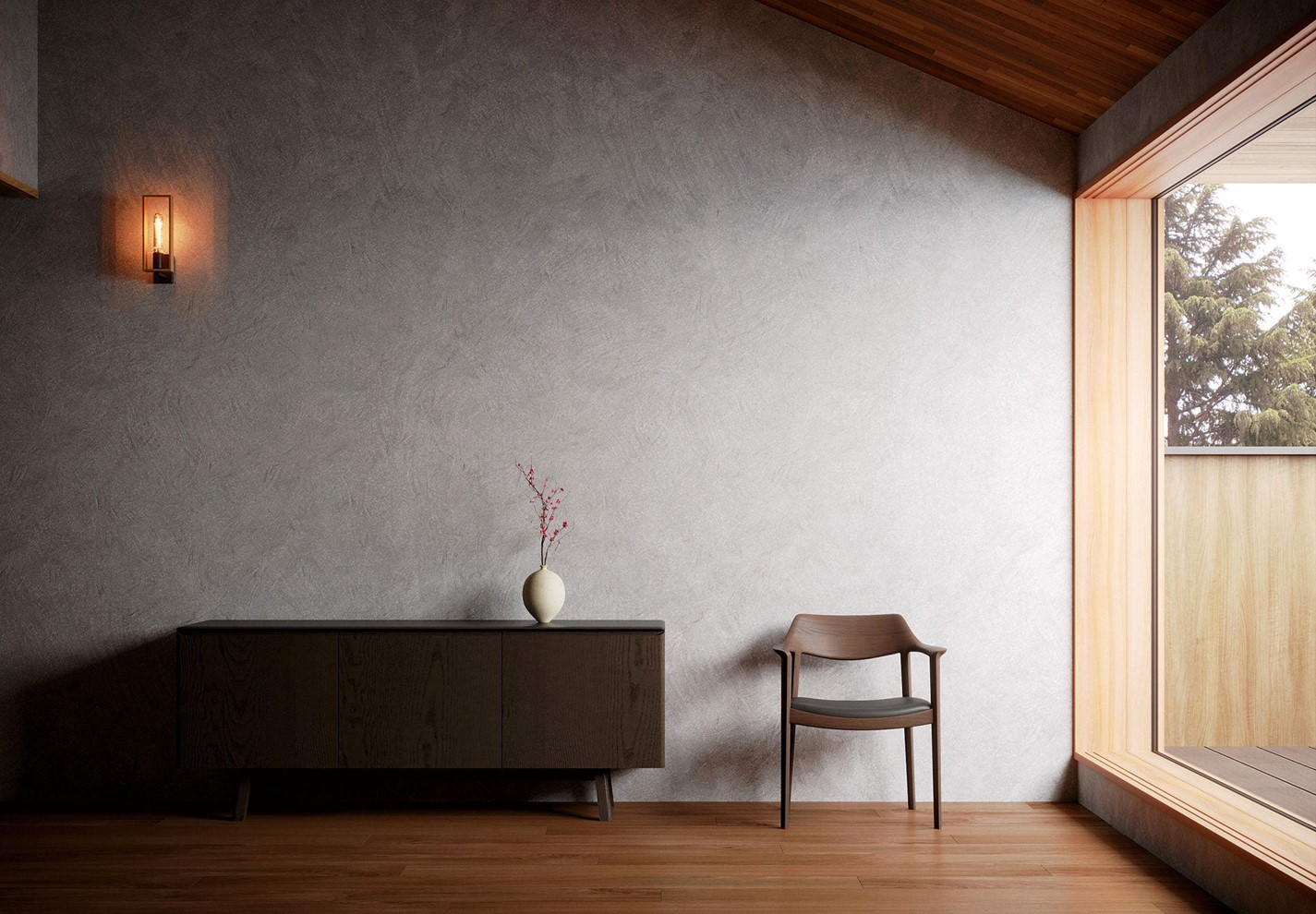
A gamble born in the abyss
2008: The financial crisis that started on Wall Street was striking the world like a tidal wave. Companies were collapsing, and at CondeHouse, we were standing at a crossroads. We needed a savior. We needed a product that could prove we still had a reason to exist.
That savior was the WING Lux, born in 2009.
Originally, the “Lux” collection started with a simple, almost arrogant question: “What if we gathered all our top technologies to make furniture without any thought of cost?” But the crisis changed everything. The market no longer wanted “luxury for luxury’s sake.” We had to pivot. We had to use our most advanced, expensive technologies to create something superior, yet somehow make it efficient enough to survive a broken economy. It was like trying to build a supercar that was also fuel-efficient during a gas shortage.
Technical challenge 1: The curse of the curve
The designer wanted to express the “pulse of life,” inspired by the wings of a bird. In the world of woodworking, “curves” are synonymous with “headaches.”
While making a curve itself isn’t impossible, it complicates every single step that follows. For instance, when parts are curved, there is no flat “reference point” to hold onto during assembly. Today, we use high-tech CNC machines for rough shaving, but don’t let the computers fool you. It takes a master craftsman’s intuition to set the jig tools with millimeter precision. If the setup is off by a hair, the “pulse of life” looks more like a manufacturing error.
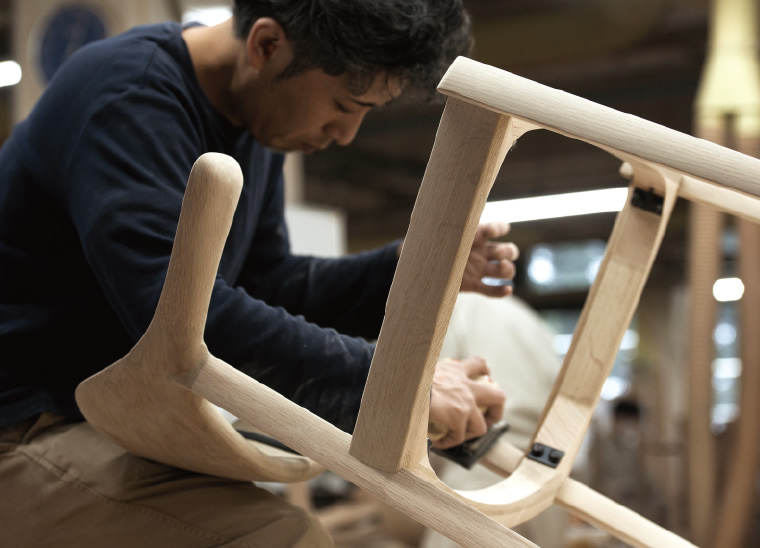
Technical challenge 2: The seamless miracle
If you look at the WING chair, try to find where the backrest meets the rear legs. You won’t find a seam.
This seamless joint is a point of immense pride for us. Achieving this look requires a series of additional, grueling processes and advanced technology that most makers would abandon to save money. We went to these great lengths because we believed that in a world full of “good enough” products, people would still recognize—and reach for—something truly exceptional.
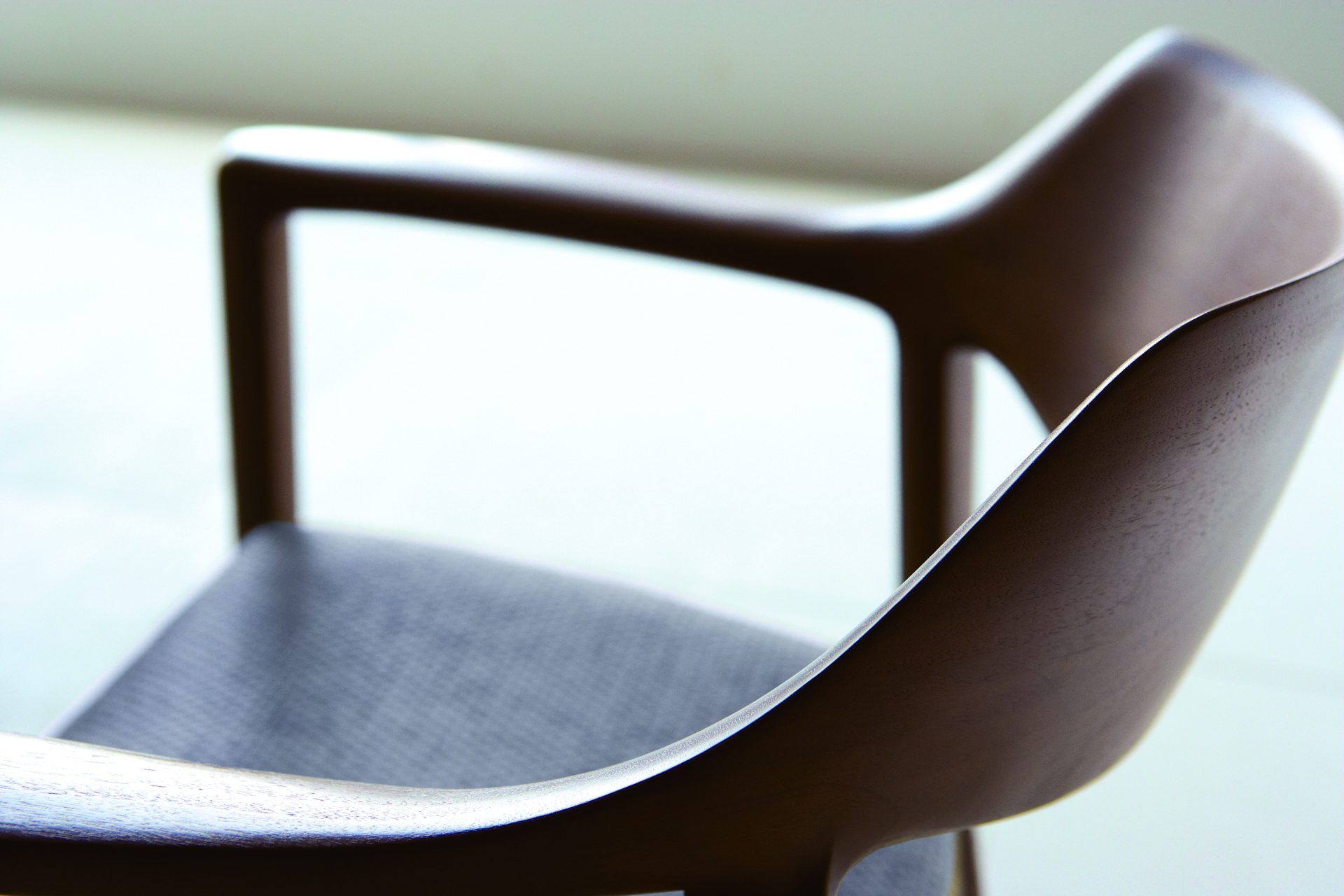
Technical challenge 3: The “bite” in the wood
Finally, there is the joint where the seat frame meets the rear legs. The design makes it look as though the seat is “biting” into the leg. To make this work, the leg must be carved to perfectly match the edge of the seat frame. It’s a marriage of two pieces of wood that requires 100% accuracy.
The luxury of resilience
Knowing these details changes how you see a chair. It’s no longer just a place to sit; it’s a record of how a group of stubborn Japanese craftsmen fought back against a global economic collapse.
Why not visit us and run your hand over that seamless joint? Feel the “pulse of life” that was born from one of the darkest times in modern history. I promise you, once you know the story behind the curves, sitting in it feels even better.
The strongest wings are forged in the fiercest storms. Why not bring home a design that represents resilience and the triumph of craftsmanship over crisis?

Shungo Ijima
Global Connector | Reformed Bureaucrat | Professional Over-Thinker
After years of navigating the rigid hallways of Japan’s Ministry of Finance and surviving an MBA, he made a life-changing realization: spreadsheets are soulless, and wood has much better stories to tell.
Currently an Executive at CondeHouse, he travels the world decoding the “hidden DNA” of Japanese culture—though, in his travels, he’s becoming increasingly more skilled at decoding how to find the cheapest hotels than actual cultural mysteries.
He has a peculiar talent for finding deep philosophical meaning in things most people ignore as meaningless (and to be fair, they are often actually meaningless). He doesn’t just sell furniture; he’s on a mission to explain Japan to the world, one intellectually over-analyzed observation at a time. He writes for the curious, the skeptical, and anyone who suspects that a chair might actually be a manifesto in disguise.
Follow his journey as he bridges the gap between high-finance logic and the chaotic art of living!
Comments
List of comments (1)
[…] though it requires advanced techniques and additional costs. No worries, by the way. Indeed, the arms of our chairs, for example, are organic-shaped but not so much smooth and resilient as human arms. You will never […]